Ferments
Two-Cabbage Sauerkraut
Ferments · serves 8 · under 30 min
Core AIP · Elimination phase compliant
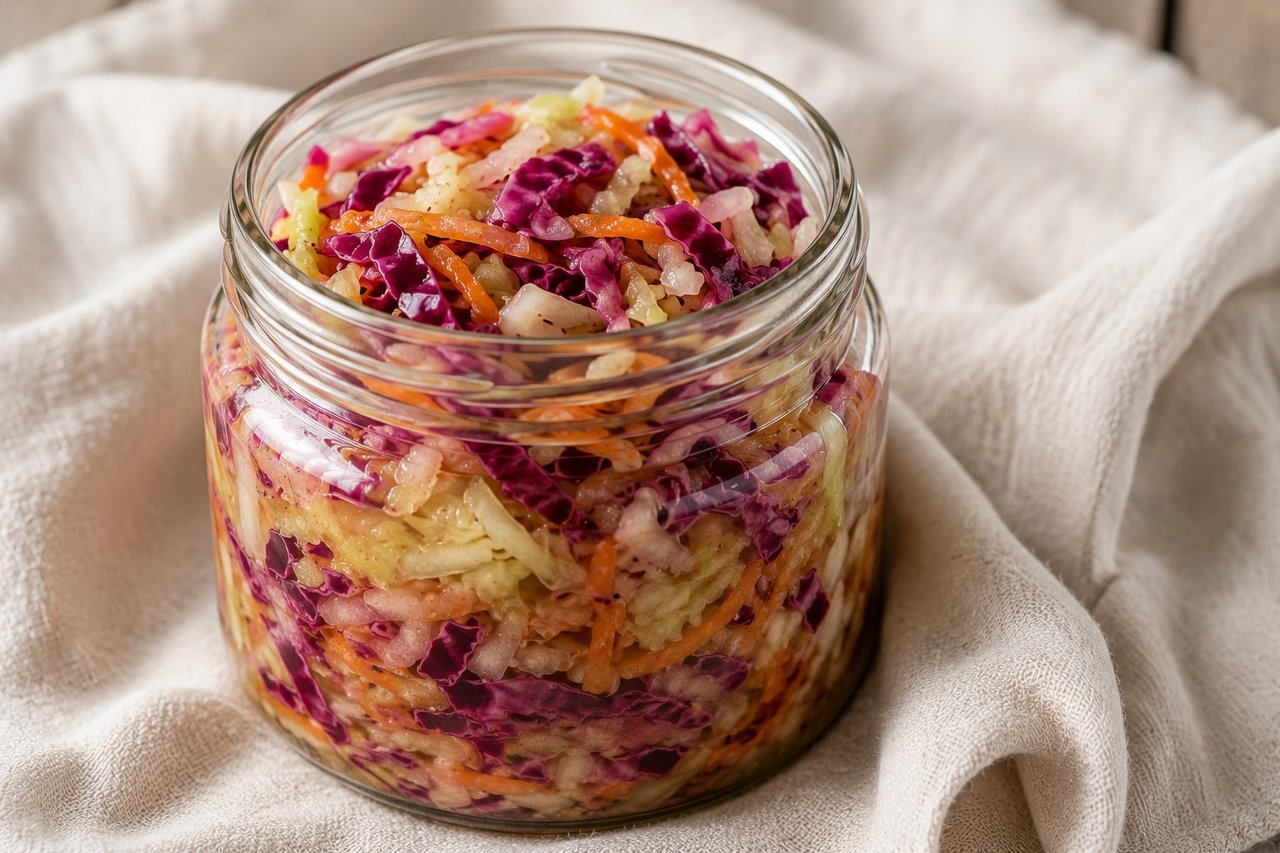
This is one of the small anchors worth building into your week. You massage cabbage and salt for 20 minutes, pack it into a jar, and then time does the rest. There is no cooking and almost no skill required, and a few weeks later you have a living food you made with your own hands. That quiet sense of provision is part of what makes this way of eating feel like abundance, something you are building week by week.
A spoonful of wild-fermented kraut alongside a meal is one of the simplest ways to bring fermented vegetables to the plate, which are studied for their role in a healthier gut community. Cabbage is also a gentle source of vitamin C and fiber. One note of honesty: fermented foods are usually set aside on low-histamine protocols, so if you are watching histamine alongside everything else, this is one to hold for later.
There is something grounding about turning 3 humble vegetables and salt into something alive. Let yourself feel that as you press the cabbage down under its brine. You are not just following a recipe, you are tending a small fermentation, and a little patience and attention are part of what makes it good.
Ingredients
- 1 lb green cabbage
- 1 lb red cabbage
- 1 lb shredded carrot
- 3 tablespoons sea salt
- 6 garlic cloves, minced
Every ingredient is already elimination-friendly, with nothing to swap. The source suggests flavor variations to play with once you are comfortable, including cilantro, apple, ginger, or radish. You need no special equipment beyond a large jar or a ceramic crock.
Method
- Discard the tough outer cabbage leaves. In a large bowl, massage the cabbage, carrot, and salt together for about 20 minutes, until the vegetables soften and release their liquid.
- Work in the minced garlic, then pack everything tightly into a jar so the brine rises and covers the vegetables up to the shoulder of the jar.
- Weight the vegetables down below the brine with a shot glass or small bowl, then cover the top with cheesecloth or a fermentation lid.
- Ferment in a cool, dark spot for 2 to 3 weeks, skimming off any floaters as they appear. A longer ferment gives you more sourness. When it tastes right to you, put on a solid lid and refrigerate.
*Adapted from acleanplate.com*
Nutrition
Estimated per serving (serves 8), calculated from the ingredients. Actual values vary with brands, sizes, and how much sauce or dressing you use.
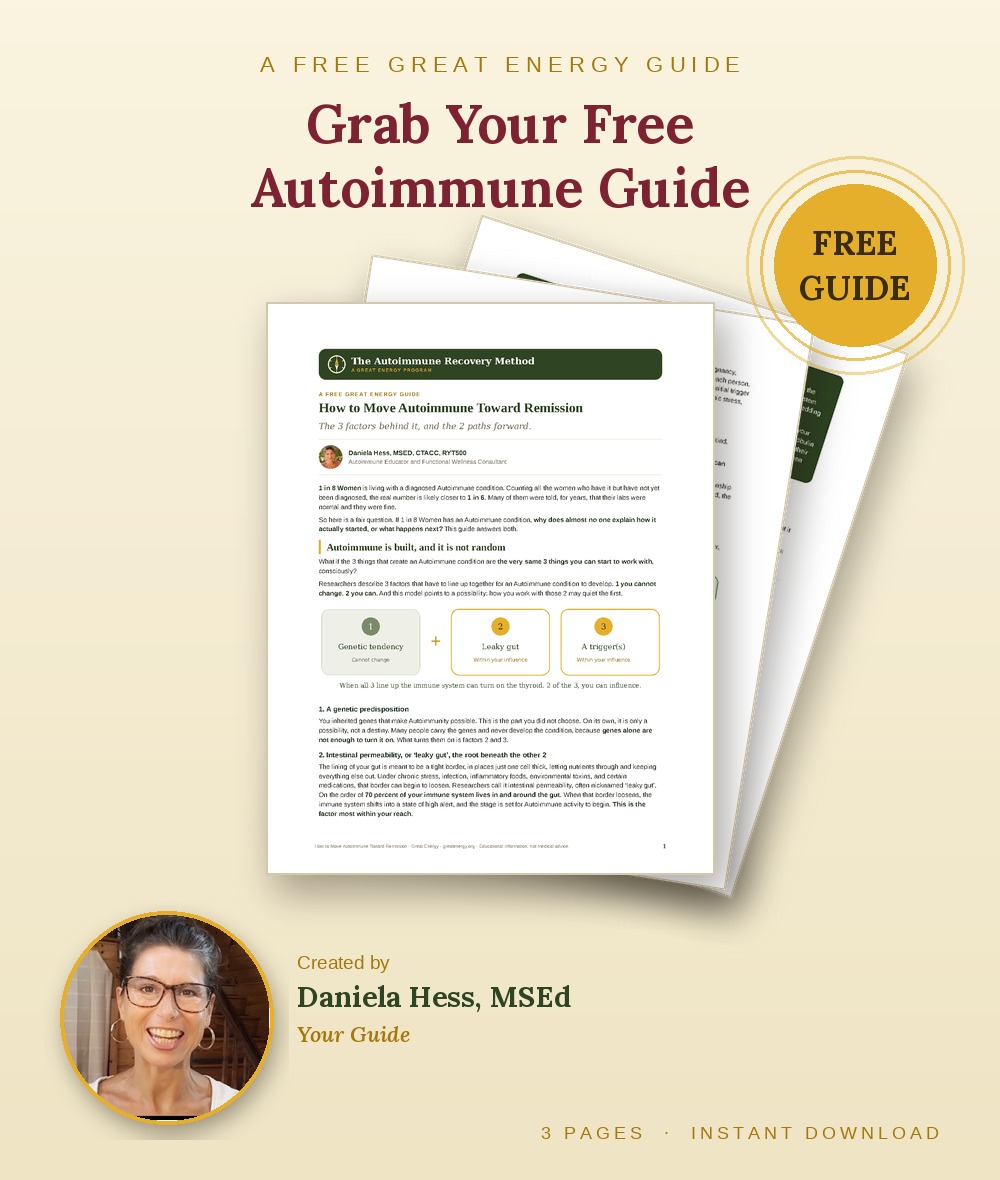
How to Move Autoimmune Toward Remission
The 3 factors behind an Autoimmune condition and the 2 paths forward, free, straight to your inbox.
No spam. Unsubscribe anytime.
Your guide is on its way. You can also open it now (PDF).

Further reading
Daniela Hess, MSEd, is a co-founder of Great Energy and an Autoimmune Educator and Functional Wellness Consultant who lives and thrives with Hashimoto’s. She is not a licensed medical provider.
More recipes with Cabbage, Carrot, or Garlic
AIP anti-inflammatory turmeric cabbage soup - one-pot gut-friendly mainBeef and Cabbage Stir-FryDeconstructed egg roll - pork, cabbage, and carrot stir-fry in coconut aminosLime Chicken Bowls with Tigernut SauceRosemary Curried Lamb Rib Stew - AIP, paleo, sugar-freeSalmon Teriyaki BowlsTakeout-style szechuan noodles, made with spaghetti squash instead of wheatYuca-Wrapped Egg Rolls - AIP elimination compliantEvery ingredient in this recipe is on the Core Autoimmune Protocol food list.
Download the Core Food List (PDF) Explore the food list