Gut & Immune
Your microbiome: why diversity is the goal and how AIP supports it
By Daniela Hess · Great Energy · July 3, 2026
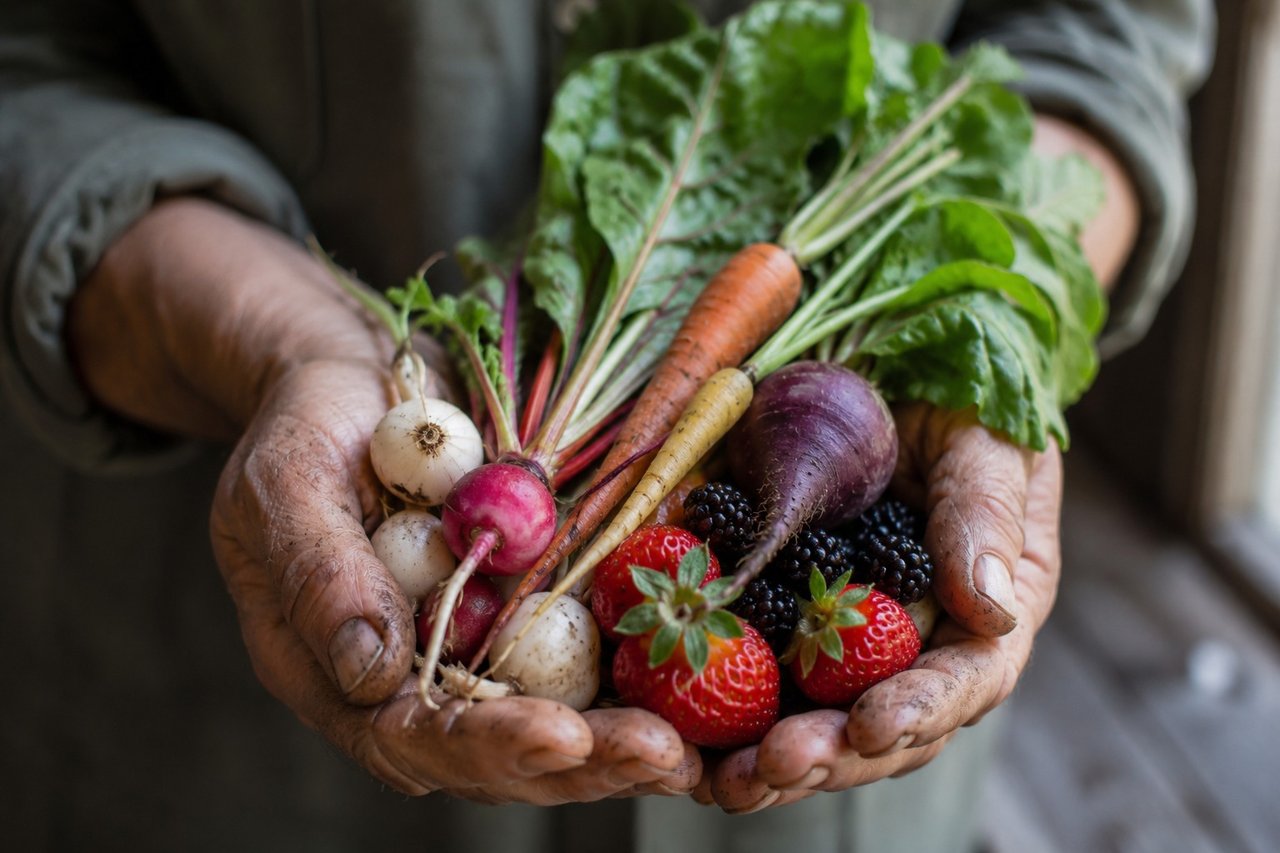
Every vegetable you eat, every new food you bring to the table, every rotation you make through the week, it counts.
I know the early weeks of AIP can feel like a long list of everything you are giving up. I want you to hold something else alongside that feeling, because both things are true at once.
This is also a big shift, away from processed foods and back to whole foods, and it is worth naming plainly. Autoimmune recovery and processed foods do not go hand in hand. If you want to work toward Remission, and stay there, processed foods will not have a seat at your table, or in your snacks. Most of what lines grocery store shelves has been altered, stripped, and treated in ways that work against the very ecosystem you are trying to rebuild, and naming that plainly is not dramatic. It is simply the landscape your gut has been living in for decades. This is the shift I make the fuller case for in 'For the Love of Whole Foods: The Shift from Processed to Real'.
We're not just 'subtracting'. You are building something. You are building a diverse, resilient gut ecosystem, one meal at a time, in a system that has broken down over decades.
The effects of that work show up later, in your immunity, in your energy, in fewer flares. The food on your plate is information your gut is reading and acting on, every single day, doing far more than fuel ever could. I want you to keep coming back to this: food is medicine, and it is always doing one of two things. It is strengthening and nourishing you, or it is weakening and depleting you. Ayurveda has a name for this, building ojas, your vital strength, through food that digests well and nourishes you, versus creating ama, the toxic buildup that comes from food your body cannot properly process. It is a simple, old idea, and it holds up.
The gut microbiome has become one of the most studied areas in medicine over the past 2 decades, and the findings keep pointing in the same direction. The diversity of bacteria living in your gut matters enormously for immunity, metabolism, brain function, and, particularly relevant for us here, for Autoimmune disease.
This holds across the whole family, from Hashimoto's and hypothyroidism to rheumatoid arthritis, lupus, psoriasis, multiple sclerosis, and inflammatory bowel disease. The Autoimmune Recovery Method (ARM), a complete approach to moving an Autoimmune condition Toward Remission, grounds its whole approach to gut health in this understanding.
If you are new here, the gut barrier is one of the 3 things that have to line up for any Autoimmune condition to take hold, which I lay out in 'The 3 Factors Behind Every Autoimmune Condition'.
What the microbiome actually does
Your gut microbiome is an active, working system, and it is on your side, far more than a passive collection of passengers riding along inside you.
Your gut bacteria produce compounds your body cannot make on its own: certain B vitamins, folate, a portion of your vitamin K. They activate plant polyphenols that would otherwise pass through you unused. They talk directly with your immune cells.
The gut is often described as housing on the order of 70 percent of the immune system, which is part of why so much of this work begins in the belly and not the gland.
This is also why the gut sits at the center of so many Autoimmune conditions at once, not only Hashimoto's but rheumatoid arthritis, celiac, and inflammatory bowel disease among them.
Getting the terms straight
A quick note on terms, since they get used interchangeably and really should not be. IBD, inflammatory bowel disease, covers Crohn's disease and ulcerative colitis. Both are immune-mediated, and both carry real autoimmune features, including specific autoantibodies found in the blood and gut lining, which is why I group them within the Autoimmune family here. IBS, irritable bowel syndrome, is a different condition entirely, a functional disorder of gut motility and sensitivity, not an immune attack on your own tissue. And leaky gut, or intestinal permeability, is not a diagnosis at all. It is a mechanism, the loosening of the tight junctions in your gut lining, and it can show up inside any of these conditions, or in someone with none of them.
Your microbiome also influences metabolism, blood sugar regulation, and how many calories you extract from your food. It signals your brain through the gut-brain axis, shaping mood, anxiety, and how clearly you think.
And it produces short-chain fatty acids, particularly butyrate, propionate, and acetate, which are among the most important tools your gut has for holding itself together and keeping your immune responses calm and accurate.
Butyrate: what it does and why it matters
Butyrate is the primary fuel for the cells lining your colon. Picture it like this. The lining of your gut is a living wall that needs feeding, and butyrate is its food.
Butyrate is produced when your gut bacteria ferment dietary fiber. Without enough of it, that mucosal lining thins. When there is not enough fiber coming in, the bacteria literally begin eating the protective mucus layer of the gut wall itself, because they have to eat something.
Butyrate also promotes the tight junction proteins, the structures that keep your intestinal wall selective and intact. It dampens inflammation by activating regulatory T cells.
And it supports what is called oral tolerance, your immune system's ability to recognize food proteins as safe friends rather than reacting to them as threats. This is the protector at its most discerning, an immune system that can tell what belongs from what does not, which is exactly the capacity that frays in Autoimmunity.
Dr. Datis Kharrazian, an incredible doctor and educator, considers butyrate deficiency one of the underappreciated drivers of intestinal permeability, the 'leaky gut' so many of us are quietly living with. I unpack that mechanism in 'Leaky Gut: What It Is and Why It Matters for Autoimmunity', and I go deeper on butyrate itself in 'Short-Chain Fatty Acids and Butyrate: How Gut Bacteria Regulate Your Immune System'.
Here is the aphorism to keep: 'Feed the bacteria, and they will feed the wall.'
Diversity over specific strains
The single most important finding from the Human Microbiome Project, a 150-million-dollar NIH initiative launched in 2007, had nothing to do with finding a magic bacterium.
It came down to this: no single bacterial species separates a healthy gut from an unhealthy one. What separates them is diversity.
More diverse microbiomes track with healthier people. Less diverse microbiomes track with chronic disease, Autoimmune conditions such as Hashimoto's, type 1 diabetes, and inflammatory bowel disease among them.
This is why Kharrazian is skeptical of leaning on probiotic supplements as your main strategy. Probiotics can be genuinely useful in specific situations, and he uses them clinically. I sort out where they help and where they do not in 'Probiotics: Understanding What They Do and Don't Do in Hashimoto's Recovery'.
But a supplement cannot rebuild diversity. Diversity comes from what you eat. Specifically, it comes from varied plant foods, different fibers, different polyphenols, different textures, that feed a wider range of bacterial species.
So the single most effective thing you can do for your microbiome is to eat a wide variety of plants, and no pill can stand in for it. Reach for genuine variety across the week, well beyond the same 3 vegetables every day.
What damages the microbiome
It helps to know what works against you, so you can choose with clear eyes, and never so you can fear your food.
Antibiotic exposure is the most potent disruptor, including the residual antibiotics in conventionally raised meat and dairy. Pesticide and herbicide residues, particularly glyphosate, alter bacterial populations.
Low produce intake and repetitive eating, even of healthy foods, narrow your diversity over time. High alcohol intake, processed foods, and excess processed sugar feed the less beneficial species while starving the ones that protect you.
Beyond food, lifestyle matters too
Chronic stress changes gut motility and bacterial composition. Low stomach acid changes the microbial environment downstream. Gut infections crowd out beneficial species and create the conditions where a less diverse, more inflammatory population takes hold. A sedentary lifestyle is its own disruptor, too. Movement supports healthy gut motility and microbial diversity, and long stretches without it work against both.
How AIP and ARM support the microbiome
The Autoimmune Protocol removes the biggest microbiome disruptors, refined sugar, grains, legumes, processed foods.
It adds the biggest microbiome supporters at the same time: a wide variety of organic vegetables, quality animal proteins, fermented foods, healthy fats, and organ meats.
The plant variety is the part I most want you to take to heart. AIP's emphasis on eating across the full spectrum of allowed vegetables reaches well past vitamins and minerals. It is about feeding a diverse bacterial population.
Rotating your vegetables, eating both cooked and raw plant foods where you tolerate them, and including root vegetables alongside leafy greens and cruciferous varieties all contribute to that diversity. This is where the soil metaphor lives for me: you are tending an inner garden, and gardens want variety, not monoculture.
Fermented foods and their limits
Fermented foods, sauerkraut, coconut kefir, AIP-compliant kimchi, fermented vegetables, are the dietary sources of beneficial bacteria. They are different from probiotic supplements in an important way: they arrive alongside the fiber and substrate that help them take hold.
A caution for sensitive guts
One important caution for a subset of ARM participants. If you react to fermented foods, fibrous vegetables, or cruciferous vegetables with worsened bloating, distension, or digestive discomfort, please read that as a clear physiological signal, your gut telling you something specific about its current terrain.
That pattern is your body speaking a specific language, and it often points to bacterial overgrowth in the small intestine. I cover that in 'SIBO: When the Gut Problem Is Bacterial Overgrowth in the Wrong Place'. Your symptoms are information, not a verdict.
I want to close where we began. In the early weeks, when the plate looks smaller than it used to, remember what is happening underneath. You are rebuilding an ecosystem.
That quiet, steady part of you that brought you here, that keeps choosing the vegetable and the variety even on the tired days, is doing real and lasting work. Trust it. It is the kind voice guiding you toward harmony and balance, and it is championing for you, one bite at a time.
---
Questions people ask
Do probiotics fix an unhealthy gut microbiome?+
What is the difference between leaky gut, IBS, and IBD?+
What does butyrate do for gut health?+
What damages the gut microbiome?+
Why does bloating happen when eating more vegetables or fermented foods on AIP?+
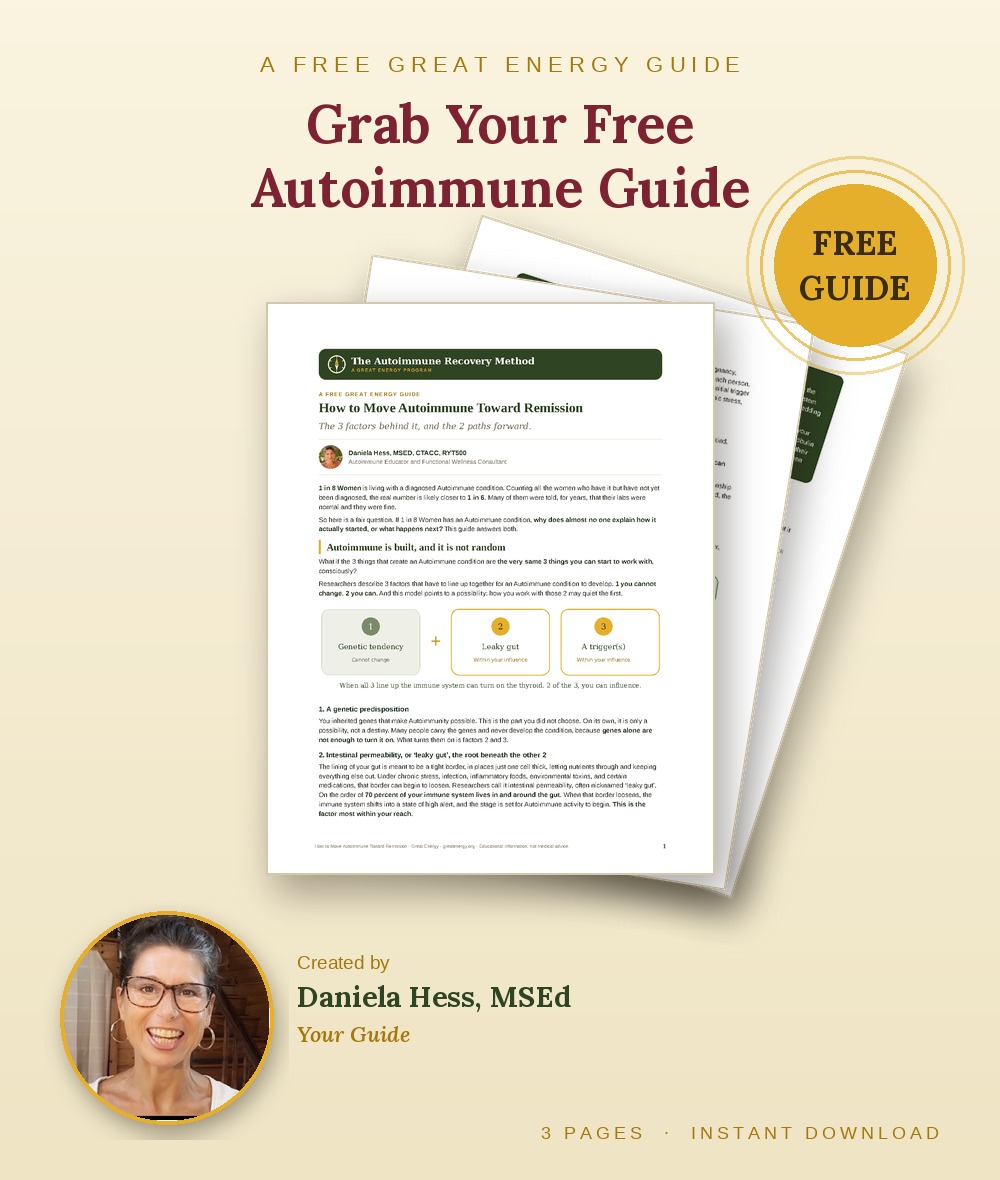
How to Move Autoimmune Toward Remission
The 3 factors behind an Autoimmune condition and the 2 paths forward, free, straight to your inbox.
No spam. Unsubscribe anytime.
Your guide is on its way. You can also open it now (PDF).
Prefer to work together directly? Daniela offers a 1-on-1 labs review and functional wellness session for women with an Autoimmune diagnosis.
See how to work with DanielaRelated reading
How AIP works on the gut Gut & ImmunePolyautoimmunity: why one autoimmune condition often becomes more than one Gut & ImmuneLeaky gut: what it is and why it matters for autoimmunity Gut & ImmuneAutoimmunity explained: what the immune system is doing and why Gut & ImmuneIntestinal permeability and autoimmunity: the gate that should be closed Gut & Immune
About the author
Daniela Hess, MSEd, is the co-founder of Great Energy and the founder of the Autoimmune Recovery Method. She is an Autoimmune Educator and Coach, a Functional Wellness Consultant, and a certified AIP coach. She lives and thrives with Hashimoto’s and hypothyroidism, and she teaches the science and the Soul of moving an autoimmune condition toward Remission. She is not a licensed medical provider and does not diagnose, treat, or prescribe. Everything here is for education, not medical advice.
With Great Energy & Great Love,
Daniela
From the glossary
Words in this article you can look up. Tap or click a term to learn what it means.
Autoimmune diseaseCrohn's diseaseGut motilityGut-brain axisHypothyroidismImmune systemInflammationMultiple sclerosisOral toleranceRheumatoid arthritisShort-chain fatty acidsTight junctionsType 1 diabetesUlcerative colitis