Foundations & staples
A dairy-free cream cheese you culture yourself
Foundations & staples · serves 3 · 1 to 2 hours
Core AIP · Elimination phase compliant
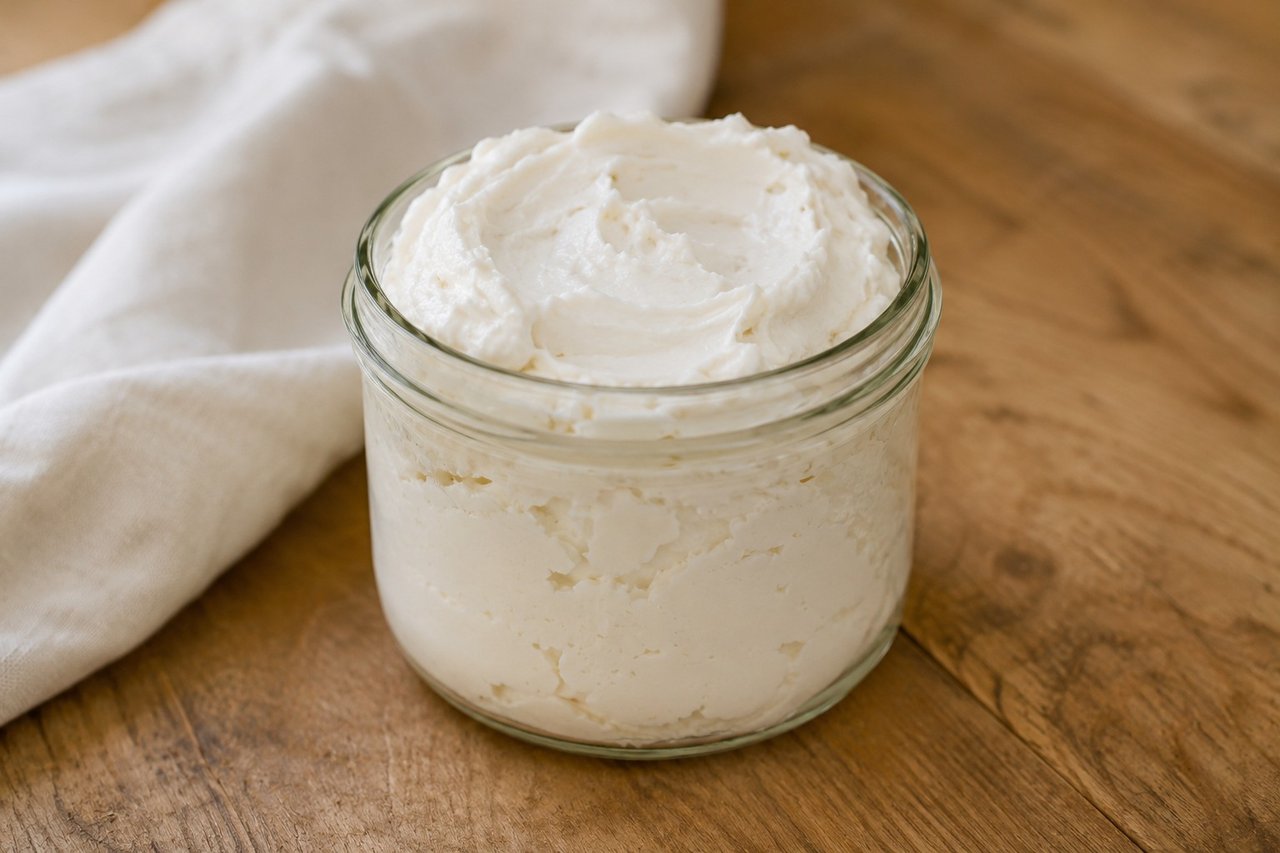
A spreadable, tangy something on the plate is a real pleasure, and this cultured coconut spread delivers exactly that without any dairy at all. It is called a cream cheese for what it stands in for, not for what is in it. There is no cheese here, only coconut cream, a fermenting culture, and time.
The tang comes from real fermentation. You drain the thick cream from coconut milk, mix in the powder from a probiotic capsule, and let it sit in a warm spot for about 1 day. The cultures do the work, turning a bland cream into something bright and a little sour, the way real cheese gets its flavor. A small bit of maple syrup feeds the microbes during fermentation rather than sweetening the final spread. Fermented foods are studied for their role in supporting a varied gut microbiome, a claim worth holding gently rather than overstating.
There is a quiet pleasure in making something live on your own counter. You set it up, you walk away, and a day later it has become something else entirely. Spread it on the sweet potato crackers at A grain-free cracker with a real crunch, on plantain chips, or on raw vegetables, and enjoy it often.
Ingredients
- 2 cans (13.5 oz each) refrigerated coconut milk
- 1 teaspoon maple syrup (feeds the culture; omit if you omit the probiotic)
- The powder from 1 probiotic capsule (the source used roughly 30 billion cultures; this varies by brand)
Method
Chill the coconut milk cans so the cream separates from the liquid. Scoop off the solid cream and keep the leftover liquid for another use.
Squeeze the cream through cheesecloth set over a bowl, pressing out the extra liquid until what is left holds together like a soft cheese.
Stir the maple syrup and the probiotic powder into the drained cream. Transfer it to a sterile lidded glass jar and hold it in a warm spot for about 24 hours to culture.
Taste as it goes, roughly every eight hours, because it sours quickly once it passes the day mark. When the tang is where you want it, move it to the refrigerator to firm up.
Serve closer to room temperature, where it spreads. Coconut cream sets hard when cold, and if it was not drained well enough it can be runny at room temperature. It keeps a few days refrigerated and freezes well.
*Adapted from a-clean-plate*
Nutrition
Estimated per serving (serves 3), calculated from the ingredients. Actual values vary with brands, sizes, and how much sauce or dressing you use.
How to Move Autoimmune Toward Remission
The 3 factors behind an Autoimmune condition and the 2 paths forward, free, straight to your inbox.
No spam. Unsubscribe anytime.
Your guide is on its way. You can also open it now (PDF).

Further reading
Daniela Hess, MSEd, is a co-founder of Great Energy and an Autoimmune Educator and Functional Wellness Consultant who lives and thrives with Hashimoto’s. She is not a licensed medical provider.
More recipes with Coconut milk or Maple syrup
A breakfast that is not dinner again: egg-free cake you can slice all weekA warm baked apple for the cold monthsAIP Coconut Maple Vanilla Cake (Core Elimination compliant)AIP Light Chocolate-Style Cake with CarobAIP Pumpkin Pie Bars with a Tigernut CrustAIP dairy-free strawberry basil balsamic ice cream from roasted berries and coconut milkCaffeine-Free Pumpkin Spice LatteCarob truffles for the chocolate-shaped cravingFrom the glossary
Words in this recipe you can look up. Tap or click a term to learn what it means.
Coconut creamMicrobiomePlantainProbioticEvery ingredient in this recipe is on the Core Autoimmune Protocol food list.
Download the Core Food List (PDF) Explore the food list