Mains
Filipino Pork Adobo - AIP elimination compliant
Mains · serves 4 · 1-2-hours
Core AIP · Elimination phase compliant
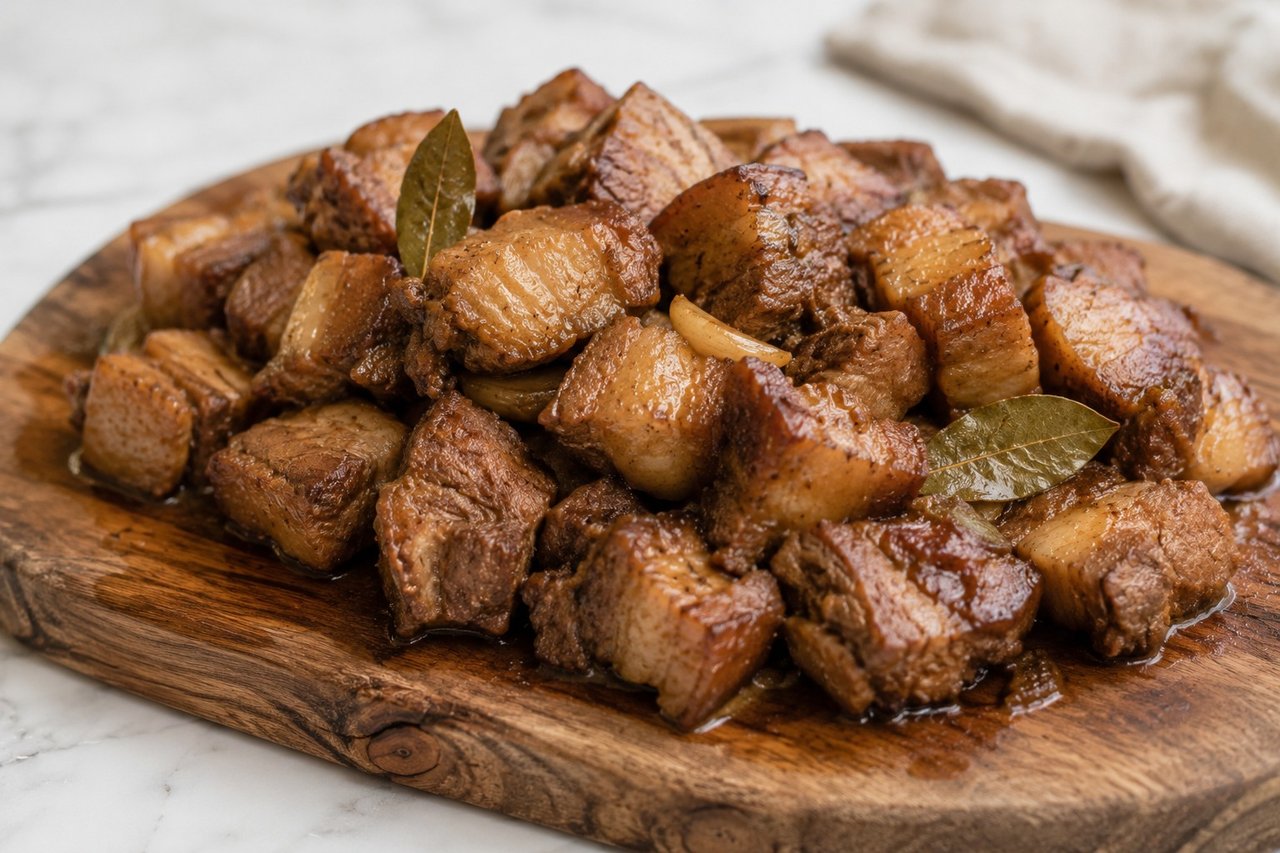
Adobo rewards exactly the kind of patience this phase keeps asking of you. Pork belly and shoulder marinate, then braise low in vinegar and garlic until tender, then roast until the outside turns deep and caramelized, then the braising liquid reduces into a sauce on its own. None of it is hard. All of it takes an afternoon, one step handed off to the next while you do something else.
That patience pays back in the meat itself. Pork shoulder is a real source of zinc, involved in the immune regulation this protocol is quietly working toward, and belly's fat keeps the whole dish from drying out during that long braise and roast. Garlic, cooked down through both stages, mellows into something closer to sweet than sharp.
The traditional version leans on black peppercorns, a seed spice AIP elimination excludes, so this loses a little heat. It does not lose the thing that makes adobo worth making: something braised slowly, finished with care, and served over cauliflower rice or roasted sweet potato while it is still warm.
Ingredients
- 1 1/2 pounds pork belly, cut into 2-inch chunks
- 1 1/2 pounds pork shoulder, cut into 2-inch chunks
- 1/3 cup coconut aminos (AIP swap: replaces tamari or soy sauce, which are excluded legume products)
- 10 cloves garlic, coarsely chopped
- 5 bay leaves
- 2/3 cup cane vinegar or white vinegar (coconut vinegar is an equally good AIP-compliant option)
- 1 cup water
AIP notes: Black peppercorns are excluded on AIP elimination (a seed spice). Omit entirely. Soy sauce and tamari are excluded (soy is a legume); coconut aminos is the direct AIP-compliant replacement. If you cannot find cane vinegar, apple cider vinegar or coconut vinegar are good alternatives that are well within AIP guidelines.
Method
- In a large oven-safe pot or Dutch oven, combine the pork belly, pork shoulder, coconut aminos, and garlic. Toss to coat. Allow to marinate for at least 30 minutes, or up to several hours in the refrigerator if time allows.
- Add the bay leaves, vinegar, and water to the pot with the marinated pork.
- Bring to a boil over medium-high heat, then reduce to a gentle simmer. Cover and cook for 45 minutes to 1 hour, until the pork is very tender when pierced with a fork.
- Preheat the oven to 400 F.
- Remove the pork from the braising liquid with tongs and arrange the pieces on a baking sheet or in an oven-safe skillet. Reserve the braising liquid in the pot.
- Roast the pork at 400 F for 20 to 25 minutes, turning once halfway through, until the outsides are deep golden and slightly caramelized.
- While the pork roasts, bring the reserved braising liquid to a boil over medium-high heat. Simmer uncovered for 10 to 15 minutes until reduced by roughly half and slightly thickened. Discard the bay leaves. Taste and adjust with a little more coconut aminos or vinegar as needed.
- Transfer the roasted pork to a serving platter. Pour the reduced sauce over or serve it alongside.
- Serve over steamed cauliflower rice or with roasted sweet potato.
*Adapted from thecuriouscoconut.com*

How to Move Autoimmune Toward Remission
The 3 factors behind an Autoimmune condition and the 2 paths forward, free, straight to your inbox.
No spam. Unsubscribe anytime.
Your guide is on its way. You can also open it now (PDF).

Further reading
Daniela Hess, MSEd, is a co-founder of Great Energy and an Autoimmune Educator and Functional Wellness Consultant who lives and thrives with Hashimoto’s. She is not a licensed medical provider.
More recipes with Pork, Garlic, or Clove
A Fast Pork Stir-Fry for the Nights You Have Nothing LeftAIP Italian meatballs - yuca-bound, egg-free, pan-fry or air fryerAIP Italian pork and kale soup - Instant Pot, hearty, gut-supportiveAIP grilled pork chops with cherry compote - herb-marinated chops, zinc sourceAIP herb-rubbed pork tenderloin with warm blueberry-balsamic-shallot sauceAIP honey garlic pulled pork - Instant Pot slow-cook or high-pressure, batch proteinAIP spaghetti squash stir-fry bowl with mushrooms, ginger, coconut aminos, and porkBBQ Pulled Pork: Carolina flavor without the tomatoFrom the glossary
Words in this recipe you can look up. Tap or click a term to learn what it means.
AdoboBraiseCoconut aminosCoconut vinegarLegumeMarinateReduceTamariZincEvery ingredient in this recipe is on the Core Autoimmune Protocol food list.
Download the Core Food List (PDF) Explore the food list