Mains
sheet-pan pork tenderloin with fennel, cauliflower, and grapes
Mains · serves 4 · 30-60 min
Core AIP · Elimination phase compliant
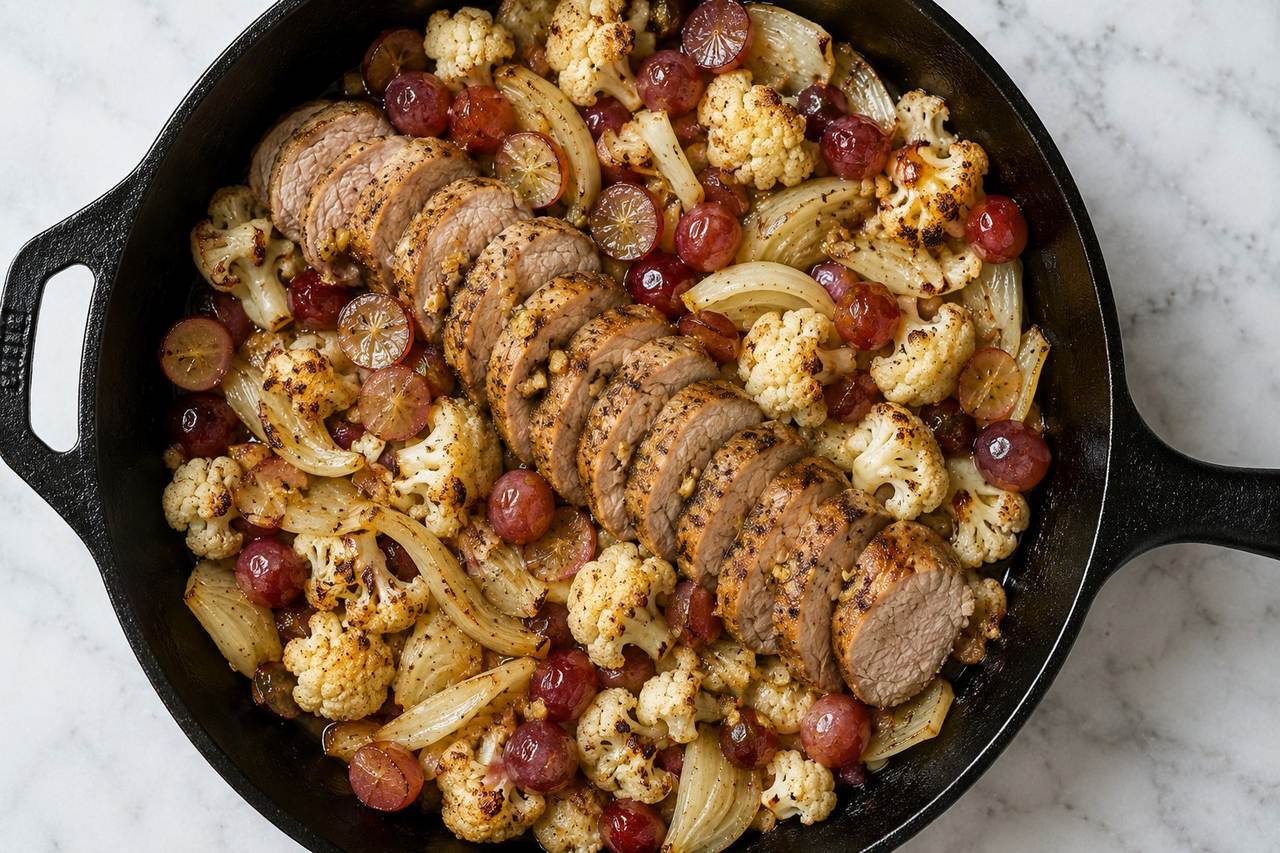
Fennel rarely shows up in a home kitchen before AIP asks you to reach for it, and learning a new vegetable takes real energy, the kind that symptoms and appointments already pull from you all week. This dish keeps the learning curve short: slice the bulb into wedges, scatter it on the pan, and let the oven finish what you started.
Pork tenderloin is a lean source of B vitamins that help your body turn food into usable energy, a real thing to name when fatigue keeps showing up uninvited. While you pat the meat dry and season it, take a moment to register where it came from: a real animal, raised to become this meal, not just an ingredient on a list.
Let the grapes roast until they blister and the fennel turns soft at the edges. Fan the sliced pork over the vegetables, spoon the pan juices over the top, and sit down to a plate that looks like more effort than it took.
Ingredients
For the vegetables:
- 1 head cauliflower, or 4 cups florets
- 1 bulb fennel
- 2 cups seedless grapes
- 2 tbsp olive oil
- 1/2 tsp sea salt
- 1/2 tsp garlic powder, or 1 minced garlic clove
For the pork tenderloin:
- 2 lb pork tenderloin
- 1/3 cup coconut sugar, or maple sugar or honey
- 2 cloves garlic, minced
- 2 tbsp coconut aminos
- 2 tbsp balsamic vinegar
Method
Heat the oven to 425F and line a sheet pan.
Stir the coconut sugar, minced garlic, coconut aminos, and balsamic vinegar together in a small bowl to make the glaze. Pat the pork dry and brush it all over with about half the glaze.
Cut the cauliflower into florets and slice the fennel bulb. Spread the cauliflower, fennel, and grapes across the sheet pan. Toss them with the olive oil, salt, and garlic powder, then push them to the edges to leave room in the center. Set the glazed pork in the middle.
Roast for 20 to 25 minutes, brushing the pork with the remaining glaze once partway through, until the pork is cooked through to a safe internal temperature and the vegetables are tender and lightly caramelized. Let the pork rest a few minutes, then slice and serve it with the roasted vegetables and grapes.
*Adapted from thrivingautoimmune.com*
Nutrition
Estimated per serving (serves 4), calculated from the ingredients. Actual values vary with brands, sizes, and how much sauce or dressing you use.
How to Move Autoimmune Toward Remission
The 3 factors behind an Autoimmune condition and the 2 paths forward, free, straight to your inbox.
No spam. Unsubscribe anytime.
Your guide is on its way. You can also open it now (PDF).

Further reading
Daniela Hess, MSEd, is a co-founder of Great Energy and an Autoimmune Educator and Functional Wellness Consultant who lives and thrives with Hashimoto’s. She is not a licensed medical provider.
More recipes with Cauliflower, Fennel, or Grape
Dairy-free seafood chowder on bone brothQuick Shredded Chicken Provencal with Cauliflower Rice - AIP elimination compliantA Fast Pork Stir-Fry for the Nights You Have Nothing LeftA Hawaiian Comfort Bowl, Rebuilt for the ProtocolA Japanese beef bowl rebuilt over cauliflower riceA layered chicken salad you can make the night beforeA warm winter salad that earns its place at the holiday tableA warming curried chicken stew with cauliflower rice and mango, built on a seedless nightshade-free curry blendFrom the glossary
Words in this recipe you can look up. Tap or click a term to learn what it means.
B vitaminsCoconut aminosCoconut sugarFennelMaple sugarEvery ingredient in this recipe is on the Core Autoimmune Protocol food list.
Download the Core Food List (PDF) Explore the food list