Mains
Teriyaki salmon with coconut aminos glaze
Mains · serves 4
Core AIP · Elimination phase compliant
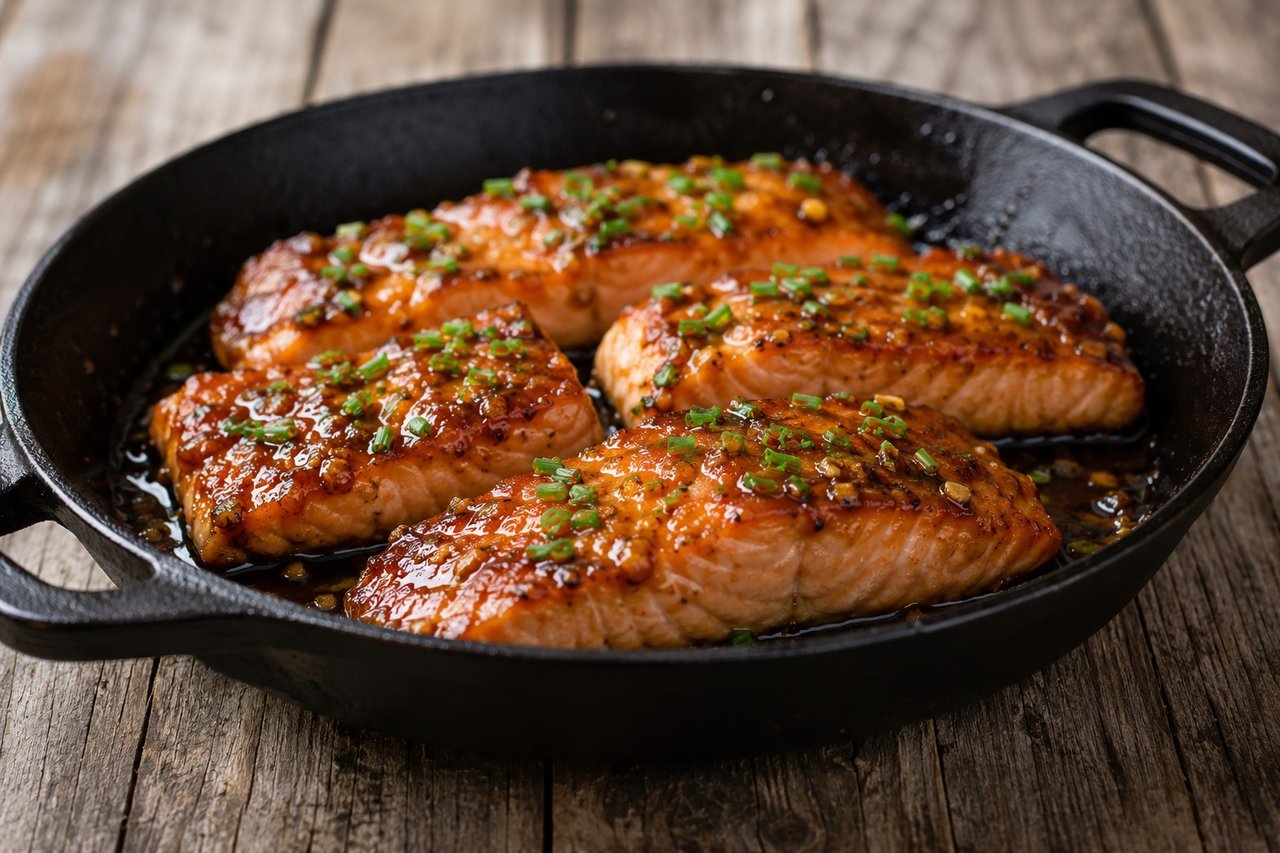
There is exactly one moment of real skill in this recipe: watching the glaze thicken in the pan and pulling the salmon the second before it tips from caramelized into burnt. Everything before that, mixing the marinade, letting the fish sit in it, takes almost no attention at all.
The omega-3 fats in salmon are the real reason this dish belongs in the rotation. They are tied to a slower, better-regulated inflammatory response over months of consistent eating, not from any single dinner. Selenium comes along for the ride too, in a smaller but real amount, one more argument for oily fish on an AIP plate.
Wild-caught salmon has a deeper color and a different fat marbling than farmed, visible the moment you unwrap it. Scatter the chives over right as it comes off the heat, so they still smell sharp instead of wilted, and serve it the moment the glaze stops bubbling, before it has any chance to cool.
Ingredients
- 2 salmon fillets, wild-caught where possible
Marinade and glaze
- 1/4 cup coconut aminos
- 1 tablespoon honey
- 2 teaspoons apple cider vinegar
- 1 teaspoon fish sauce (verify label: no gluten or non-AIP additives)
- 2 garlic cloves, pressed
- 1 teaspoon fresh ginger, finely grated
- 1 tablespoon fresh chives, finely chopped
Method
Combine the coconut aminos, honey, apple cider vinegar, fish sauce, garlic, and ginger in a small bowl. Stir until the honey is fully dissolved.
Place the salmon fillets in a shallow dish. Pour the marinade over them and turn to coat all sides. Allow to marinate for at least 15 minutes at room temperature, or up to 2 hours covered in the refrigerator.
Heat a skillet over medium-high heat. Remove the salmon from the marinade, reserving all the liquid. Place the fillets skin-side up in the hot pan. Cook for 3 to 4 minutes until a golden crust forms on the flesh side.
Flip the salmon carefully. Pour the reserved marinade into the pan. Cook for another 3 to 4 minutes, basting occasionally as the glaze thickens and reduces. The salmon is done when it flakes easily at the thickest point.
Scatter the fresh chives over the top and serve immediately.
Oven variation
Preheat the oven to 400 F (200 C). Place the marinated salmon on a parchment-lined baking sheet. Bake for 12 to 15 minutes depending on thickness. While it bakes, pour the reserved marinade into a small saucepan and reduce over medium heat for 2 to 3 minutes until slightly thickened. Spoon over the cooked fish and finish with chives.
Air fryer variation
Preheat the air fryer to 400 F (200 C). Place the marinated salmon skin-side down in the basket. Cook for 8 to 10 minutes depending on thickness. While the salmon cooks, reduce the reserved marinade in a small saucepan on the stovetop. Drizzle over before serving and finish with chives.
*Adapted from lichenpaleolovingaip.com*
***
Nutrition
Estimated per serving (serves 4), calculated from the ingredients. Actual values vary with brands, sizes, and how much sauce or dressing you use.
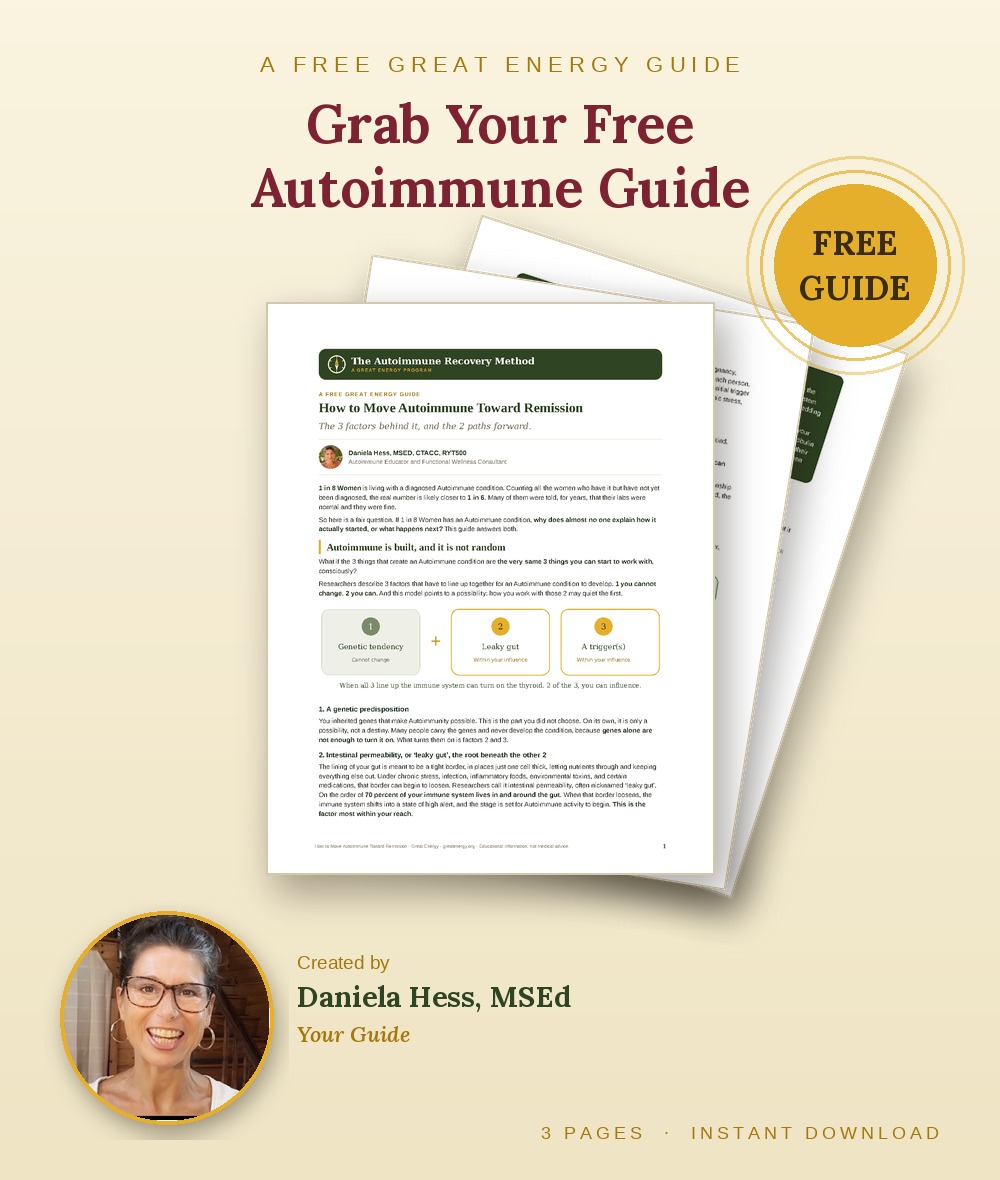
How to Move Autoimmune Toward Remission
The 3 factors behind an Autoimmune condition and the 2 paths forward, free, straight to your inbox.
No spam. Unsubscribe anytime.
Your guide is on its way. You can also open it now (PDF).

Further reading
Daniela Hess, MSEd, is a co-founder of Great Energy and an Autoimmune Educator and Functional Wellness Consultant who lives and thrives with Hashimoto’s. She is not a licensed medical provider.
More recipes with Salmon
AIP Chicken Salad LunchAIP air fryer salmon - fast weeknight omega-3 mainAIP egg-free salmon patties made with canned salmon, pumpkin, coconut flour, tapioca starch, and AIP-compliant pestoAIP ginger-lime baked salmon over zucchini with coconut aminos marinadeAIP one-pan salmon and rainbow chard with garlic and tarragonAIP roasted veggie and salmon bowls - roasted roots, baked salmon, omega-3 sourceAIP salmon patties pan-fried with tigernut butter, grated carrot, pumpkin, and gelatin as egg replacementAIP salmon stew with rutabaga, leeks, and dill - root vegetable stew finished with salmon and lemonFrom the glossary
Words in this recipe you can look up. Tap or click a term to learn what it means.
Coconut aminosFish sauceGlutenMarinateOmega-3 fatsReduceSeleniumEvery ingredient in this recipe is on the Core Autoimmune Protocol food list.
Download the Core Food List (PDF) Explore the food list