Sauces, condiments & dressings
AIP caramel sauce: a drizzle made from coconut sugar and coconut cream
Sauces, condiments & dressings · serves 8 · under-15 min
Core AIP · Elimination phase compliant
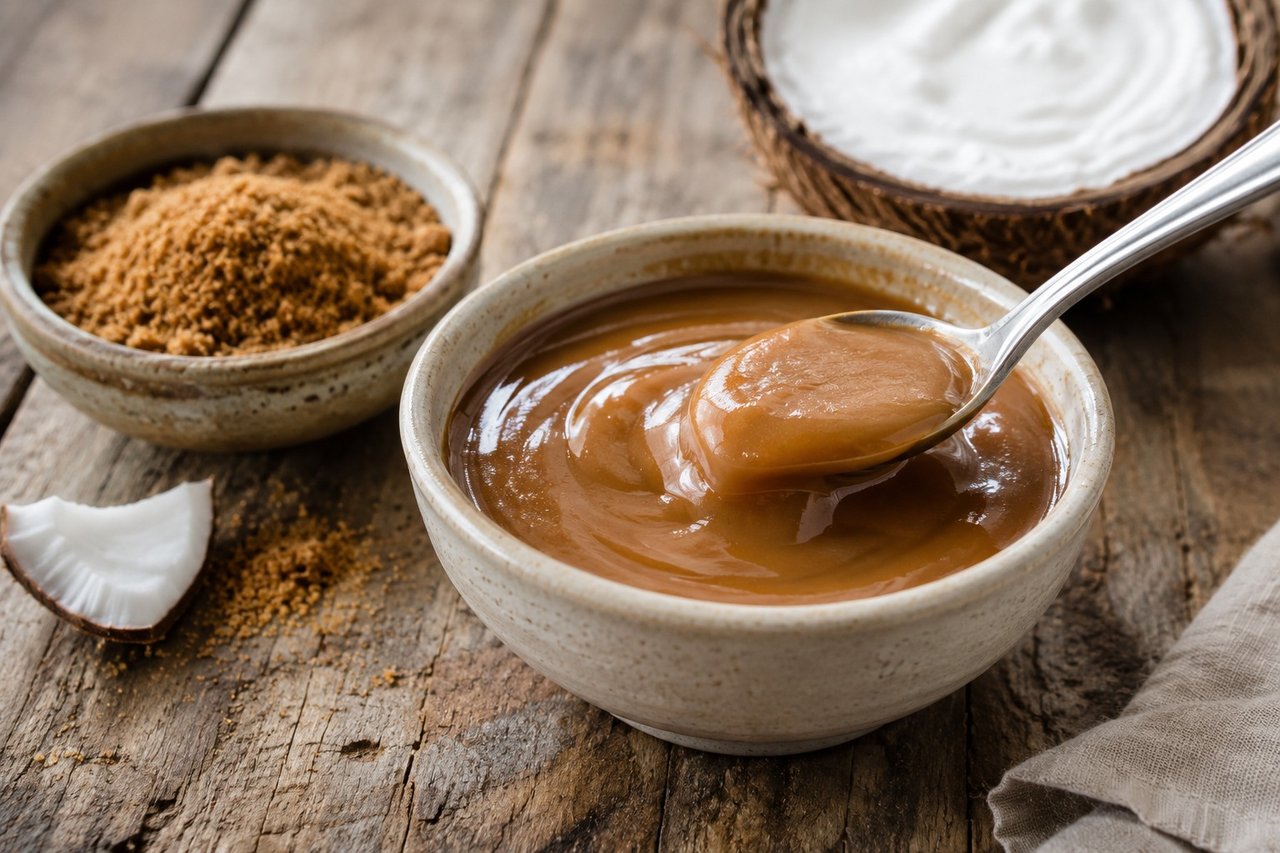
Caramel sauce used to appear in a jar labeled AIP-compliant, but that product is no longer available. This is the from-scratch version, and it takes about 10 minutes on the stovetop.
Coconut sugar has a lower glycemic index than refined cane sugar (approximately 35 vs. 65 on the glycemic index scale) and retains small amounts of iron, zinc, calcium, and potassium that are stripped from refined white sugar during processing. It is not a health food in large quantities, but in a sauce used by the tablespoon it is the better choice. Blood sugar spikes drive cortisol release, which activates inflammatory pathways - a relevant cycle for people managing autoimmune conditions. Using a lower-glycemic sweetener in recipes like this one is a small reduction in that upstream pressure.
The ingredient list is short: coconut sugar, full-fat coconut cream, coconut oil, and sea salt. The coconut sugar caramelizes the same way cane sugar does, and the coconut cream gives the sauce its body and richness. The result is a dark, glossy drizzle with a slightly nutty, butterscotch-adjacent flavor, different from a dairy caramel but genuinely good on its own terms.
A few things to know before you start. Coconut cream and coconut sugar both vary by brand, so the first time you make this, watch the heat carefully and taste as you go. The sauce thickens as it cools, so pull it off the heat while it still looks slightly thin, then let it set at room temperature before drizzling. If it hardens too much, warm it gently in a small saucepan with a splash of coconut cream or water.
This sauce is a treat, not a staple. The coconut sugar keeps the amount in a reasonable range per serving, and a small drizzle is what the recipe asks for. Keep it on the table for holiday moments, upside-down cakes (see The cake you flip to reveal autumn), fresh fruit, and the occasional sweet potato dessert.
Ingredients
- 1/2 cup coconut sugar
- 1/2 cup full-fat coconut cream (not coconut milk; use the thick cream from a can that has been chilled, or use a can labeled coconut cream)
- 1 tbsp coconut oil
- 1/4 tsp sea salt
- Optional: 1/4 tsp vanilla powder (not extract; vanilla extract contains alcohol)
Method
In a small, heavy saucepan over medium heat, combine the coconut sugar and coconut oil. Stir together and let them melt. The mixture will bubble and darken quickly once it starts moving. Keep stirring and watch the heat - this is a small amount and it can scorch.
When the sugar is fully melted and beginning to smell nutty and deeply sweet, about 2 to 3 minutes, remove the pan from the heat and carefully pour in the coconut cream. The mixture will sputter and steam. Stir quickly and return to low heat. The sauce will look grainy or separated for a moment, then smooth out as you stir. Keep it over low heat, stirring, for another 2 to 3 minutes until smooth and glossy.
Stir in the salt and vanilla powder if using. Let it cool for 5 minutes in the pan, then transfer to a glass jar or small bowl. The sauce will thicken as it sits.
Yield: About 3/4 cup.
How to use it
- Drizzle over the warm autumn upside-down cake before serving (see The cake you flip to reveal autumn)
- Spoon over roasted pears or baked apples
- Drizzle over the maple caramel chews for a stickier finish (see Maple Caramel Chews)
- Serve alongside AIP shortbread or coconut-flour cookies as a dipping sauce
- Swirl into a dish of coconut cream ice cream or a warm smoothie bowl
Troubleshooting
If the sauce seizes up (goes grainy and stiff): return to low heat, add 1 to 2 tbsp of coconut cream, and stir steadily until it loosens and smooths out again.
If the sauce is too thin after cooling: return it to the saucepan and simmer over low heat for another 2 to 3 minutes to reduce.
If it tastes slightly bitter: the sugar went too dark. Start over with lower heat and pull it off a few seconds earlier next time.
Storage
Refrigerator: keeps for up to 2 weeks in a sealed glass jar. The sauce will solidify when chilled. To re-liquefy, set the jar in a bowl of warm water for a few minutes or warm it gently in a small saucepan over low heat with a splash of coconut cream.
*Original ARM recipe*
Nutrition
Estimated per serving (serves 8), calculated from the ingredients. Actual values vary with brands, sizes, and how much sauce or dressing you use.

How to Move Autoimmune Toward Remission
The 3 factors behind an Autoimmune condition and the 2 paths forward, free, straight to your inbox.
No spam. Unsubscribe anytime.
Your guide is on its way. You can also open it now (PDF).

Further reading
Daniela Hess, MSEd, is a co-founder of Great Energy and an Autoimmune Educator and Functional Wellness Consultant who lives and thrives with Hashimoto’s. She is not a licensed medical provider.
More recipes with Coconut cream, Vanilla, or Coconut sugar
AIP Carob Chip CookiesAIP Cassava Flour PancakesAIP GingersnapsAIP Pumpkin PieAIP apple crumble - oat-free, grain-free, built on a three-flour blendAIP coconut whipped cream - dairy-free whipped topping from coconut cream, honey, and vanillaAir fryer baked apples with ghee or coconut oil, cinnamon, raisins, and shredded coconut (AIP swap for almonds), served with coconut cream or coconut ice creamBlackberry Lemon Panna CottaFrom the glossary
Words in this recipe you can look up. Tap or click a term to learn what it means.
Blood sugarCoconut creamCoconut sugarCortisolPotassiumReduceReductionZincEvery ingredient in this recipe is on the Core Autoimmune Protocol food list.
Download the Core Food List (PDF) Explore the food list