Sauces, condiments & dressings
AIP teriyaki sauce: the Asian pantry staple, rebuilt without soy or sugar
Sauces, condiments & dressings · serves 8 · under-15 min
Core AIP · Elimination phase compliant
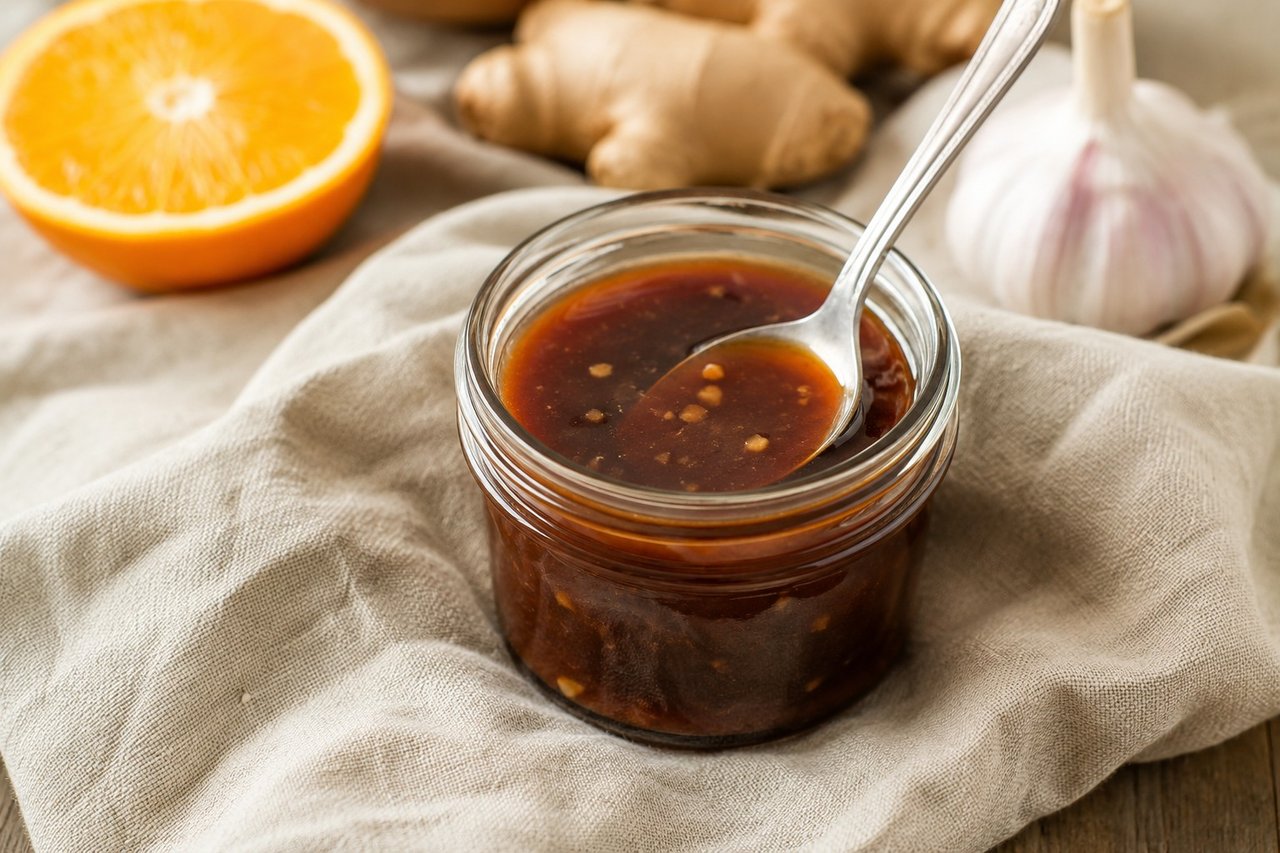
The bottles in the Asian aisle are built on soy, refined sugar, and often fermented ingredients the elimination phase sets aside. This version covers the same ground in 5 minutes with a handful of things you can keep in the pantry.
Ginger is carrying more than heat here. Gingerols, its active compounds, turn up repeatedly in research on inflammatory signaling. A sauce you reach for often is a low-effort way to get ginger into the week rather than remembering it once.
Coconut aminos carry the salty, slightly sweet depth that soy sauce once did, without the soy. Maple syrup brings modest sweetness. A squeeze of orange lifts the whole thing. Arrowroot thickens the sauce as it cools into the glaze that makes teriyaki feel like takeout. Fresh garlic and ginger round it out.
Keep a jar in the refrigerator. Brush it over salmon before roasting, stir it into a chicken and cauliflower rice bowl, or use it as a quick marinade for pork. It stores for a week and takes seconds to reheat into a glossy glaze.
Ingredients
- 1/2 cup coconut aminos
- 1/4 cup maple syrup (start with 3 tbsp and add more to taste)
- 2 tsp fresh orange juice
- 1 tbsp apple cider vinegar
- 2 tsp garlic, minced
- 1 tsp fresh ginger, minced
- Pinch of sea salt
- 1/2 tsp arrowroot flour, dissolved in 1 tsp cold water
AIP note: omit the sesame oil. Sesame is a seed, excluded during the elimination phase. The sauce is complete without it.
Method
Combine the coconut aminos, maple syrup, orange juice, apple cider vinegar, garlic, ginger, and salt in a small saucepan. Whisk together and bring to a low boil over medium heat, stirring.
Once it reaches a boil, reduce the heat to a simmer and cook for 2 to 3 minutes to let the garlic and ginger bloom into the liquid. Remove from the heat and stir in the dissolved arrowroot, then return to the heat for 30 to 60 seconds, stirring, until the sauce thickens and turns glossy.
Taste and adjust: more maple for sweetness, more ACV for tang, more salt if it needs depth.
Yield: About 3/4 cup.
How to use it
- Brush over salmon fillets before roasting at 400 F for 12 to 15 minutes
- Toss with cooked chicken and cauliflower rice for a teriyaki bowl
- Use as a marinade for pork tenderloin (30 minutes to overnight)
- Drizzle over roasted sweet potato and greens
- Stir 2 to 3 tbsp into stir-fried vegetables at the end of cooking
Storage
Refrigerator: up to 1 week in a sealed glass jar. The sauce will thicken as it chills. Warm it gently in a small saucepan with a splash of water or coconut aminos to loosen.
*Adapted from autoimmunewellness.com/teriyaki-sauce/ by Kris King*
Nutrition
Estimated per serving (serves 8), calculated from the ingredients. Actual values vary with brands, sizes, and how much sauce or dressing you use.

How to Move Autoimmune Toward Remission
The 3 factors behind an Autoimmune condition and the 2 paths forward, free, straight to your inbox.
No spam. Unsubscribe anytime.
Your guide is on its way. You can also open it now (PDF).

Further reading
Daniela Hess, MSEd, is a co-founder of Great Energy and an Autoimmune Educator and Functional Wellness Consultant who lives and thrives with Hashimoto’s. She is not a licensed medical provider.
More recipes with Orange, Garlic, or Ginger
AIP herb-rubbed pork tenderloin with warm blueberry-balsamic-shallot sauceButternut squash red curryCurry-Style Beef and Vegetable SoupKorean Beef Bowls - AIP, paleo, sesame-freeSlow Cooker Teriyaki Chicken: a soy-free take on the bowl you missSweet Potato and Carrot Soup with Turmeric and Ginger - AIP elimination compliantslow-braised beef brisket with a nightshade-free nomato BBQ sauce5-Veggie Beef Stir-FryFrom the glossary
Words in this recipe you can look up. Tap or click a term to learn what it means.
ArrowrootCoconut aminosGingerolsReduceEvery ingredient in this recipe is on the Core Autoimmune Protocol food list.
Download the Core Food List (PDF) Explore the food list