Sauces, condiments & dressings
Fresh dill vinaigrette: the herb dressing that makes poached fish worth eating
Sauces, condiments & dressings · serves 6 · under-15 min
Core AIP · Elimination phase compliant
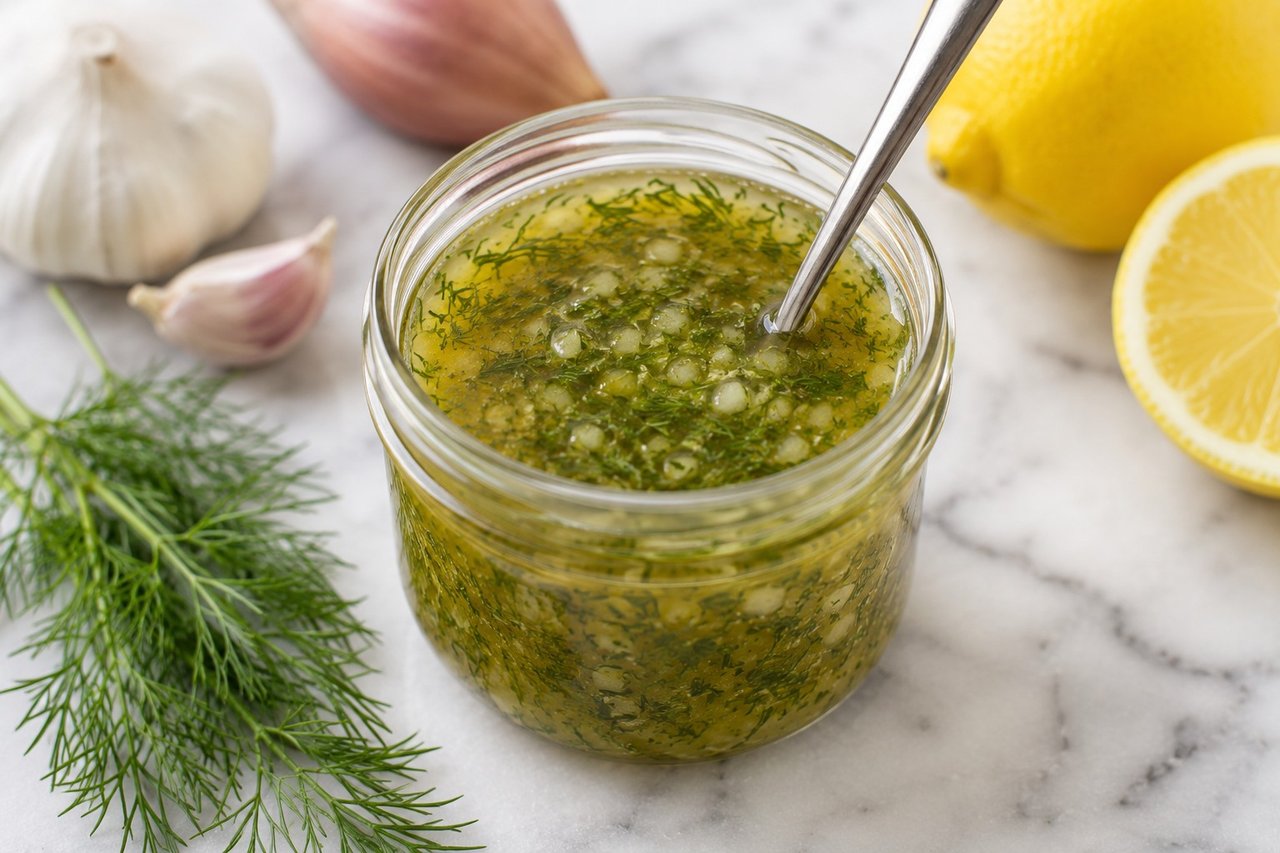
Dill is one of the more underused herbs in AIP cooking. It is bright, slightly anise-adjacent, and has a particular affinity for fish and cucumbers - it makes both taste more like themselves. This vinaigrette uses fresh dill, not dried, which matters; dried dill is a completely different and significantly less interesting ingredient. Fresh dill is also a source of flavonoids including kaempferol and vicenin, which have documented anti-inflammatory properties in vitro. The dill's volatile aromatic compounds are best expressed fresh, and the olive oil in the dressing carries them onto the food more effectively than a water-based dressing would.
The dressing uses lemon juice as the primary acid with a small amount of apple cider vinegar (replacing the white wine vinegar in the original, which is not AIP-elimination-compliant). The shallot and garlic are used raw and provide a mild heat that balances the sweetness from the honey. A single teaspoon of honey is enough - the dressing should taste bright and herbaceous, not sweet.
This vinaigrette is worth knowing because it is useful in a way most dressings are not: it makes poached fish taste like a deliberate meal. Poached salmon is mild and can be flat; the dill vinaigrette is everything the fish is not, and together they work.
Ingredients
- 1/4 cup extra-virgin olive oil
- 1 tbsp fresh lemon juice
- 2 tsp apple cider vinegar (replacing white wine vinegar for AIP)
- 2 tbsp fresh dill, finely chopped (not dried)
- 2 tsp shallot, minced (about 1/2 a small shallot)
- 1 tsp raw honey
- 1 clove garlic, pressed or finely minced
- 1/4 tsp fine sea salt
Yield: About 1/3 cup, dressing 4 to 6 portions of salad or fish.
Method
Combine the lemon juice, apple cider vinegar, minced shallot, garlic, honey, and salt in a small bowl. Whisk to combine and dissolve the honey.
Drizzle in the olive oil while whisking to form a loose emulsion. Stir in the fresh dill.
Taste and adjust - more lemon if it needs brightness, more salt if it tastes flat, a tiny additional drop of honey if the vinegar is too sharp.
The dressing will not stay fully emulsified; whisk or shake before each use.
Note on shallot: Raw shallot can be sharp. If you are sensitive to raw alliums, mince the shallot and let it sit in the lemon juice and ACV for 5 minutes before adding the oil - it softens the edge significantly.
How to use it
- Drizzle over poached salmon over a bed of romaine and cucumber (the original pairing)
- Use as a dressing for a spinach, celery, and avocado salad
- Toss with cold leftover salmon and cucumber for a quick lunch bowl
- Pour over roasted asparagus and leeks as a warm-dish dressing
- Use as a marinade for salmon fillets (coat and refrigerate 1 hour before roasting)
- Stir into mashed white sweet potato for a herbed side
Storage
Refrigerator: up to 4 days in a sealed jar. The dill will darken slightly but the flavor holds. Bring to room temperature before using.
*Adapted from autoimmunewellness.com/poached-salmon-salad-dill-vinaigrette/ by Alaena Haber*
Nutrition
Estimated per serving (serves 6), calculated from the ingredients. Actual values vary with brands, sizes, and how much sauce or dressing you use.
How to Move Autoimmune Toward Remission
The 3 factors behind an Autoimmune condition and the 2 paths forward, free, straight to your inbox.
No spam. Unsubscribe anytime.
Your guide is on its way. You can also open it now (PDF).

Further reading
Daniela Hess, MSEd, is a co-founder of Great Energy and an Autoimmune Educator and Functional Wellness Consultant who lives and thrives with Hashimoto’s. She is not a licensed medical provider.
More recipes with Lemon, Shallot, or Garlic
AIP garlic and herb lamb riblets - rubbed riblets pressure-cooked then broiled, with a herb and caper sauceAIP herb-rubbed pork tenderloin with warm blueberry-balsamic-shallot sauceAn AIP chicken makhani that brings curry back to the tableChicken tikka masala without the nightshades: warm, rich, and built for the elimination phase5-Veggie Beef Stir-FryA Make-Ahead Meal for the Days You Cannot CookA blended chicken and asparagus soup on a sweet potato base, finished with arugula, asparagus tips, and lemonA bright raw slaw of shredded carrot and radish tossed in a no-cook mint and turmeric pestoFrom the glossary
Words in this recipe you can look up. Tap or click a term to learn what it means.
ShallotEvery ingredient in this recipe is on the Core Autoimmune Protocol food list.
Download the Core Food List (PDF) Explore the food list