Mains
AIP Bibimbap
Mains · serves 4 · 1-2-hours
Core AIP · Elimination phase compliant
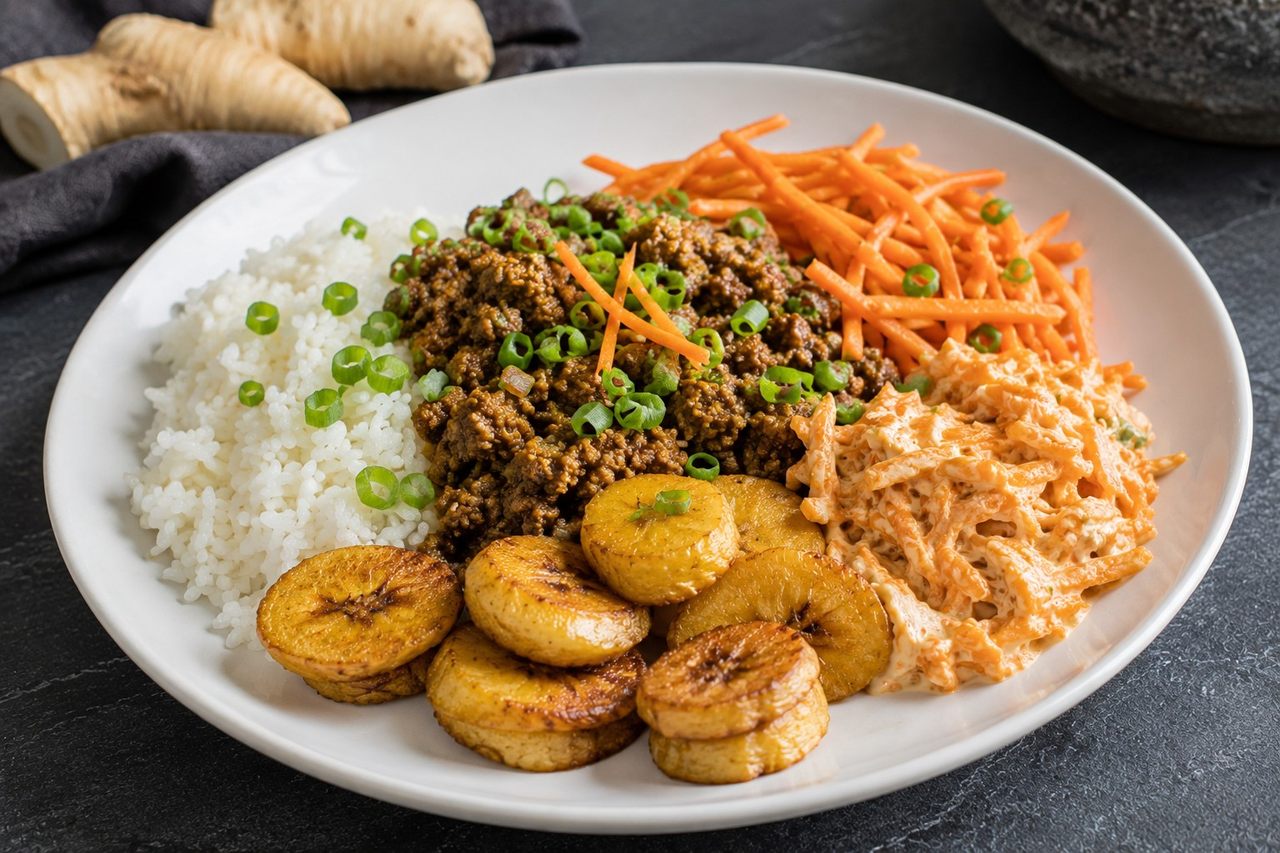
This bowl comes together in pieces - a sauce, a plantain base, and a handful of vegetables and beef, each sauteed on its own in the same skillet, rinsed and reused every time. Bibimbap asks more of your kitchen than a weeknight usually allows, and it is worth the trouble, because a meal built with that much intention teaches your nervous system something a bowl of plain rice and protein never will: that you are worth the extra effort.
Shiitake mushrooms are the quiet workhorse of this bowl. They contain beta-glucans, a type of polysaccharide linked in early research to a more regulated immune response, which is precisely the direction this whole protocol is aimed. The spinach and arugula folded in near the end add folate and vitamin K, both involved in how the body repairs tissue day to day.
Plantain, riced and browned, stands in for the traditional rice, and a carrot-coconut sauce with fresh horseradish stands in for the heat gochujang would normally bring, minus the chili and the soy. The ground sirloin cooks last, browned simply in garlic, ginger, and coconut aminos - another animal, fed well and used with care, folded into a bowl built from real attention.
Arrange each component in its own section before you mix it. That minute of arranging, before the bowl becomes one thing, is not wasted time. It is the beauty part of the meal, and it belongs to you.
Ingredients
For the beef:
- 1 lb ground sirloin
- 3 large cloves garlic, minced
- 1 T minced fresh ginger
- 1/3 cup coconut aminos
For the carrot-coconut sauce:
- 4.25 oz jar carrots (baby food puree)
- 1/2 cup coconut milk
- 2 T honey
- 2 t sea salt
- 1/2 t garlic powder
- 1/4 t turmeric
- 3 t finely grated horseradish root
For the plantain base:
- 3 green plantains, riced
For the vegetables:
- 3 cups julienned carrots
- 5 oz sliced shiitake mushrooms
- 1 bunch green onions, cut into 2-inch pieces
- 2 cups spinach, packed
- 2 cups arugula, packed
For cooking:
- 1/3 to 1/2 cup avocado oil or coconut oil, divided, for sauteing
Method
Start with the sauce, since it needs no cooking and can wait. Whisk together the carrot puree, coconut milk, honey, sea salt, garlic powder, turmeric, and grated horseradish root until smooth. Taste and adjust seasoning. Set aside.
For the plantain rice, peel the green plantains - score the skin lengthwise and pry it away in sections, then cut the plantain into chunks. Working in batches, pulse the chunks in a food processor until the texture resembles coarse rice. Alternatively, grate on the large holes of a box grater. Heat a thin layer of oil in a wide skillet over medium heat and cook the riced plantain for 4 to 5 minutes, stirring occasionally, until just tender and any excess moisture has evaporated. Season lightly with sea salt. Transfer to a bowl and keep warm.
Using the same skillet with a small amount of fresh oil each time, saute each vegetable component separately over medium-high heat until just cooked: the carrots for 3 to 4 minutes until tender-crisp, the shiitake mushrooms for 3 to 4 minutes until golden, the green onion pieces for 1 to 2 minutes until slightly softened, and the spinach and arugula together for about 1 minute until just wilted. Season each lightly with sea salt and set each aside in its own small bowl or section of a large platter.
For the beef, heat a thin layer of oil in the skillet over medium-high heat. Add the ground sirloin and cook, breaking it up, until browned and cooked through. Add the minced garlic and ginger and stir for another minute. Pour in the coconut aminos, stir to coat, and cook for 1 to 2 minutes more until the liquid reduces and the beef is glossy and fragrant.
Assemble the bowls: add a base of plantain rice, then arrange each vegetable component in its own section around the bowl. Spoon the beef in the center or alongside. Drizzle the carrot-coconut sauce generously over everything. Mix at the table before eating, pulling everything together into one unified bite.
*Adapted from Wendi's AIP Kitchen*
Nutrition
Estimated per serving (serves 4), calculated from the ingredients. Actual values vary with brands, sizes, and how much sauce or dressing you use.
How to Move Autoimmune Toward Remission
The 3 factors behind an Autoimmune condition and the 2 paths forward, free, straight to your inbox.
No spam. Unsubscribe anytime.
Your guide is on its way. You can also open it now (PDF).

Further reading
Daniela Hess, MSEd, is a co-founder of Great Energy and an Autoimmune Educator and Functional Wellness Consultant who lives and thrives with Hashimoto’s. She is not a licensed medical provider.
More recipes with Garlic, Clove, or Ginger
5-Veggie Beef Stir-FryA Fast Pork Stir-Fry for the Nights You Have Nothing LeftA Japanese beef bowl rebuilt over cauliflower riceA Make-Ahead Meal for the Days You Cannot CookA bright raw slaw of shredded carrot and radish tossed in a no-cook mint and turmeric pestoA club sandwich, turned into a bright bowl of greens you can build in 10 minutesA gentle, nightshade-free vindaloo you stir together and walk away fromA hot and sour soup that keeps the comfort and skips the pepper heatFrom the glossary
Words in this recipe you can look up. Tap or click a term to learn what it means.
Coconut aminosFolateHorseradishPlantainSauteShiitakeVitamin KEvery ingredient in this recipe is on the Core Autoimmune Protocol food list.
Download the Core Food List (PDF) Explore the food list