Skin and hair
Alopecia areata (AA)
Alopecia areata affects the hair follicles. Research describes the condition as resulting from a loss of the hair follicle's normal immune privilege, allowing T cells to mistakenly target the follicle and interrupt the hair growth cycle. Because the follicle itself is usually not destroyed, hair can regrow once the inflammatory attack quiets, which distinguishes alopecia areata from scarring forms of hair loss. Genetic susceptibility combines with environmental triggers to bring on episodes, and the condition often runs in families or alongside other autoimmune conditions, most commonly autoimmune thyroid disease.
Reviews describe a lifetime prevalence of roughly 2 percent of the general population worldwide, though estimates vary by region and are notably higher in North African, Middle Eastern, and North American populations than in parts of Asia and Western Europe.
Common signs
Sudden patchy hair loss, classically in round or coin-shaped bald spots on the scalp, though it can affect the beard, eyebrows, eyelashes, and body hair. Some people lose all scalp hair (alopecia totalis) or all body hair (alopecia universalis). The bald skin is usually smooth, without scarring, and many also notice pitted or ridged fingernails and toenails.
This is a plain-language summary for orientation, not a diagnosis. Mechanisms are described as current understanding, not settled fact. Work with your own clinician for your care.
Questions people ask
What causes alopecia areata?+
Will hair grow back after alopecia areata?+
Does alopecia areata run in families?+
In a doctor’s words
“Where there was so much darkness before, the present and the future are so bright for people living with alopecia areata and their families.”
Brett King, MD, PhD, dermatologist, Yale Medicine
Read more at Yale Medicine ↗
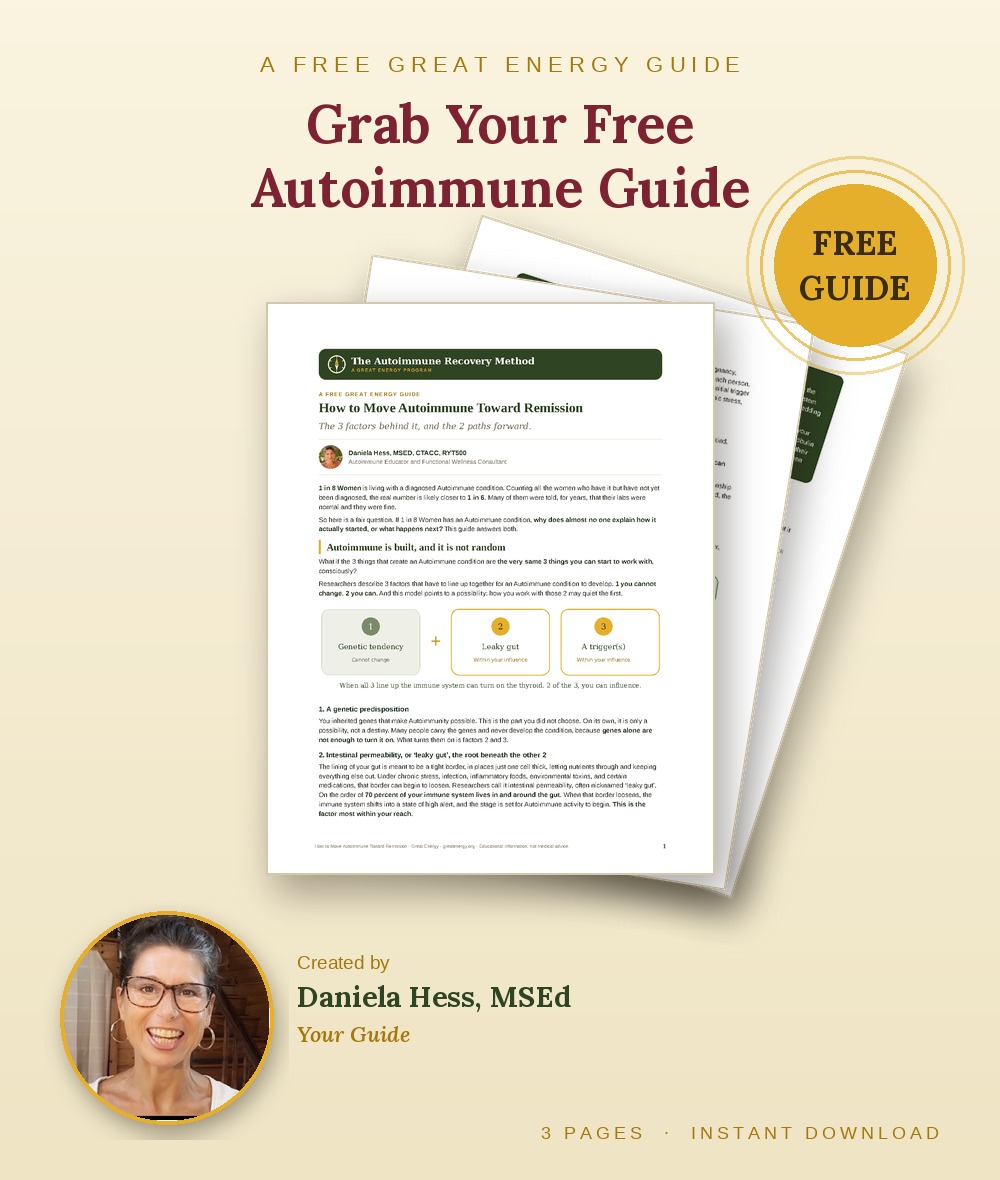
How to Move Autoimmune Toward Remission
The 3 factors behind an Autoimmune condition and the 2 paths forward, free, straight to your inbox.
No spam. Unsubscribe anytime.
Your guide is on its way. You can also open it now (PDF).
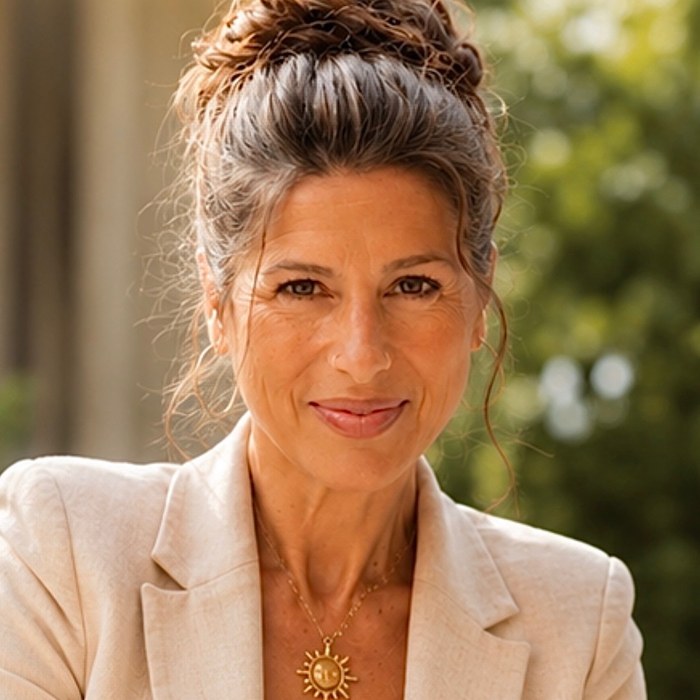
Articles from Daniela
Daniela Hess, MSEd, is a co-founder of Great Energy and an Autoimmune Educator and Functional Wellness Consultant who lives and thrives with Hashimoto’s. She is not a licensed medical provider.
AIP recipes to try
A place to start in the kitchen while you work on this with your own clinician: