Kidney and eye
ANCA-Associated Glomerulonephritis
ANCA-associated glomerulonephritis affects the glomeruli as part of a small-vessel vasculitis. Current understanding describes antibodies called ANCA, most often directed against the proteins myeloperoxidase (MPO) or proteinase 3 (PR3), activating certain white blood cells in a way that damages the walls of small blood vessels in the kidney and can involve other organs as well. The resulting kidney injury is often described as pauci-immune, meaning there is comparatively little antibody deposit visible in the kidney tissue itself despite the antibody-driven process behind it.
ANCA-associated vasculitis as a group is considered rare, and researchers note that its true incidence and prevalence have been difficult to pin down precisely, though a growing body of epidemiological work over the past two decades has revealed patterns by age, geography, and ethnicity. Kidney involvement is common when the disease is active, and because it can progress quickly, prompt specialist care matters for preserving kidney function.
Common signs
Blood in the urine, foamy urine, reduced urine output, and a falling sense of well-being with tiredness, fever, weight loss, and joint or muscle aches, since the vasculitis can affect more than the kidneys.
This is a plain-language summary for orientation, not a diagnosis. Mechanisms are described as current understanding, not settled fact. Work with your own clinician for your care.
Questions people ask
What are the symptoms of ANCA-associated glomerulonephritis?+
What causes ANCA-associated glomerulonephritis?+
Is ANCA-associated glomerulonephritis curable?+
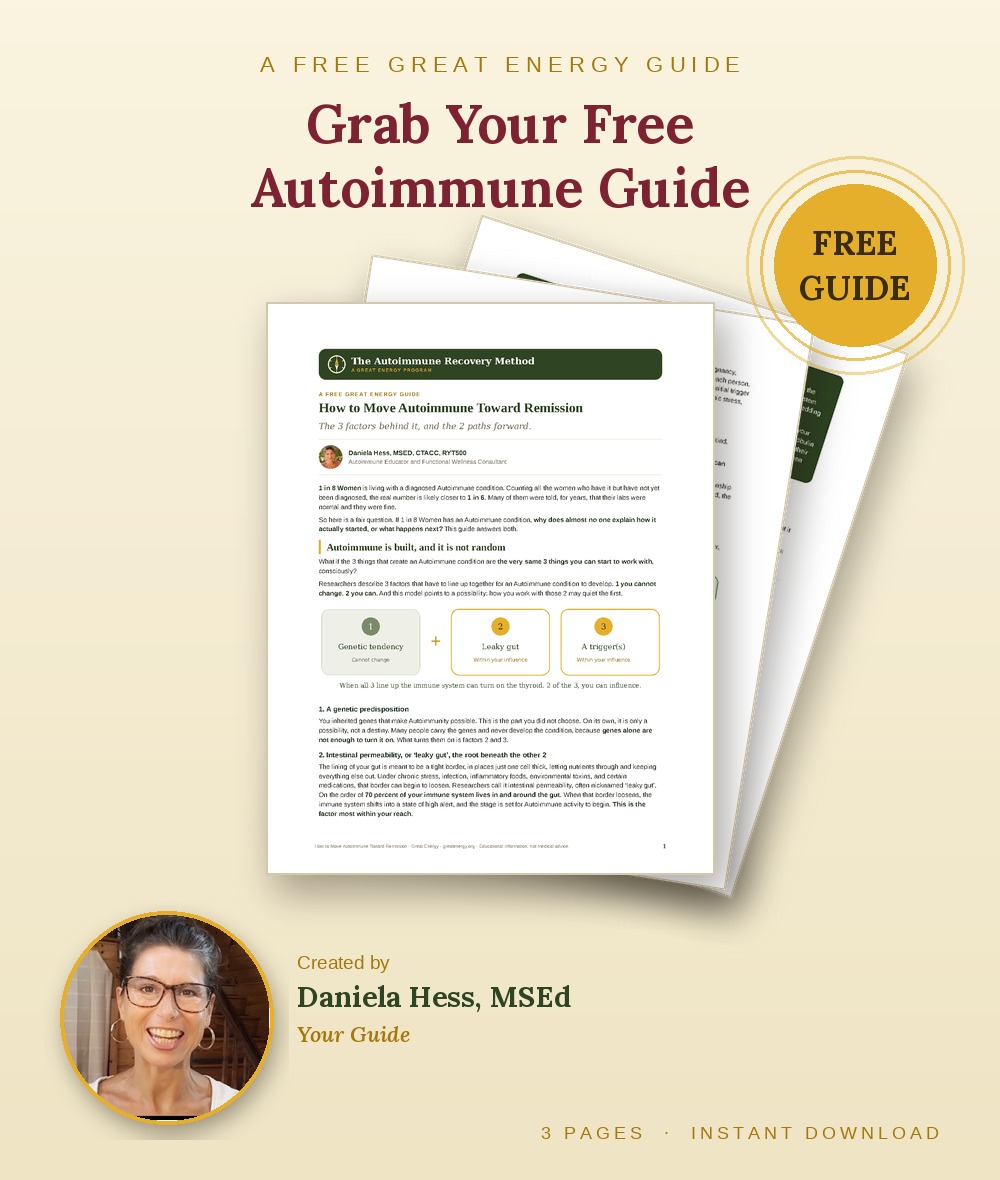
How to Move Autoimmune Toward Remission
The 3 factors behind an Autoimmune condition and the 2 paths forward, free, straight to your inbox.
No spam. Unsubscribe anytime.
Your guide is on its way. You can also open it now (PDF).

Articles from Daniela
Daniela Hess, MSEd, is a co-founder of Great Energy and an Autoimmune Educator and Functional Wellness Consultant who lives and thrives with Hashimoto’s. She is not a licensed medical provider.
AIP recipes to try
A place to start in the kitchen while you work on this with your own clinician: