Joints, muscles, and connective tissue
Ankylosing spondylitis (AS)
Ankylosing spondylitis is a form of inflammatory arthritis that mainly affects the spine and the sacroiliac joints where the spine meets the pelvis, part of a larger group of conditions called axial spondyloarthritis. Current understanding points to immune cells and inflammatory cytokines, particularly along the interleukin-23/17 pathway, driving inflammation at the spine and at the entheses, the points where ligaments and tendons attach to bone, which over time can lead to stiffening and, in some people, fusion of parts of the spine. The HLA-B27 gene is strongly associated with the condition, present in a large majority of people diagnosed, though having the gene alone does not mean someone develops AS.
Reported prevalence varies considerably across populations, and research describes a male predominance in classic AS, with onset almost always before age 50.
Common signs
Deep, ongoing back and buttock pain and stiffness that is typically worse with rest and in the morning and eases with movement. Reduced spinal flexibility, and sometimes hip or other joint involvement, eye inflammation (uveitis), and fatigue.
This is a plain-language summary for orientation, not a diagnosis. Mechanisms are described as current understanding, not settled fact. Work with your own clinician for your care.
Questions people ask
What are the symptoms of ankylosing spondylitis?+
What causes ankylosing spondylitis, and is it genetic?+
Is there a cure for ankylosing spondylitis?+
In a doctor’s words
“The outlook for AS is very good if addressed early in the disease course. With appropriate comprehensive treatment, including physical therapy and exercise, NSAIDs, and biologics, many people have preserved function and minimal pain.”
Brett Smith, DO, rheumatologist, Blount Memorial Physicians Group, Alcoa, Tennessee
Read more at CreakyJoints ↗
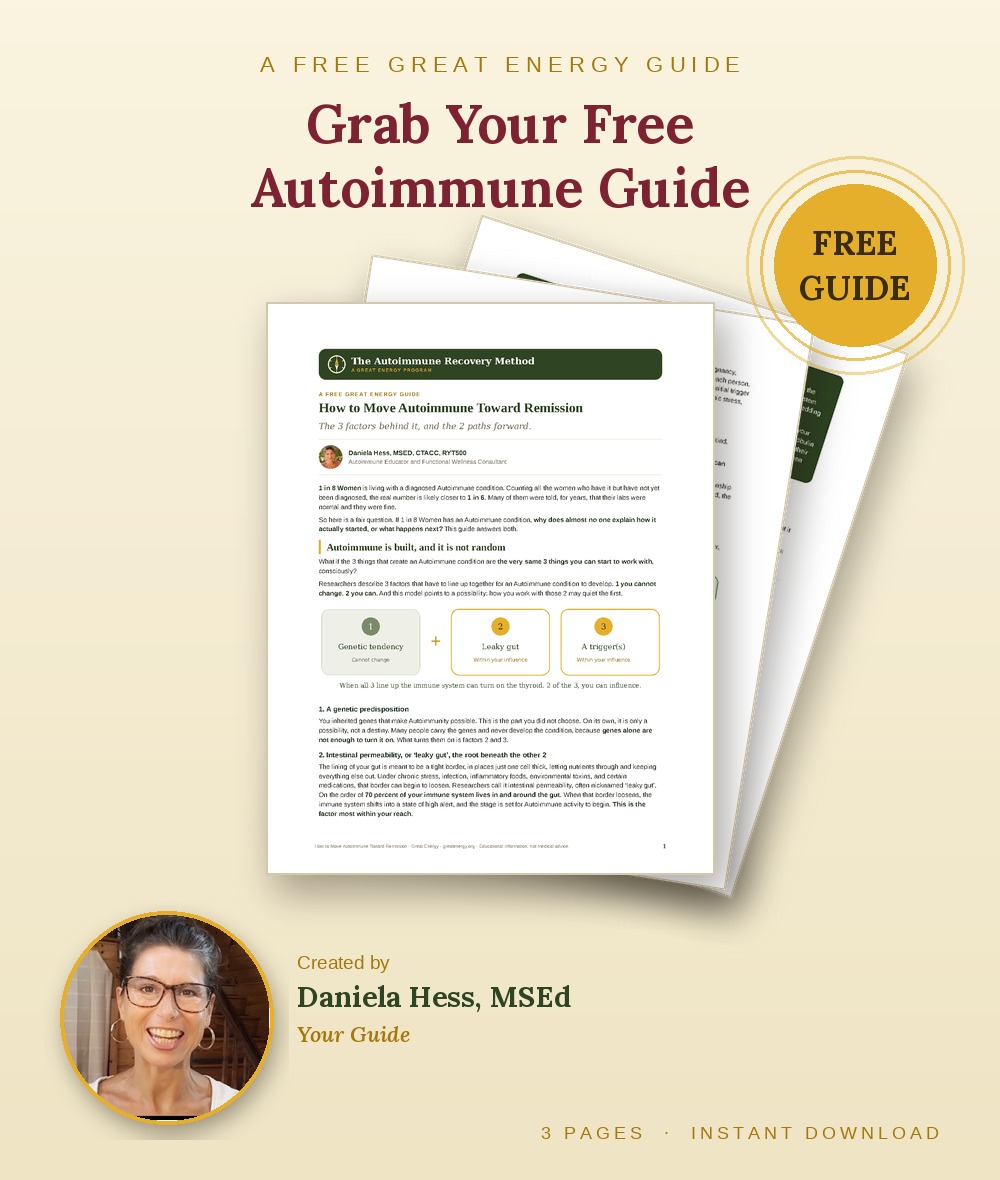
How to Move Autoimmune Toward Remission
The 3 factors behind an Autoimmune condition and the 2 paths forward, free, straight to your inbox.
No spam. Unsubscribe anytime.
Your guide is on its way. You can also open it now (PDF).

Articles from Daniela
Daniela Hess, MSEd, is a co-founder of Great Energy and an Autoimmune Educator and Functional Wellness Consultant who lives and thrives with Hashimoto’s. She is not a licensed medical provider.
AIP recipes to try
A place to start in the kitchen while you work on this with your own clinician: