Kidney and eye
Anti-GBM Disease (Goodpasture, with kidney involvement)
Anti-GBM disease affects the glomeruli, and sometimes the lungs, when the immune system produces antibodies against a specific protein within type IV collagen, a structural component of the glomerular basement membrane and, in the lungs, the alveolar membrane. These antibodies bind directly to that membrane and trigger a rapid, small-vessel inflammatory process that can impair kidney filtering and, when the lungs are involved, gas exchange.
Anti-GBM disease is considered rare, and research describes it as accounting for around one in five cases of a pattern of rapidly progressive kidney inflammation called crescentic glomerulonephritis, while remaining an uncommon cause of kidney failure overall. Because the disease can move quickly, prompt specialist treatment, often combining plasma exchange with immune-suppressing medication, is considered central to preserving kidney function and, when present, lung function.
Common signs
Blood in the urine (visible or not), reduced urine output, tiredness, nausea or poor appetite, and swelling. When the lungs are involved, coughing up blood and shortness of breath can occur.
This is a plain-language summary for orientation, not a diagnosis. Mechanisms are described as current understanding, not settled fact. Work with your own clinician for your care.
Questions people ask
What causes Anti-GBM disease?+
What are the symptoms of Anti-GBM disease?+
How is Anti-GBM disease treated?+
In a doctor’s words
“If diagnosed early enough, kidney damage in some anti-GBM patients can be reversed.”
S. Paul Hmiel, MD, PhD, Washington University physician, Medical Director, Pediatric Kidney Transplant, St. Louis Children's Hospital
Read more at St. Louis Children's Hospital (The Pulse) ↗
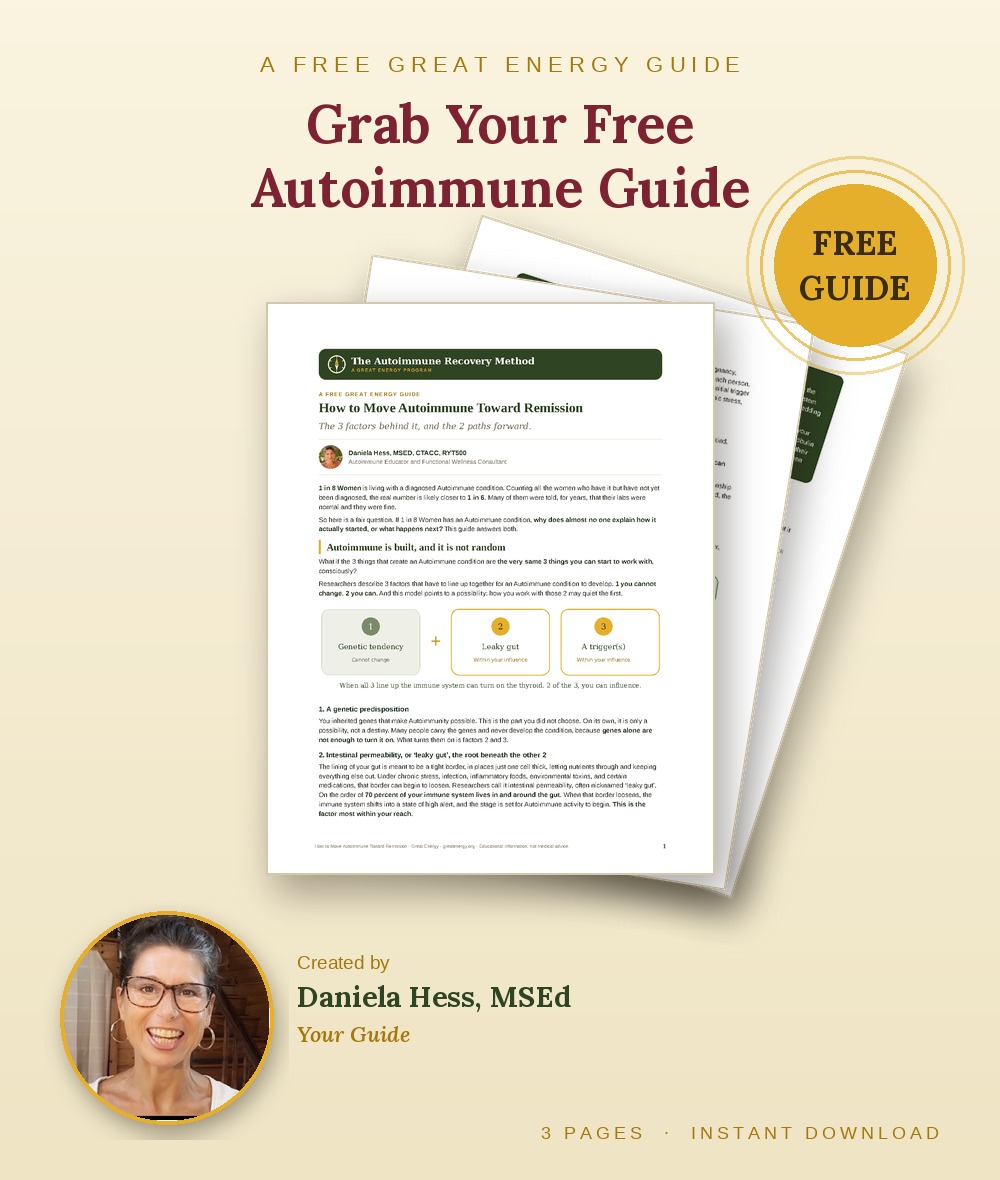
How to Move Autoimmune Toward Remission
The 3 factors behind an Autoimmune condition and the 2 paths forward, free, straight to your inbox.
No spam. Unsubscribe anytime.
Your guide is on its way. You can also open it now (PDF).

Articles from Daniela
Daniela Hess, MSEd, is a co-founder of Great Energy and an Autoimmune Educator and Functional Wellness Consultant who lives and thrives with Hashimoto’s. She is not a licensed medical provider.
AIP recipes to try
A place to start in the kitchen while you work on this with your own clinician: