Neuromuscular and nervous system
Anti-NMDA receptor encephalitis
Anti-NMDA receptor encephalitis is a form of brain inflammation in which the immune system makes antibodies against the NMDA receptor, a protein nerve cells use to communicate, predominantly targeting a piece of it called the GluN1 subunit. This is thought to impair glutamate signaling between neurons and produces a mix of psychiatric and neurological symptoms. It can appear on its own or alongside a tumor, most often an ovarian teratoma in women of childbearing age, though it also occurs in men and children without an identifiable tumor.
It's considered the most common cause of autoimmune encephalitis after acute demyelinating encephalitis, and research describes it as predominantly affecting young adults and children with a clear female predominance. It's rare and was only characterized in the literature about fifteen years ago, so comprehensive prevalence data remain limited.
Common signs
Often a prodrome of headache or flu-like symptoms, followed within days to weeks by psychiatric changes such as anxiety, agitation, psychosis, or unusual behavior, then memory and speech problems, seizures, abnormal movements, reduced responsiveness, and instability of heart rate, blood pressure, and body temperature, with breathing trouble in more severe cases.
This is a plain-language summary for orientation, not a diagnosis. Mechanisms are described as current understanding, not settled fact. Work with your own clinician for your care.
Questions people ask
What is anti-NMDA receptor encephalitis, and how does it relate to autoimmune encephalitis overall?+
What are the symptoms of anti-NMDA receptor encephalitis?+
Is anti-NMDA receptor encephalitis linked to cancer or a tumor?+
In a doctor’s words
“it is necessary to be cautious when establishing prognoses and therapeutic decisions, because the possibility of recovery exists even after very long periods”
Josep Dalmau, MD, PhD, head of the Pathogenesis of Autoimmune Neuronal Disorders research group, IDIBAPS and CaixaResearch Institute, Hospital Clinic Barcelona
Read more at Clinic Barcelona (Hospital Clinic Barcelona news) ↗
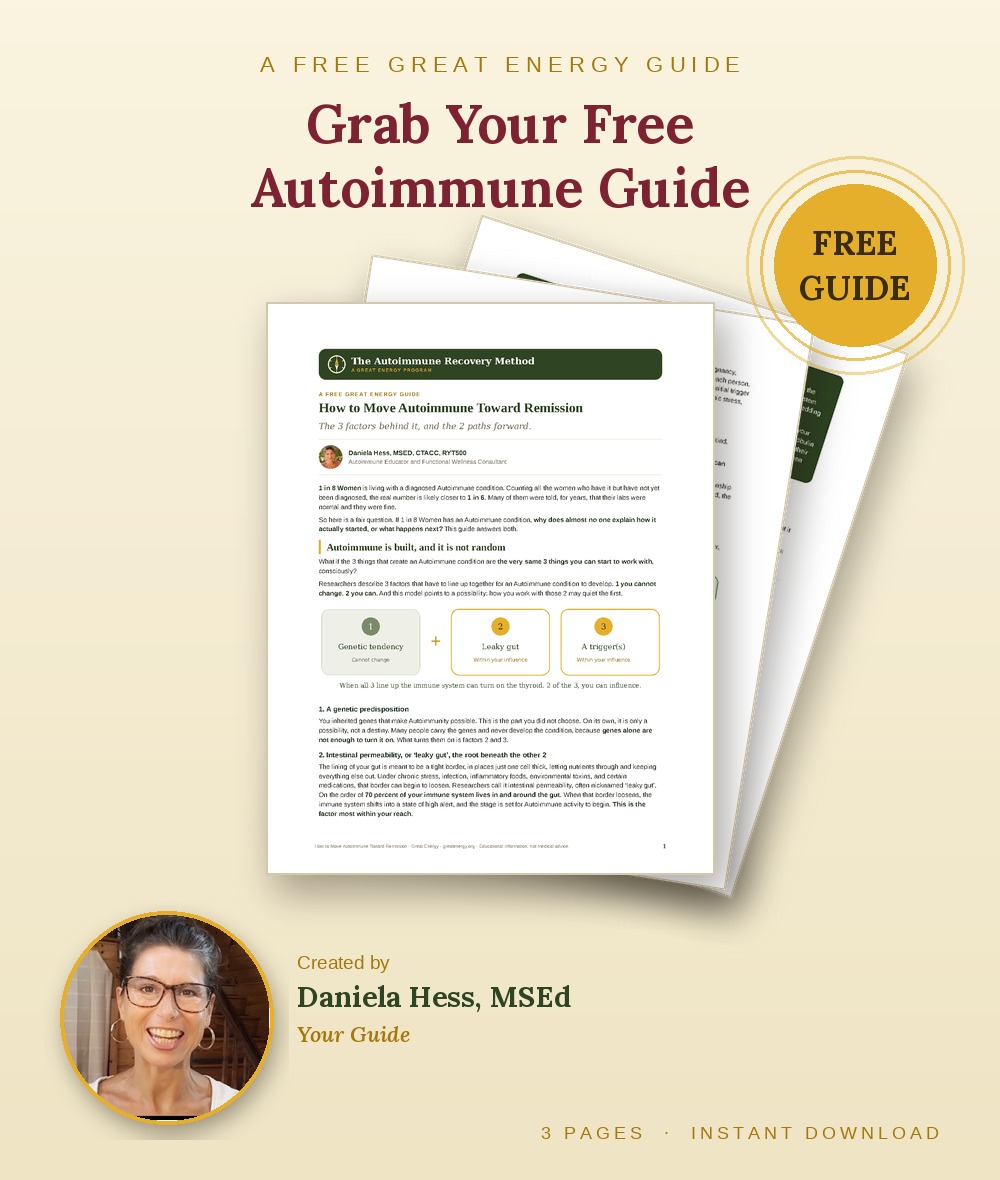
How to Move Autoimmune Toward Remission
The 3 factors behind an Autoimmune condition and the 2 paths forward, free, straight to your inbox.
No spam. Unsubscribe anytime.
Your guide is on its way. You can also open it now (PDF).

Articles from Daniela
Daniela Hess, MSEd, is a co-founder of Great Energy and an Autoimmune Educator and Functional Wellness Consultant who lives and thrives with Hashimoto’s. She is not a licensed medical provider.
AIP recipes to try
A place to start in the kitchen while you work on this with your own clinician: