Blood and blood vessels
Antiphospholipid syndrome (APS, Hughes syndrome)
Antiphospholipid syndrome is a condition in which the immune system produces antibodies, most importantly against a protein called beta-2 glycoprotein I, that appear to increase the tendency of blood to clot and to disrupt normal placental function during pregnancy. Current understanding describes a broader process of thrombo-inflammation behind the clotting risk, involving activation of platelets, blood vessel lining cells, and the complement system. APS can occur on its own or alongside another autoimmune condition such as lupus.
Research describes it as an uncommon condition, with studies estimating incidence and prevalence in the general population at roughly 1 to 2 new cases and 40 to 50 existing cases per 100,000 people, while antiphospholipid antibodies themselves are found more often, in a meaningful share of people with unexplained pregnancy loss, stroke, or blood clots.
Common signs
Blood clots in the legs or lungs, stroke or other clot-related events, recurrent miscarriage or other pregnancy losses, a lacy purplish skin pattern (livedo reticularis), and sometimes low platelets or migraines.
This is a plain-language summary for orientation, not a diagnosis. Mechanisms are described as current understanding, not settled fact. Work with your own clinician for your care.
Questions people ask
What is antiphospholipid syndrome?+
What are the symptoms of antiphospholipid syndrome?+
Is antiphospholipid syndrome related to lupus?+
In a doctor’s words
“I should say that the history of pregnancy and antiphospholipid syndrome has been staggering. Before patients were tested for this syndrome the success rate and pregnancy in patients with antiphospholipid was less than 20%, it's now over 90% in most big centres so that's totally revolutionized looking at early pregnancy.”
Graham Hughes, MD, Rheumatologist; discovered and first described Hughes Syndrome (APS) in 1983; founder of the Graham Hughes International Charity (GHIC)
Read more at Graham Hughes International Charity (GHIC) - Q&A with Graham Hughes video transcript ↗
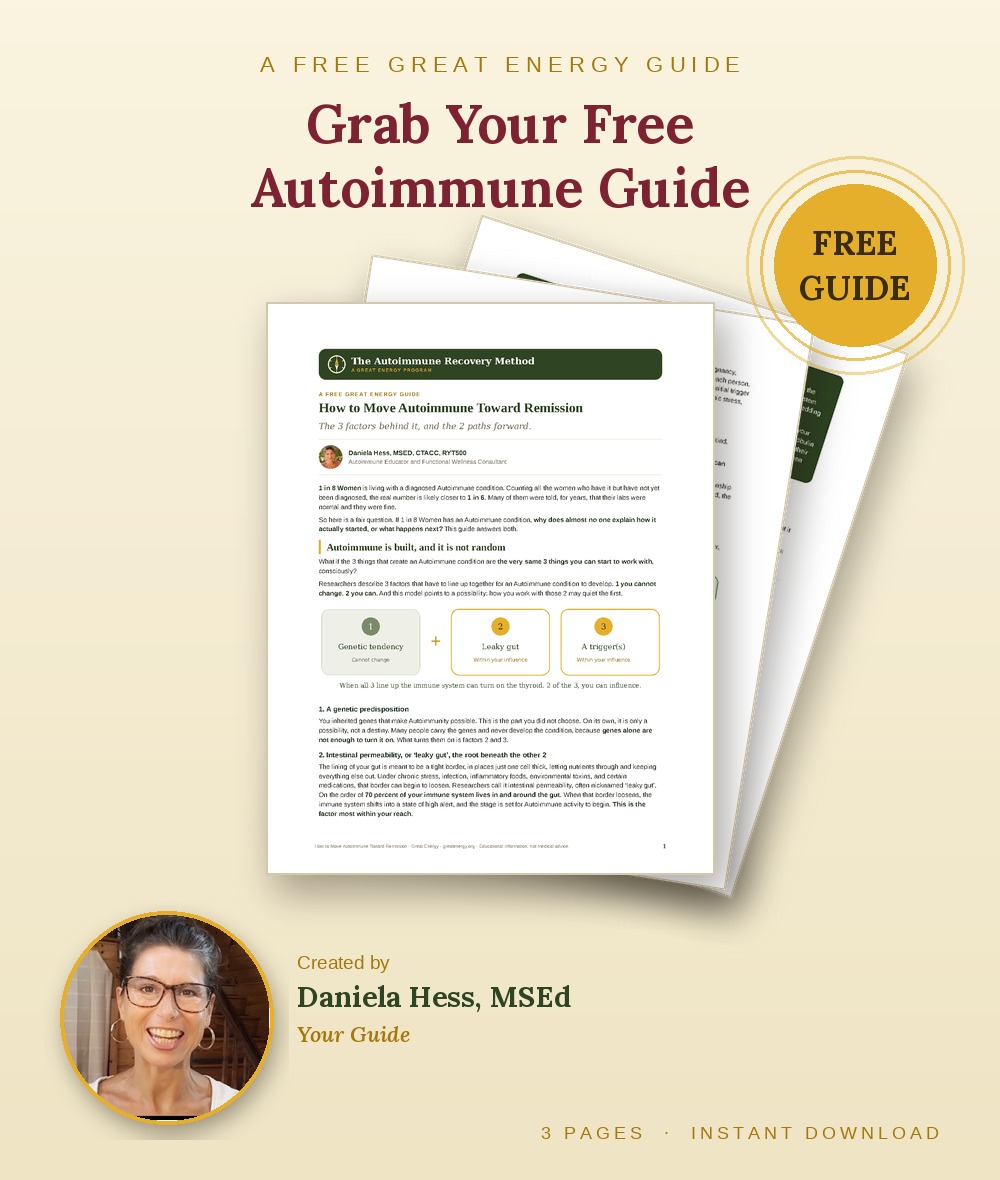
How to Move Autoimmune Toward Remission
The 3 factors behind an Autoimmune condition and the 2 paths forward, free, straight to your inbox.
No spam. Unsubscribe anytime.
Your guide is on its way. You can also open it now (PDF).

Articles from Daniela
Daniela Hess, MSEd, is a co-founder of Great Energy and an Autoimmune Educator and Functional Wellness Consultant who lives and thrives with Hashimoto’s. She is not a licensed medical provider.
AIP recipes to try
A place to start in the kitchen while you work on this with your own clinician: