Joints, muscles, and connective tissue
Antisynthetase syndrome (ASS)
Antisynthetase syndrome is defined by a group of antibodies directed at aminoacyl-tRNA synthetases, enzymes that play a role in building proteins inside cells, though research notes that exactly how these antibodies contribute to the disease process is still undetermined. The condition typically combines muscle inflammation, joint pain, and interstitial lung disease, and studies describe genetic predisposition and possible viral triggers as contributing factors, without a single confirmed cause.
Because antisynthetase syndrome was only recently distinguished as its own diagnostic category, population-based epidemiology is still limited, and researchers are actively working to establish reliable incidence figures. Research describes the lung involvement as a major driver of prognosis, often making the overall outlook more serious than for muscle inflammation alone.
Common signs
A combination that can include muscle weakness, inflammatory arthritis, Raynaud's, thickened cracked skin on the fingers (mechanic's hands), fever, and shortness of breath or cough from lung involvement. The mix varies, and lung symptoms can be prominent.
This is a plain-language summary for orientation, not a diagnosis. Mechanisms are described as current understanding, not settled fact. Work with your own clinician for your care.
Questions people ask
What is antisynthetase syndrome?+
What are the symptoms of antisynthetase syndrome?+
How serious is the lung involvement in antisynthetase syndrome?+
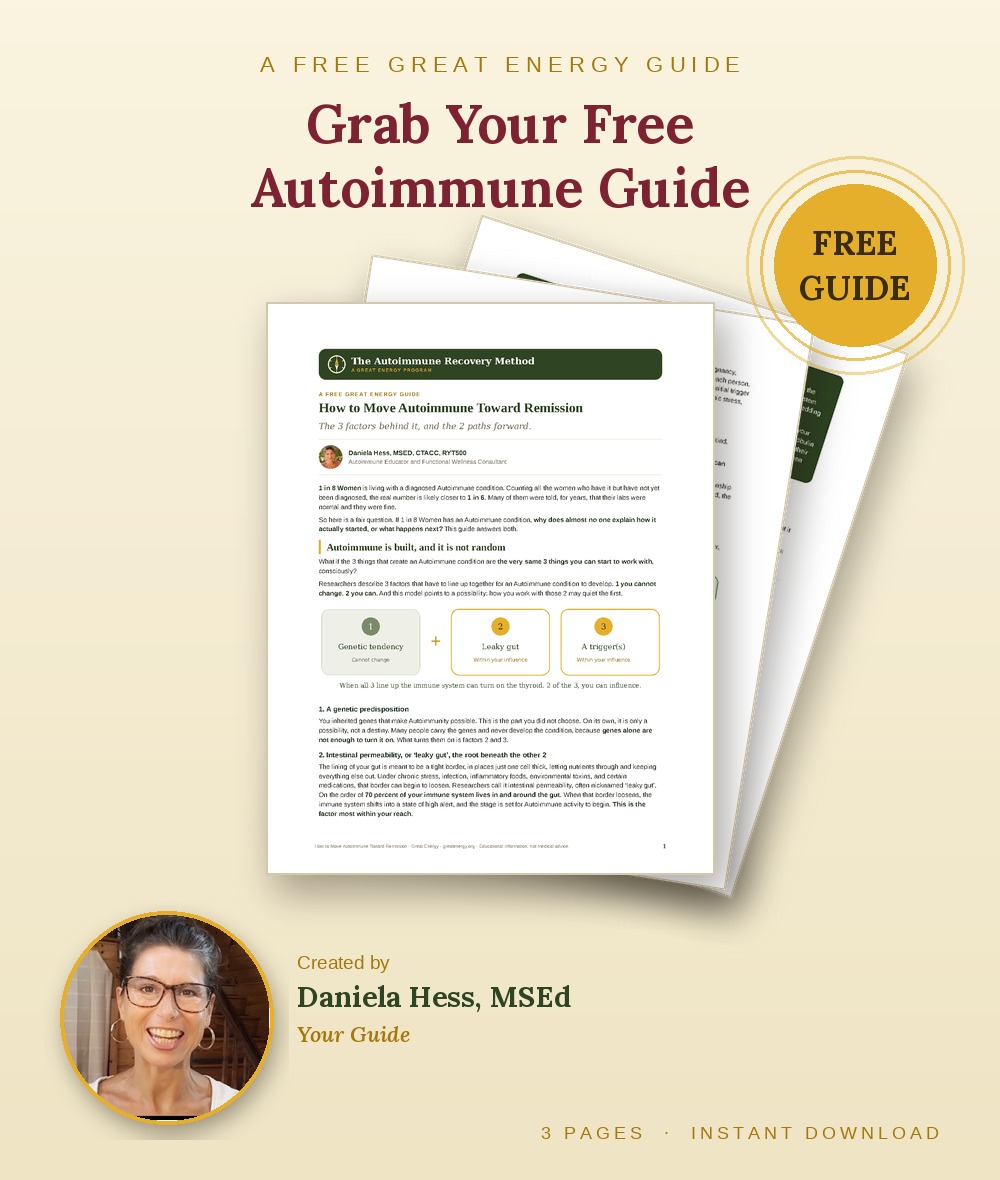
How to Move Autoimmune Toward Remission
The 3 factors behind an Autoimmune condition and the 2 paths forward, free, straight to your inbox.
No spam. Unsubscribe anytime.
Your guide is on its way. You can also open it now (PDF).

Articles from Daniela
Daniela Hess, MSEd, is a co-founder of Great Energy and an Autoimmune Educator and Functional Wellness Consultant who lives and thrives with Hashimoto’s. She is not a licensed medical provider.
AIP recipes to try
A place to start in the kitchen while you work on this with your own clinician: