Skin and hair
Atopic dermatitis / eczema (related)
Atopic dermatitis, the most common form of eczema, is a chronic inflammatory skin condition, immune-related rather than a classic antibody-driven autoimmune disease, that arises from a combination of skin barrier dysfunction and immune dysregulation. Research describes genetic factors, including mutations in the filaggrin gene, that weaken the skin's ability to hold moisture and keep out irritants and allergens, allowing immune cells in the skin to encounter triggers more easily and mount an inflammatory response. This impaired barrier is now understood as an early step that can set off a broader pattern of allergic sensitization sometimes called the atopic march.
Atopic dermatitis is described in the literature as the most common chronic inflammatory skin disease, typically appearing in early childhood and often improving with age, though it can persist into or begin in adulthood, and its prevalence and severity vary with age, geography, and socioeconomic factors.
Common signs
Dry, itchy, inflamed skin that may look red, pink, purple, or darker depending on skin tone, often in the bends of the elbows and knees, on the face, neck, hands, and around the eyes. Scratching can lead to cracking, weeping, crusting, and thickening, and the itch can be intense enough to disturb sleep, especially in children.
This is a plain-language summary for orientation, not a diagnosis. Mechanisms are described as current understanding, not settled fact. Work with your own clinician for your care.
Questions people ask
Is eczema an autoimmune disease?+
What causes eczema?+
What's the difference between eczema and psoriasis?+
In a doctor’s words
“I'm especially hopeful that some of our systemic agents will gain approval for use in children under 12. That may not happen within the year, but I'm confident it's on the horizon—and I'm already looking forward to that day.”
Elizabeth Swanson, MD, FAAD, Pediatric Dermatologist, Ada West Dermatology, Boise, Idaho
Read more at Patient Care Online ↗
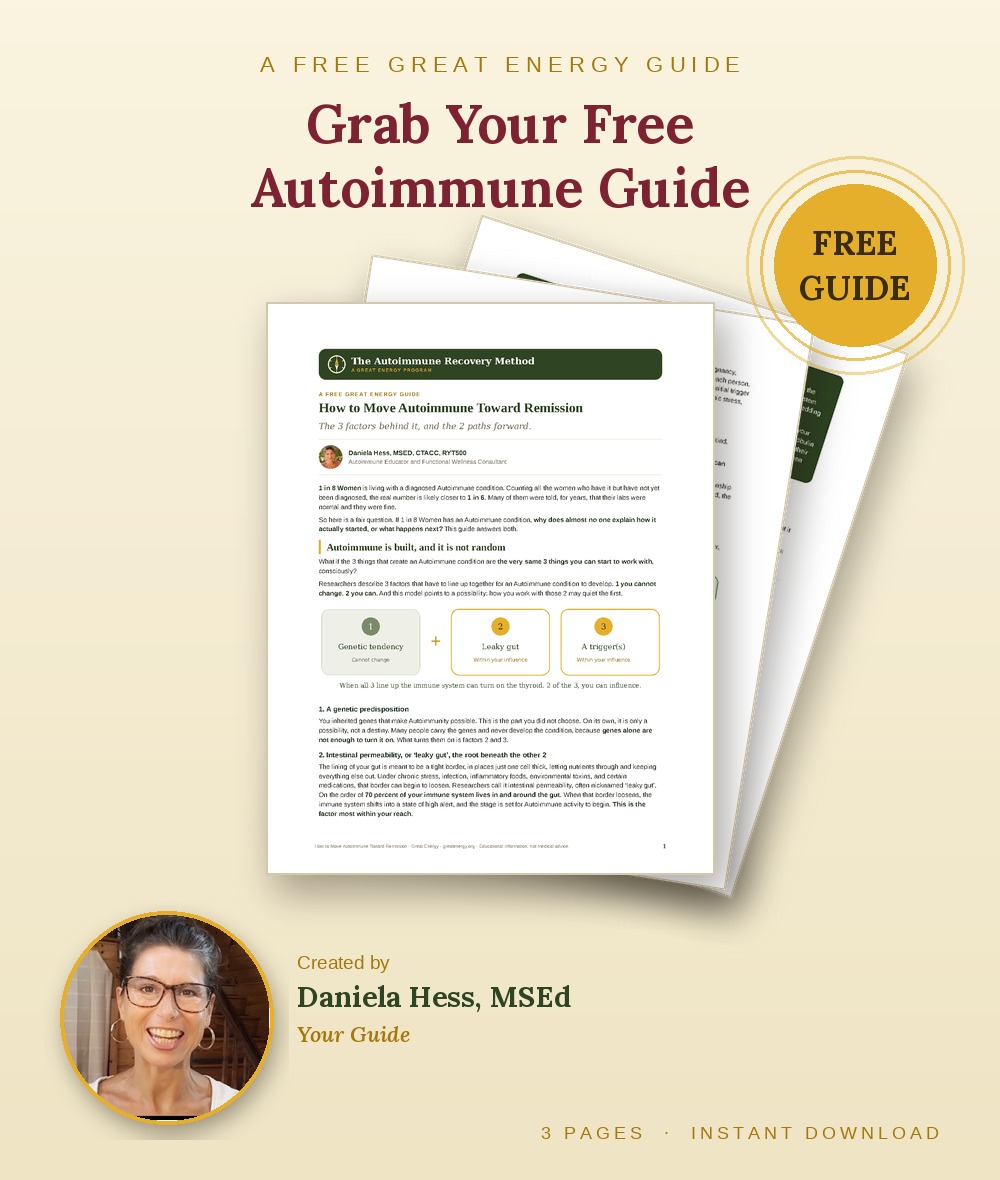
How to Move Autoimmune Toward Remission
The 3 factors behind an Autoimmune condition and the 2 paths forward, free, straight to your inbox.
No spam. Unsubscribe anytime.
Your guide is on its way. You can also open it now (PDF).
Articles from Daniela
Daniela Hess, MSEd, is a co-founder of Great Energy and an Autoimmune Educator and Functional Wellness Consultant who lives and thrives with Hashimoto’s. She is not a licensed medical provider.
AIP recipes to try
A place to start in the kitchen while you work on this with your own clinician: