Blood and blood vessels
Autoimmune aplastic anemia
In autoimmune aplastic anemia, the immune system is understood to mount a T-cell mediated attack against the stem cells in bone marrow that normally give rise to red cells, white cells, and platelets, so the marrow becomes underactive and produces too few of all three blood cell lines. Cytotoxic T-cells release inflammatory signals that suppress this production and drive the cells toward early cell death, leaving the body short across the board rather than in just one blood cell type.
The condition is uncommon, with research describing an incidence of roughly 2 cases per million people per year in Western populations and a rate about two to three times higher in parts of Asia. It can occur at any age and shows two peaks, affecting younger people between about 10 and 25 and, separately, adults over 60.
Common signs
Fatigue and shortness of breath from low red cells, frequent or lingering infections from low white cells, and easy bruising, petechiae, or bleeding from low platelets.
This is a plain-language summary for orientation, not a diagnosis. Mechanisms are described as current understanding, not settled fact. Work with your own clinician for your care.
Questions people ask
What causes autoimmune aplastic anemia?+
Who is most likely to get autoimmune aplastic anemia?+
Is autoimmune aplastic anemia curable?+
In a doctor’s words
“I'm blessed to have patients who remain so positive regardless of their diagnosis. And I'm happy to see them get better and return to living their life with this disease. They don't have to sit in the background - they can ski, swim, travel and do things with their families.”
Bhumika Patel, MD, Medical Hematologist and Oncologist, Cleveland Clinic Cancer Center
Read more at Cleveland Clinic Patient Stories ↗
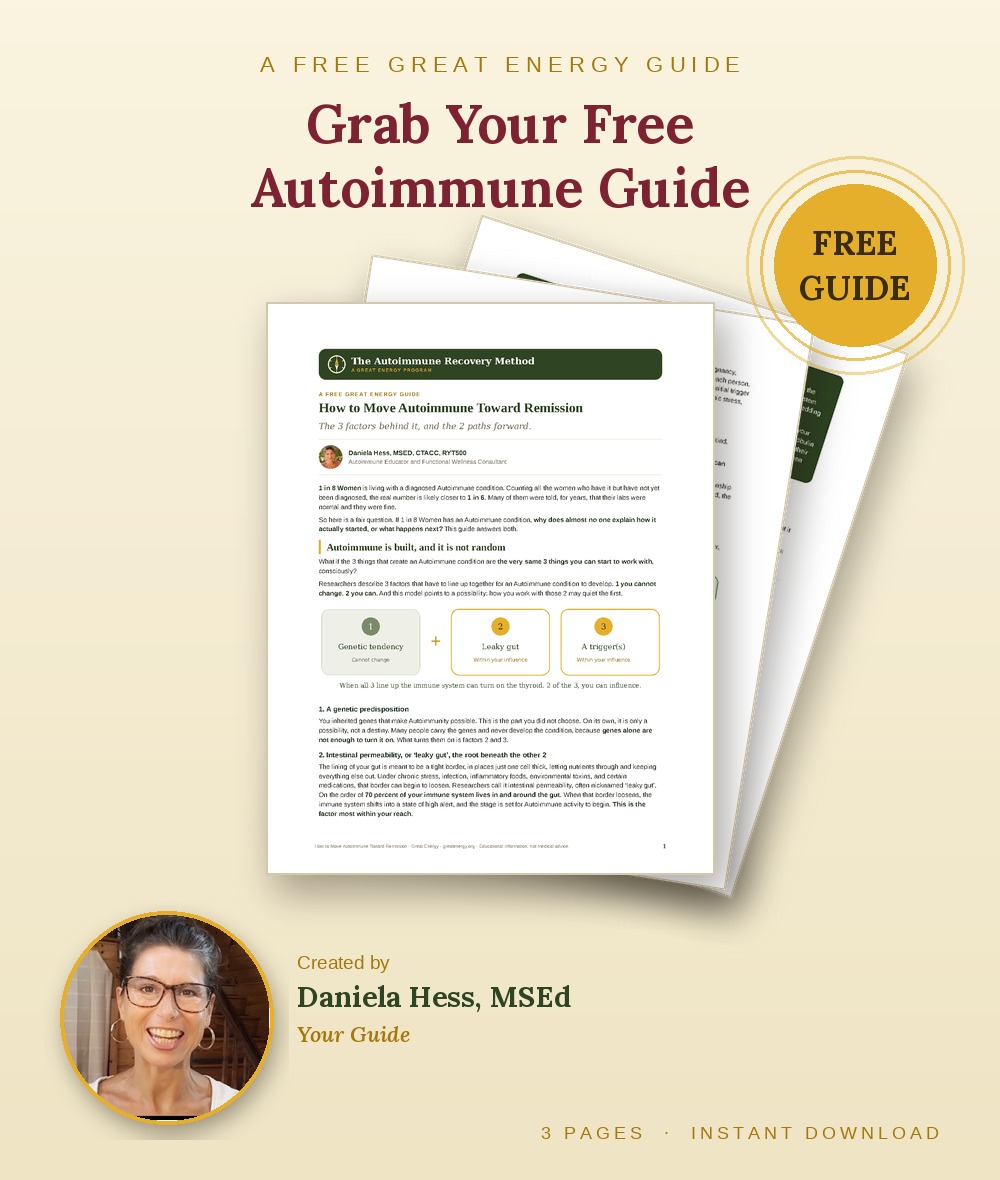
How to Move Autoimmune Toward Remission
The 3 factors behind an Autoimmune condition and the 2 paths forward, free, straight to your inbox.
No spam. Unsubscribe anytime.
Your guide is on its way. You can also open it now (PDF).
Articles from Daniela
Daniela Hess, MSEd, is a co-founder of Great Energy and an Autoimmune Educator and Functional Wellness Consultant who lives and thrives with Hashimoto’s. She is not a licensed medical provider.
AIP recipes to try
A place to start in the kitchen while you work on this with your own clinician: