Neuromuscular and nervous system
Autoimmune autonomic ganglionopathy
Autoimmune autonomic ganglionopathy is a rare condition in which the immune system is thought to target the ganglionic acetylcholine receptor, a protein that helps relay signals at the autonomic ganglia, the relay stations for the nerve pathways that run automatic body functions like blood pressure, digestion, and pupil response. Antibodies against this receptor disrupt synaptic transmission in those ganglia and are found in roughly half of patients, with higher antibody levels generally associated with more severe symptoms. The result is a fairly rapid, often subacute onset of widespread autonomic failure that is usually monophasic, meaning it happens once, with some patients seeing partial improvement over months.
The condition is considered rare enough that solid population-wide prevalence figures are not well established. A case series reported a median age at diagnosis around 45.
Common signs
Severe lightheadedness or fainting on standing from a drop in blood pressure (orthostatic hypotension), dry mouth and dry eyes, constipation and other gut sluggishness, bladder problems, and pupils that react poorly to light.
This is a plain-language summary for orientation, not a diagnosis. Mechanisms are described as current understanding, not settled fact. Work with your own clinician for your care.
Where this comes from
Questions people ask
What causes autoimmune autonomic ganglionopathy?+
What are the symptoms of autoimmune autonomic ganglionopathy?+
Is autoimmune autonomic ganglionopathy the same as other conditions that cause a racing heart or fainting on standing?+
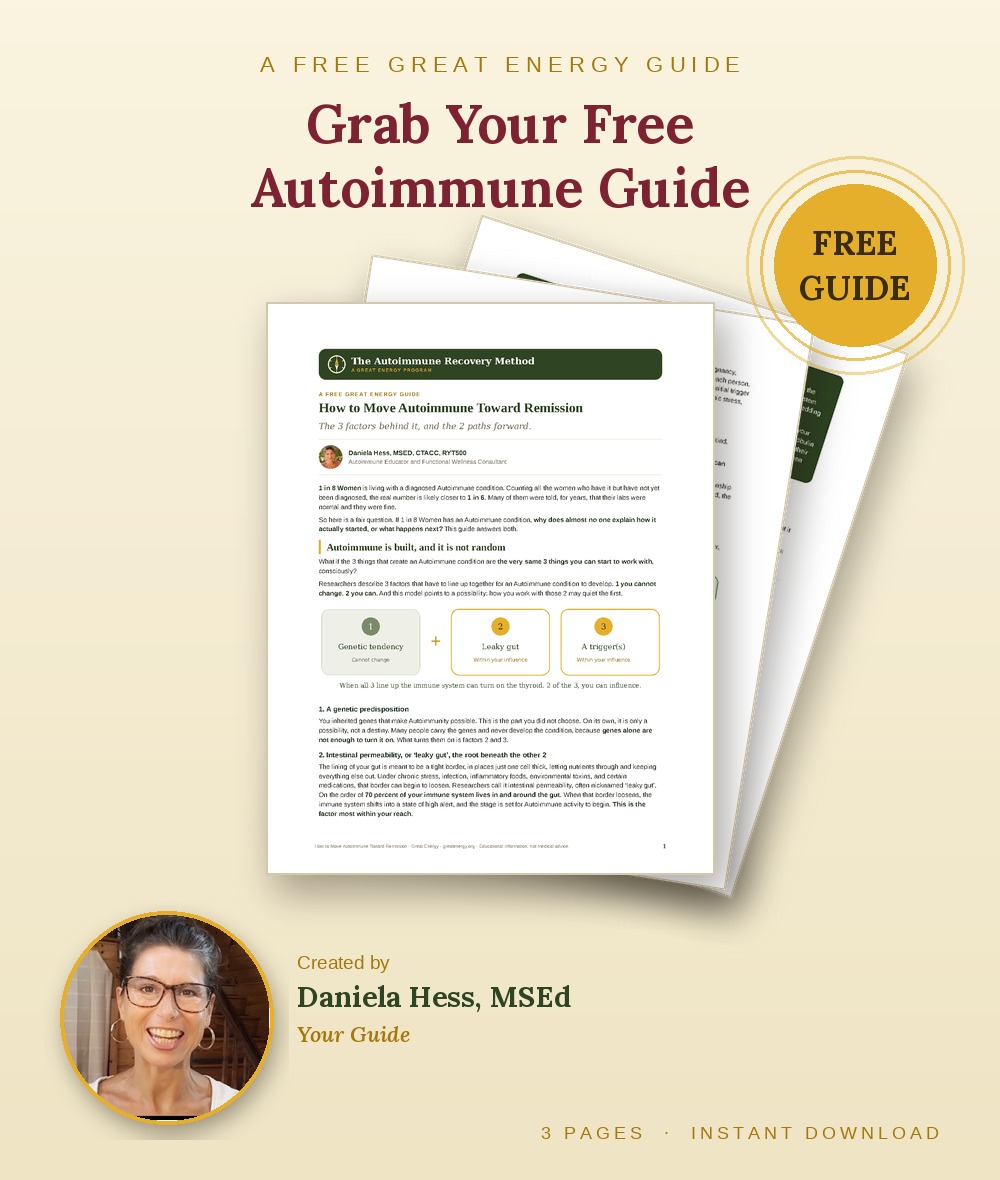
How to Move Autoimmune Toward Remission
The 3 factors behind an Autoimmune condition and the 2 paths forward, free, straight to your inbox.
No spam. Unsubscribe anytime.
Your guide is on its way. You can also open it now (PDF).

Articles from Daniela
Daniela Hess, MSEd, is a co-founder of Great Energy and an Autoimmune Educator and Functional Wellness Consultant who lives and thrives with Hashimoto’s. She is not a licensed medical provider.
AIP recipes to try
A place to start in the kitchen while you work on this with your own clinician: