Neuromuscular and nervous system
Autoimmune encephalitis
Autoimmune encephalitis is a broad term for brain inflammation driven by the immune system, most often through antibodies against proteins on the surface of nerve cells or, less commonly, proteins inside them. Anti-NMDA receptor encephalitis is one specific and well-studied type, and others involve antibodies such as LGI1 or GABA receptors, with some cases linked to an underlying tumor and others not. The pattern of symptoms depends on which part of the brain is affected.
Research describes autoimmune encephalitis overall as a group of conditions now recognized about as often as infectious causes of encephalitis, and their recognized prevalence has been rising as testing has improved, though reviewers note that solid population-level epidemiological data remain scarce. Some subtypes are more common in children and young adults and more prevalent in women, while others affect a broader age range.
Common signs
Fairly rapid changes in memory and thinking, mood or behavior changes, confusion, seizures, abnormal movements, and sometimes sleep or autonomic disturbances, usually developing over days to weeks rather than slowly over years.
This is a plain-language summary for orientation, not a diagnosis. Mechanisms are described as current understanding, not settled fact. Work with your own clinician for your care.
Questions people ask
What is autoimmune encephalitis?+
What are the symptoms of autoimmune encephalitis?+
What are the different types of autoimmune encephalitis?+
In a doctor’s words
“It's scary, I know, for a lot of these patients and their families, but taking a step back and looking at the big picture of everything and knowing that there are lots and lots of people who are interested in research and moving the field forward [can be encouraging].”
Grace Gombolay, MD, pediatric neuroimmunologist, Emory University and Children's Healthcare of Atlanta
Read more at International Autoimmune Encephalitis Society (IAES), in partnership with PennNeuroKnow ↗
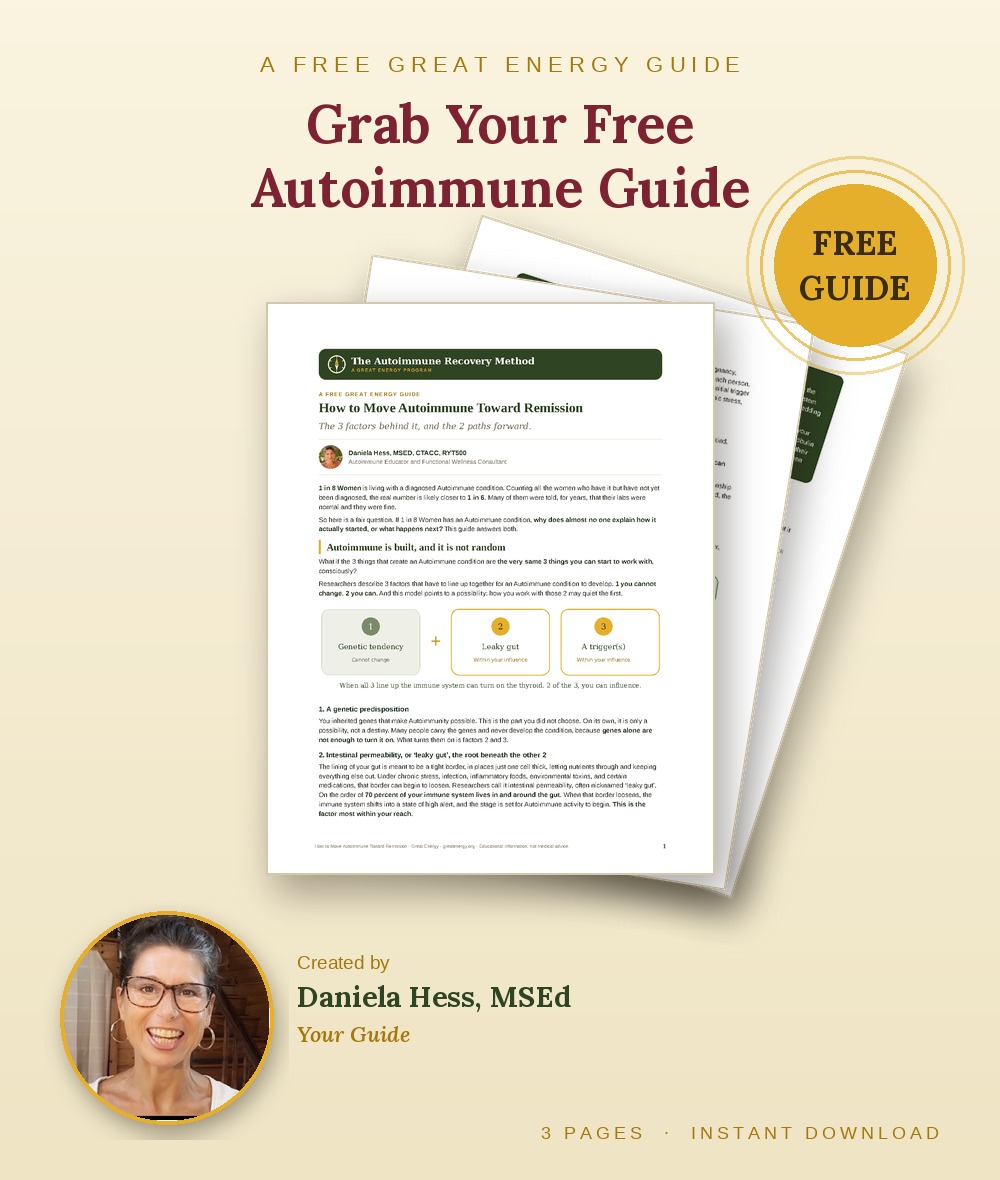
How to Move Autoimmune Toward Remission
The 3 factors behind an Autoimmune condition and the 2 paths forward, free, straight to your inbox.
No spam. Unsubscribe anytime.
Your guide is on its way. You can also open it now (PDF).

Articles from Daniela
Daniela Hess, MSEd, is a co-founder of Great Energy and an Autoimmune Educator and Functional Wellness Consultant who lives and thrives with Hashimoto’s. She is not a licensed medical provider.
AIP recipes to try
A place to start in the kitchen while you work on this with your own clinician: