Gastrointestinal and liver
Autoimmune gastritis (AIG, autoimmune metaplastic atrophic gastritis)
Autoimmune gastritis affects the stomach, specifically the acid-producing parietal cells in the upper stomach lining. It is understood to result from a T-cell mediated immune response directed against the parietal cell proton pump, working alongside autoantibodies against parietal cells and intrinsic factor, a protein needed to absorb vitamin B12. Over time this immune activity destroys parietal cells, so the stomach lining thins, acid production drops, and B12 absorption falls, a process closely tied to pernicious anemia, which can develop later.
A 2024 clinical review estimated the prevalence of autoimmune atrophic gastritis at somewhere between 0.3 and 2.7 percent of the general population. It was once thought to mainly affect older women of Northern European descent and is now recognized across many populations and ethnic groups.
Common signs
Often there are few or no digestive symptoms for a long time. Some people notice indigestion, early fullness, or bloating. Because the stomach struggles to absorb iron and B12, the first clues are sometimes iron-deficiency anemia or, later, the fatigue, numbness or tingling, and balance changes that signal a developing vitamin B12 deficiency.
This is a plain-language summary for orientation, not a diagnosis. Mechanisms are described as current understanding, not settled fact. Work with your own clinician for your care.
Where this comes from
Questions people ask
What is autoimmune gastritis?+
What causes autoimmune gastritis?+
Is there a cure for autoimmune gastritis?+
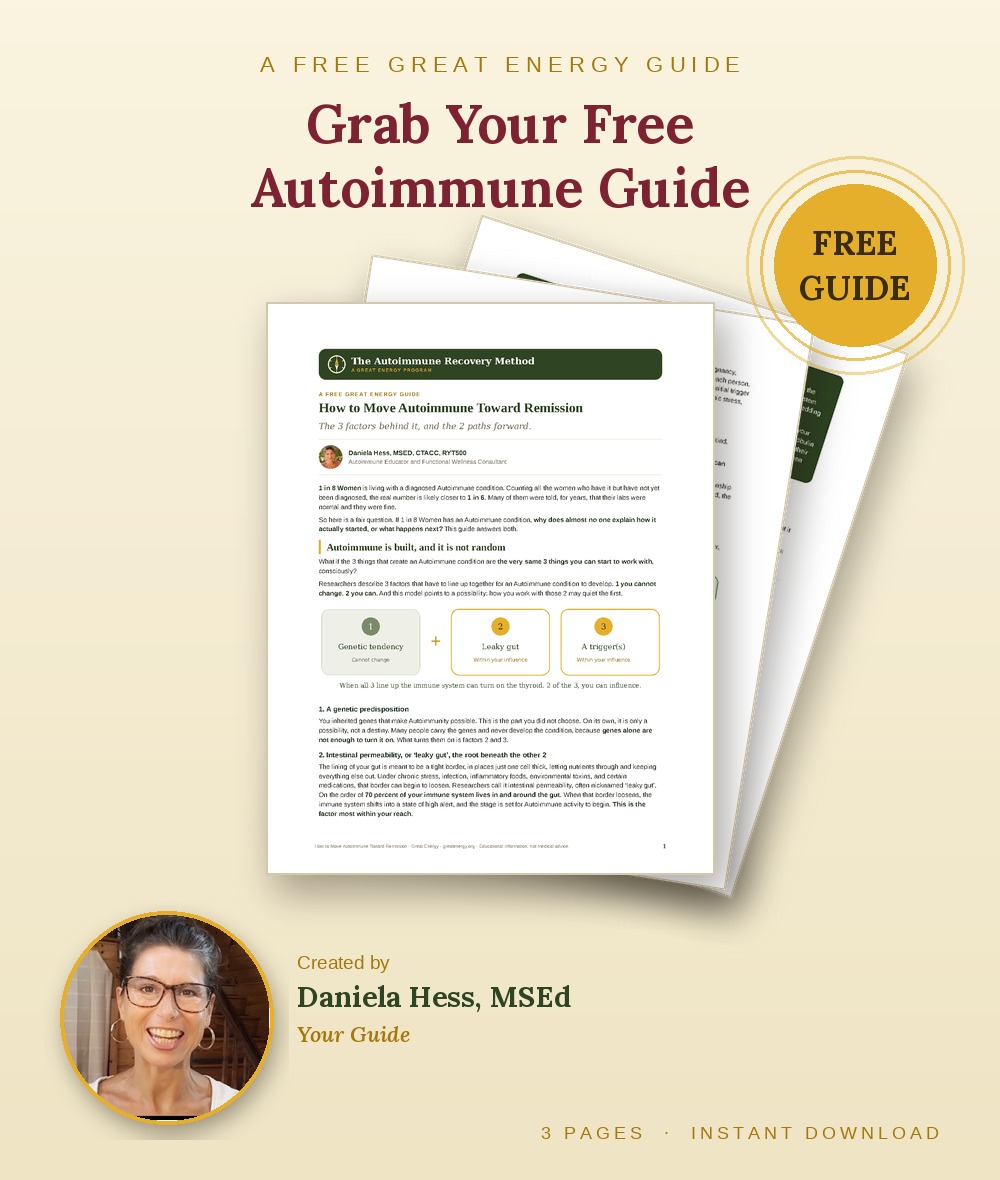
How to Move Autoimmune Toward Remission
The 3 factors behind an Autoimmune condition and the 2 paths forward, free, straight to your inbox.
No spam. Unsubscribe anytime.
Your guide is on its way. You can also open it now (PDF).

Articles from Daniela
Daniela Hess, MSEd, is a co-founder of Great Energy and an Autoimmune Educator and Functional Wellness Consultant who lives and thrives with Hashimoto’s. She is not a licensed medical provider.
AIP recipes to try
A place to start in the kitchen while you work on this with your own clinician: