Gastrointestinal and liver
Autoimmune hepatitis (AIH)
Autoimmune hepatitis affects the liver, where the immune system is understood to target liver cells, producing ongoing inflammation that can scar the liver over time if it stays active. The disease is thought to develop through a combination of genetic susceptibility, including certain HLA gene variants, and immune-regulation problems that allow the body to lose tolerance for its own liver tissue. It can come on suddenly, including as acute liver failure, or build quietly over years toward advanced fibrosis.
Autoimmune hepatitis occurs worldwide, and research describes it as having a low, and likely underestimated, prevalence, since many cases are mild or go undetected until liver blood tests are checked for another reason. It shows a clear female predominance and can appear at any age.
Common signs
Many people feel tired, achy in the joints, or have vague upper-right belly discomfort, nausea, or poor appetite. As inflammation advances, yellowing of the skin or eyes (jaundice), dark urine, pale stools, itching, or a swollen abdomen can appear. Some people have no symptoms and are found through routine blood tests that show elevated liver enzymes.
This is a plain-language summary for orientation, not a diagnosis. Mechanisms are described as current understanding, not settled fact. Work with your own clinician for your care.
Questions people ask
Is autoimmune hepatitis contagious?+
How do you get autoimmune hepatitis?+
What is the prognosis for autoimmune hepatitis?+
In a doctor’s words
“I'm hopeful that someday Ciara may be able to wean off it, but if not, my goal is to have her on as little medication as possible and for her to be able to do all the things she wants to do and live a really happy and healthy life with a well-functioning liver.”
Amy Taylor, MD, hepatologist, Center for Autoimmune Liver Disease, Cincinnati Children's Hospital Medical Center
Read more at Cincinnati Children's Hospital (Patient Story: Meet Ciara) ↗
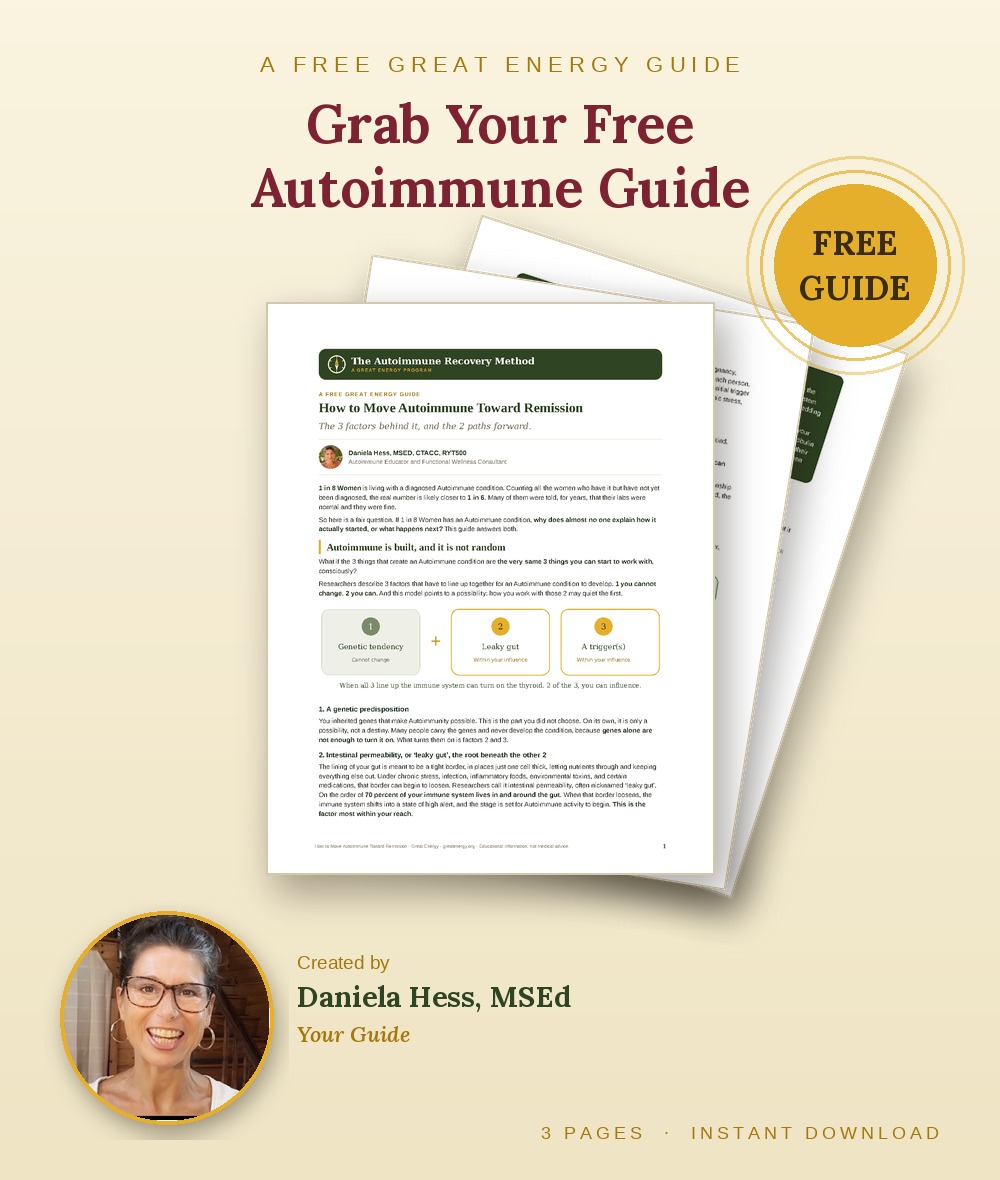
How to Move Autoimmune Toward Remission
The 3 factors behind an Autoimmune condition and the 2 paths forward, free, straight to your inbox.
No spam. Unsubscribe anytime.
Your guide is on its way. You can also open it now (PDF).

Articles from Daniela
Daniela Hess, MSEd, is a co-founder of Great Energy and an Autoimmune Educator and Functional Wellness Consultant who lives and thrives with Hashimoto’s. She is not a licensed medical provider.
AIP recipes to try
A place to start in the kitchen while you work on this with your own clinician: