Kidney and eye
Autoimmune Inner Ear Disease (AIED, included here as an ear condition)
Autoimmune inner ear disease affects the inner ear, the organ of hearing and balance. The immune system is thought to mistakenly target inner-ear tissue through mechanisms that may include molecular mimicry, where immune cells trained to recognize an infection cross-react with similar-looking proteins in the ear, and a bystander effect in which nearby healthy tissue is damaged during an unrelated immune response. Antibodies against heat shock protein 70 have been studied as a possible marker of cochlear damage, though no biomarker is reliable enough yet for routine diagnosis, so it remains a diagnosis of exclusion.
It is included here as an ear condition and is considered rare, with research describing an estimated incidence of fewer than 5 cases per 100,000 people. It can occur alongside a systemic autoimmune disease, and prompt specialist care matters because hearing can be at stake.
Common signs
Hearing loss in both ears that fluctuates but tends to progress over weeks to months, ringing in the ears, a sense of pressure in the ear, and sometimes dizziness or vertigo.
This is a plain-language summary for orientation, not a diagnosis. Mechanisms are described as current understanding, not settled fact. Work with your own clinician for your care.
Questions people ask
What is autoimmune inner ear disease?+
What causes autoimmune inner ear disease?+
How is autoimmune inner ear disease diagnosed?+
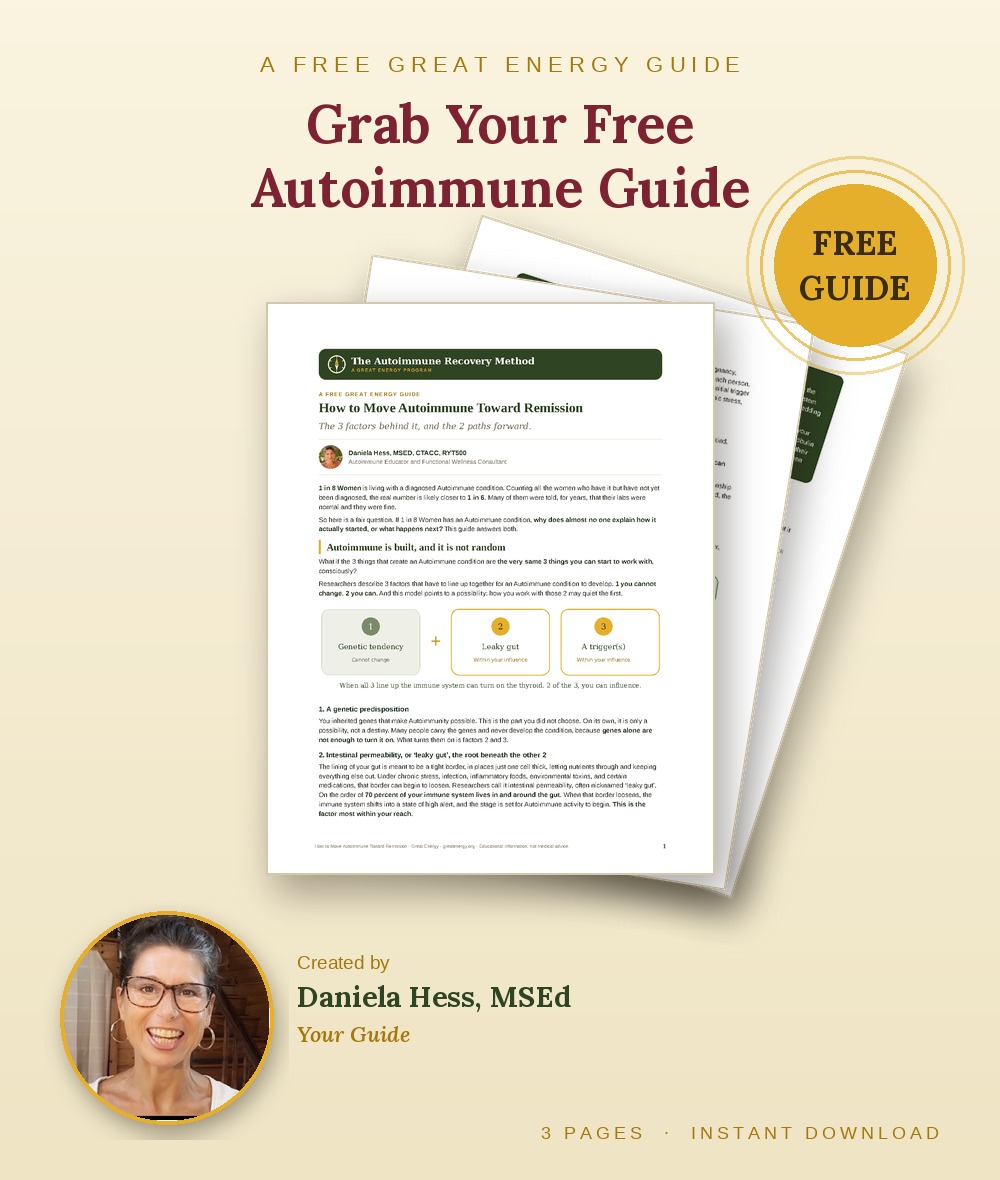
How to Move Autoimmune Toward Remission
The 3 factors behind an Autoimmune condition and the 2 paths forward, free, straight to your inbox.
No spam. Unsubscribe anytime.
Your guide is on its way. You can also open it now (PDF).

Articles from Daniela
Daniela Hess, MSEd, is a co-founder of Great Energy and an Autoimmune Educator and Functional Wellness Consultant who lives and thrives with Hashimoto’s. She is not a licensed medical provider.
AIP recipes to try
A place to start in the kitchen while you work on this with your own clinician: