Multi-system and other
Autoimmune myocarditis
Autoimmune myocarditis is inflammation of the heart muscle driven by the immune system rather than by an active infection, though it can sometimes follow a viral illness. Current understanding describes several contributing factors, including existing autoimmune disease elsewhere in the body, viral triggers, genetic and hormonal influences, and immune cells mistaking heart tissue for a foreign threat, sometimes through a CD4 T-cell driven inflammatory process.
Myocarditis overall is estimated to affect roughly 4 to 14 people per 100,000 each year worldwide, and most adults present with chest pain, and some with shortness of breath or fainting. Only a subset of these cases are specifically autoimmune, such as giant cell myocarditis or eosinophilic necrotizing myocarditis, and it can occur alone or alongside conditions such as lupus. Symptoms can range from mild to serious, and the acute form can be life-threatening and needs prompt specialist care.
Common signs
People may notice chest pain or pressure, shortness of breath, fatigue, palpitations or irregular heartbeats, lightheadedness, and swelling in the legs. Some also notice a recent viral illness with fever or body aches just before heart symptoms begin. Chest pain or breathlessness that comes on suddenly or feels severe is a reason to seek urgent medical attention rather than wait it out.
This is a plain-language summary for orientation, not a diagnosis. Mechanisms are described as current understanding, not settled fact. Work with your own clinician for your care.
Questions people ask
What is autoimmune myocarditis?+
What causes autoimmune myocarditis?+
What are the symptoms of autoimmune myocarditis, and when is it an emergency?+
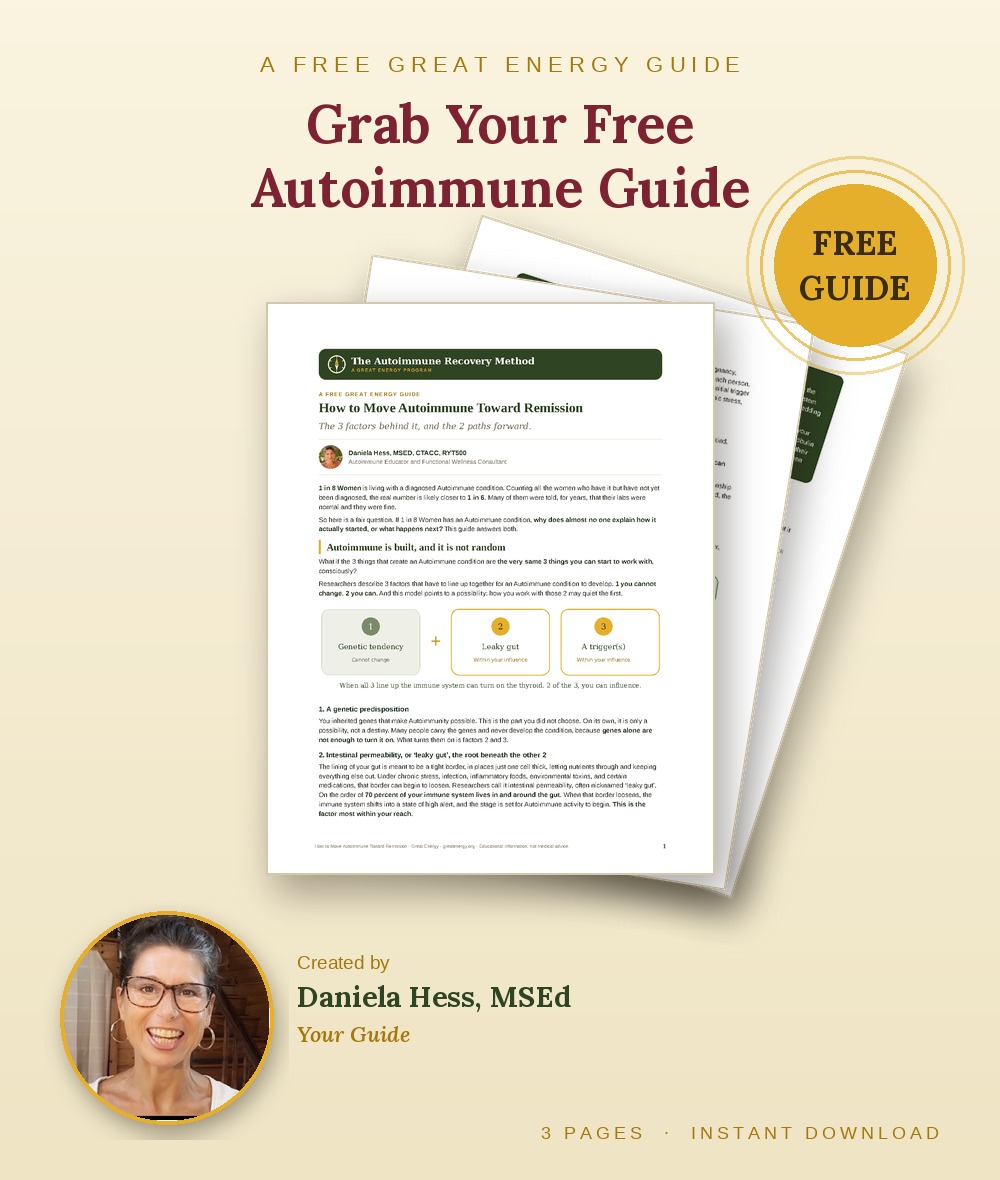
How to Move Autoimmune Toward Remission
The 3 factors behind an Autoimmune condition and the 2 paths forward, free, straight to your inbox.
No spam. Unsubscribe anytime.
Your guide is on its way. You can also open it now (PDF).

Articles from Daniela
Daniela Hess, MSEd, is a co-founder of Great Energy and an Autoimmune Educator and Functional Wellness Consultant who lives and thrives with Hashimoto’s. She is not a licensed medical provider.
AIP recipes to try
A place to start in the kitchen while you work on this with your own clinician: