Endocrine system
Autoimmune oophoritis (autoimmune ovarian inflammation)
Autoimmune oophoritis affects the ovaries, where the immune system is thought to selectively target the theca cells surrounding developing follicles, while leaving other ovarian cells more intact. This pattern of injury is one recognized driver of primary ovarian insufficiency, in which the ovaries lose normal function earlier than expected. Diagnosis is difficult because the accepted gold standard is ovarian biopsy, an invasive step rarely performed in practice, so most cases are inferred rather than confirmed. This condition often appears alongside other autoimmune endocrine conditions, especially Addison's disease.
Because of these diagnostic limits, prevalence is hard to state precisely. Research estimates that autoimmune mechanisms may underlie roughly 4 to 30 percent of premature ovarian failure cases, a wide range that reflects how much uncertainty remains in identifying the autoimmune subtype specifically.
Common signs
irregular, infrequent, or absent periods; difficulty conceiving; and sometimes hot flashes or vaginal dryness. The ovaries may be small, or enlarged when inflammation is active.
This is a plain-language summary for orientation, not a diagnosis. Mechanisms are described as current understanding, not settled fact. Work with your own clinician for your care.
Questions people ask
Can I get pregnant if I have autoimmune oophoritis?+
Is autoimmune oophoritis the same as early menopause?+
How common is autoimmune oophoritis?+
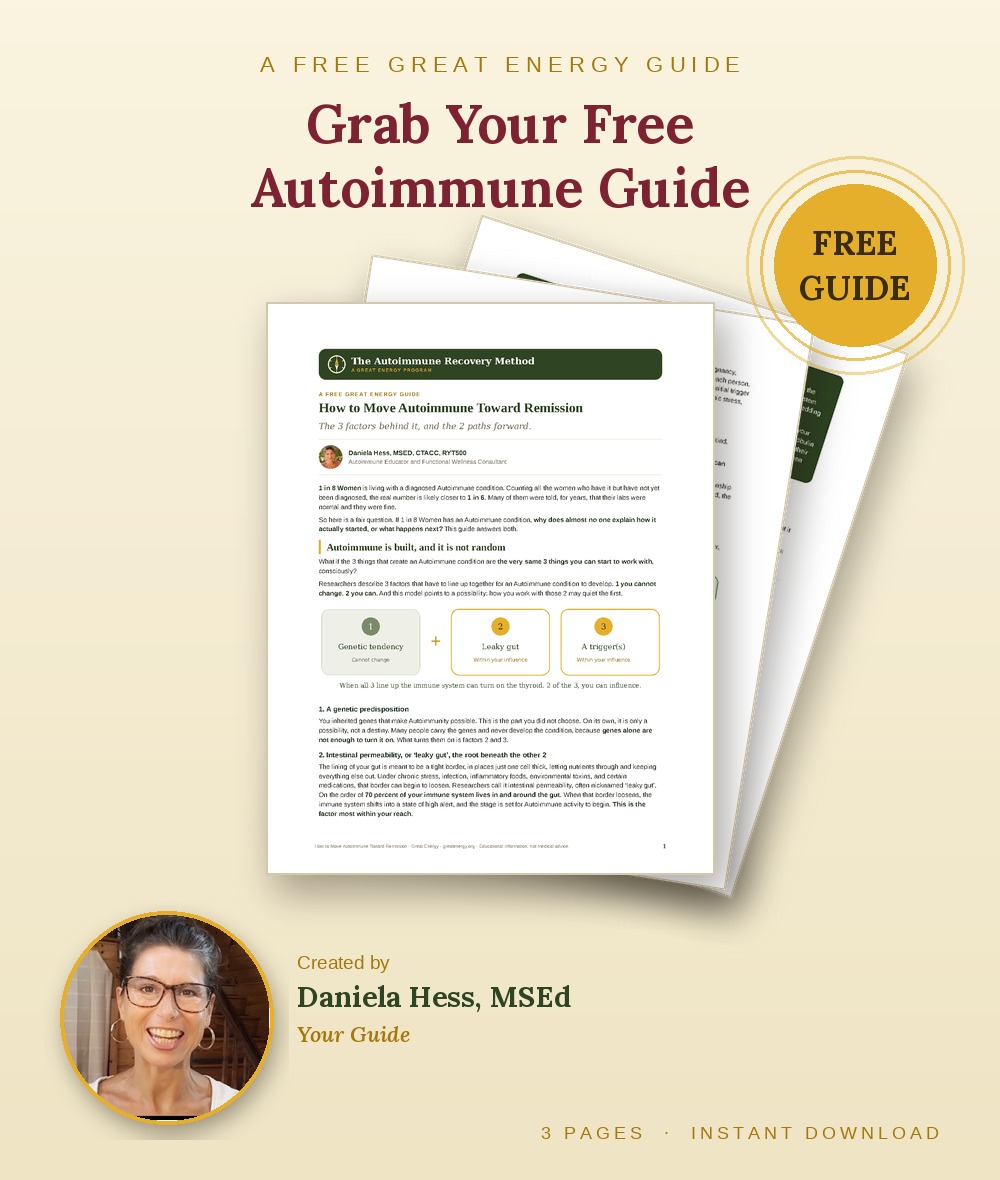
How to Move Autoimmune Toward Remission
The 3 factors behind an Autoimmune condition and the 2 paths forward, free, straight to your inbox.
No spam. Unsubscribe anytime.
Your guide is on its way. You can also open it now (PDF).

Articles from Daniela
Daniela Hess, MSEd, is a co-founder of Great Energy and an Autoimmune Educator and Functional Wellness Consultant who lives and thrives with Hashimoto’s. She is not a licensed medical provider.
AIP recipes to try
A place to start in the kitchen while you work on this with your own clinician: