Endocrine system
Autoimmune orchitis (autoimmune testicular inflammation)
Autoimmune orchitis affects the testicles, where the immune system is thought to target sperm-producing tissue or sperm themselves, largely through anti-sperm antibodies. The testicle is normally an immune-privileged site, meaning it is partly shielded from immune surveillance, and researchers believe infection, inflammation, injury, or surgery such as vasectomy can disrupt that barrier and trigger an immune response against sperm antigens. This is considered one contributor to male infertility, alongside other causes like varicocele and prior epididymo-orchitis.
Research describes anti-sperm antibodies as present in roughly 5 to 12 percent of infertile male partners, though this reflects antibody presence broadly rather than a confirmed diagnosis of autoimmune orchitis itself, and reliable prevalence figures for the condition as a distinct diagnosis remain limited.
Common signs
it is often quiet, with reduced fertility as the main sign; some men notice testicular discomfort, swelling, or tenderness.
This is a plain-language summary for orientation, not a diagnosis. Mechanisms are described as current understanding, not settled fact. Work with your own clinician for your care.
Where this comes from
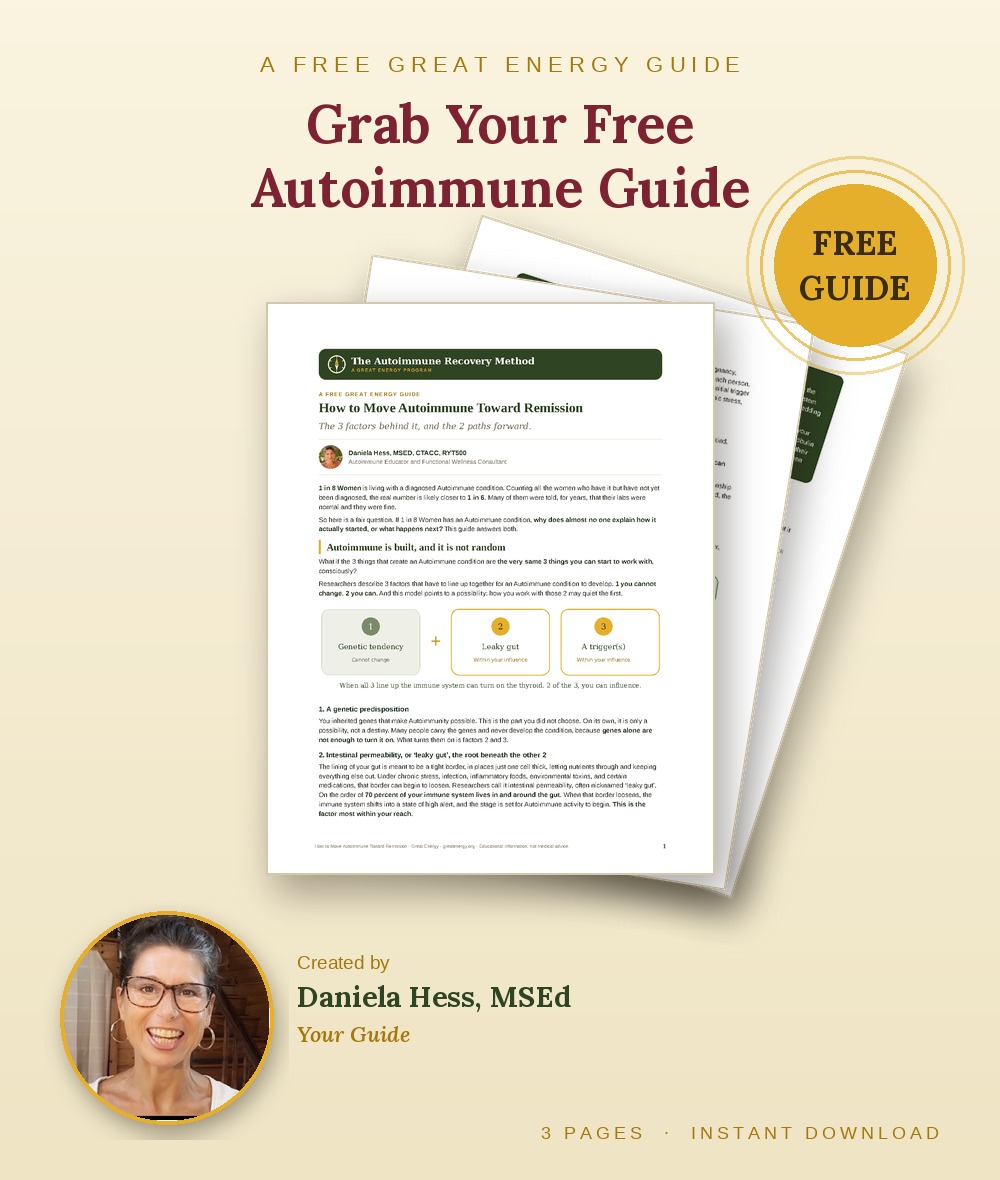
How to Move Autoimmune Toward Remission
The 3 factors behind an Autoimmune condition and the 2 paths forward, free, straight to your inbox.
No spam. Unsubscribe anytime.
Your guide is on its way. You can also open it now (PDF).

Articles from Daniela
Daniela Hess, MSEd, is a co-founder of Great Energy and an Autoimmune Educator and Functional Wellness Consultant who lives and thrives with Hashimoto’s. She is not a licensed medical provider.
AIP recipes to try
A place to start in the kitchen while you work on this with your own clinician: