Endocrine system
Autoimmune polyendocrine syndrome type 1 (APS-1, APECED)
APS-1 is a rare inherited condition, caused by mutations in the AIRE gene, which normally helps the immune system learn to tolerate the body's own tissues. When AIRE is defective, the immune system is thought to lose tolerance toward several hormone glands and other tissues at once, most classically the parathyroid glands, the adrenal cortex, and the skin and mucous membranes that resist candida. Researchers describe this as an autosomal recessive disorder, meaning a person needs two altered copies of the gene, one from each parent, to develop it.
APS-1 is genuinely rare in most populations and research describes it as having limited epidemiological data overall, though certain founder populations carry a much higher burden: reported prevalence reaches roughly 1 in 14,000 in Sardinia and 1 in 9,000 among Iranian Jews, with Finland and other Scandinavian countries also reporting elevated rates.
Common signs
recurring candida infections of the mouth, skin, or nails; symptoms of low calcium such as muscle cramps and tingling; and adrenal symptoms such as fatigue, low blood pressure, and salt craving. It can also involve the thyroid, type 1 diabetes, ovarian or testicular changes, vitiligo, alopecia, and, less often, the eyes, teeth, or liver.
This is a plain-language summary for orientation, not a diagnosis. Mechanisms are described as current understanding, not settled fact. Work with your own clinician for your care.
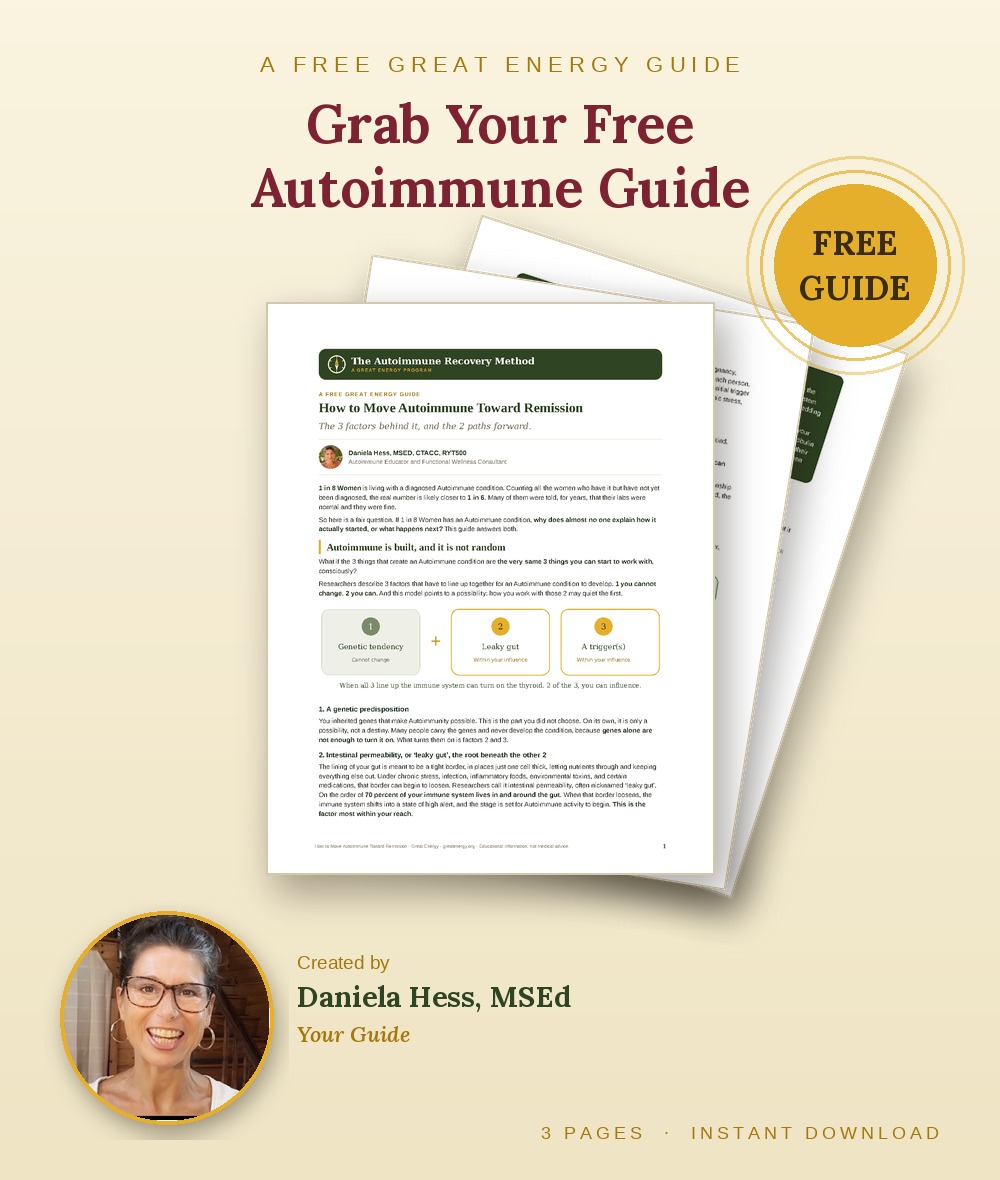
How to Move Autoimmune Toward Remission
The 3 factors behind an Autoimmune condition and the 2 paths forward, free, straight to your inbox.
No spam. Unsubscribe anytime.
Your guide is on its way. You can also open it now (PDF).

Articles from Daniela
Daniela Hess, MSEd, is a co-founder of Great Energy and an Autoimmune Educator and Functional Wellness Consultant who lives and thrives with Hashimoto’s. She is not a licensed medical provider.
AIP recipes to try
A place to start in the kitchen while you work on this with your own clinician: