Endocrine system
Autoimmune polyendocrine syndrome type 2 (Schmidt syndrome)
APS-2 is a cluster in which the immune system is thought to target more than one hormone gland over time, most often combining Addison's disease with autoimmune thyroid disease and, in some people, type 1 diabetes. Unlike APS-1, it is not tied to a single known gene and instead is understood as a polygenic condition with incomplete penetrance, meaning genetic risk factors raise susceptibility without guaranteeing the condition will develop.
It typically emerges in early adulthood, with peak onset in the third or fourth decade, and research describes it as roughly three times more common in women than in men. APS-2 is considered rare. Estimates vary across studies, with some research citing a prevalence near 1 in 20,000 and others reporting a lower range of about 1.4 to 4.5 cases per 100,000 people, reflecting how inconsistently the condition has been tracked across populations.
Common signs
a blend of the involved conditions, for example the fatigue, low blood pressure, and salt craving of Addison's, the underactive-thyroid picture of Hashimoto's or the overactive picture of Graves', and the thirst, frequent urination, and weight changes of type 1 diabetes.
This is a plain-language summary for orientation, not a diagnosis. Mechanisms are described as current understanding, not settled fact. Work with your own clinician for your care.
Where this comes from
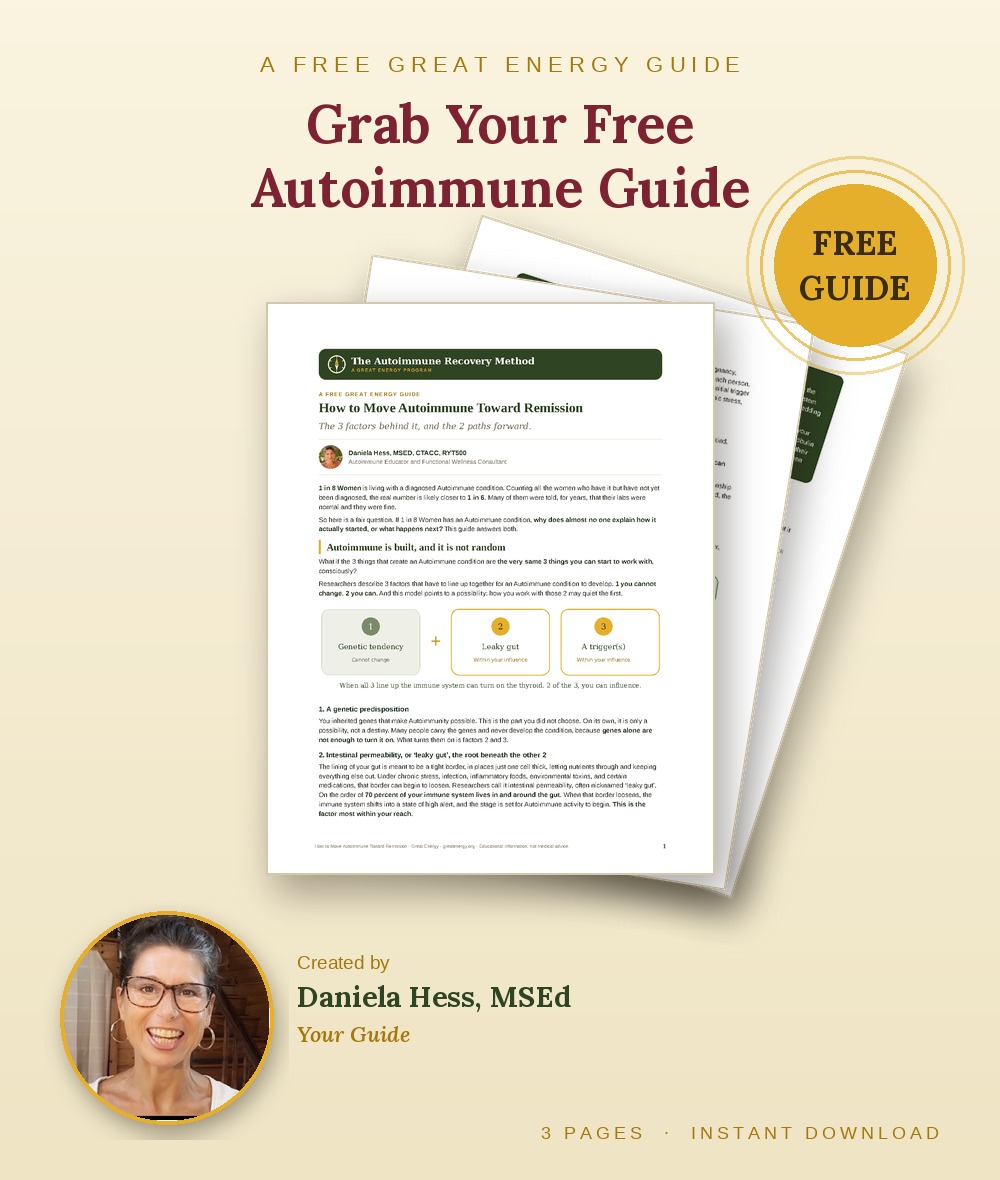
How to Move Autoimmune Toward Remission
The 3 factors behind an Autoimmune condition and the 2 paths forward, free, straight to your inbox.
No spam. Unsubscribe anytime.
Your guide is on its way. You can also open it now (PDF).

Articles from Daniela
Daniela Hess, MSEd, is a co-founder of Great Energy and an Autoimmune Educator and Functional Wellness Consultant who lives and thrives with Hashimoto’s. She is not a licensed medical provider.
AIP recipes to try
A place to start in the kitchen while you work on this with your own clinician: