Multi-system and other
Autoimmune progesterone dermatitis (APD) (related)
Autoimmune progesterone dermatitis is a rare, autoimmune-related skin condition in which the body reacts to its own progesterone, the hormone that rises in the second half of the menstrual cycle. Because the reaction is tied to a natural hormone and follows the cycle, the rash tends to appear in a predictable pattern in the days before a period, when progesterone peaks, and ease again once menstruation begins. It is described as a cyclical hypersensitivity reaction, and presentations vary widely, ranging from hives and eczema-like patches to target-shaped lesions and, rarely, anaphylaxis.
A systematic review of the published literature found only around 50 documented cases of the condition worldwide, underscoring how rare and likely underdiagnosed it is, since many milder cases may never be evaluated or correctly identified. Diagnosis typically involves a skin test using progesterone itself, and treatment focuses on suppressing ovulation or desensitizing the immune response to progesterone, since the condition is tied directly to the hormonal cycle.
Common signs
Because the trigger is the body's own progesterone, reactions can also be set off by progesterone-containing medications such as certain birth control pills or fertility treatments, which is sometimes how the pattern is first recognized. In the rare cases where anaphylaxis occurs, it needs immediate emergency care, and anyone with a sudden, severe, or breathing-related reaction during this part of the cycle should seek care right away.
This is a plain-language summary for orientation, not a diagnosis. Mechanisms are described as current understanding, not settled fact. Work with your own clinician for your care.
Questions people ask
What are the symptoms of autoimmune progesterone dermatitis?+
What triggers autoimmune progesterone dermatitis?+
Can autoimmune progesterone dermatitis be cured, or does it go away?+
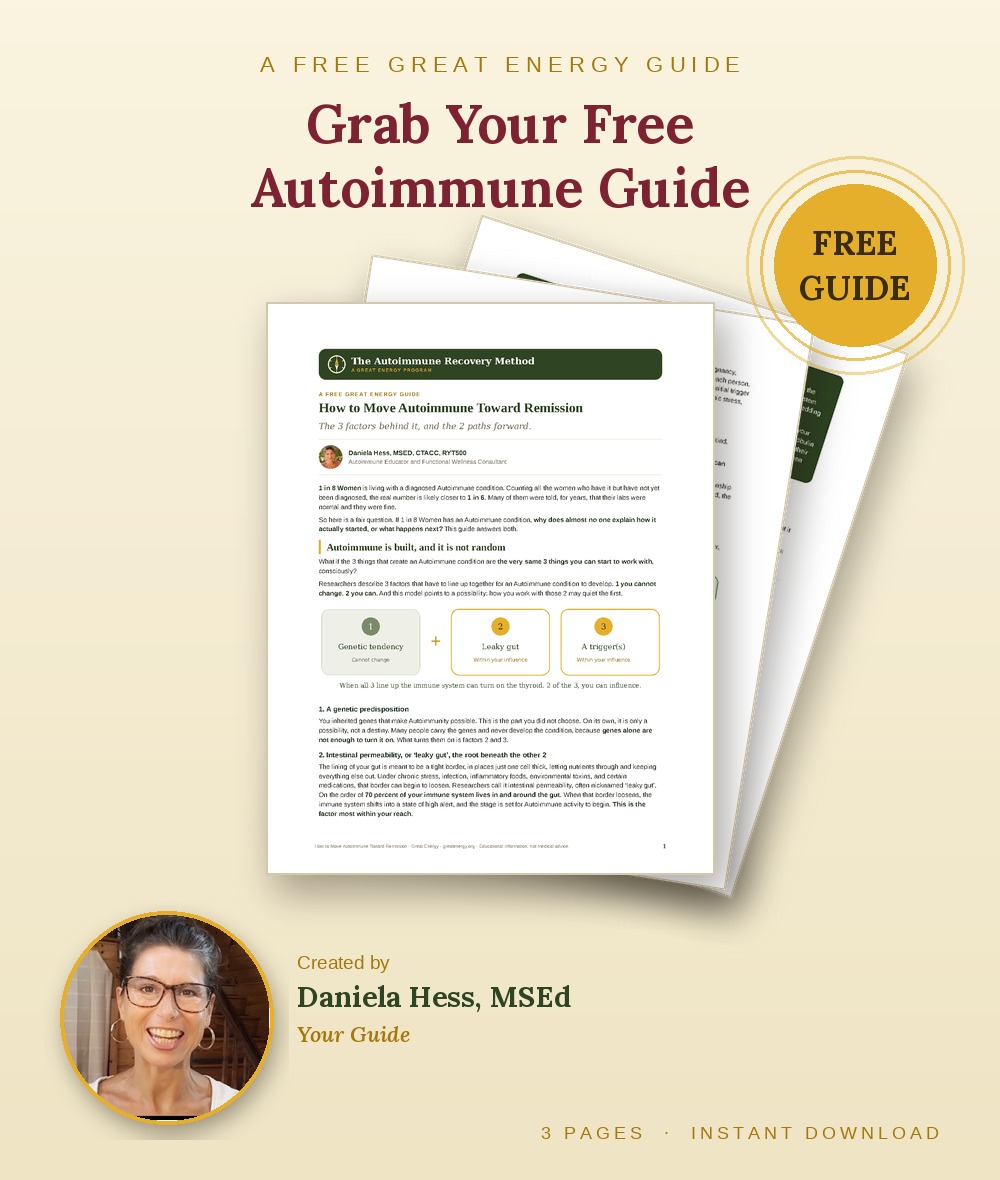
How to Move Autoimmune Toward Remission
The 3 factors behind an Autoimmune condition and the 2 paths forward, free, straight to your inbox.
No spam. Unsubscribe anytime.
Your guide is on its way. You can also open it now (PDF).

Articles from Daniela
Daniela Hess, MSEd, is a co-founder of Great Energy and an Autoimmune Educator and Functional Wellness Consultant who lives and thrives with Hashimoto’s. She is not a licensed medical provider.
AIP recipes to try
A place to start in the kitchen while you work on this with your own clinician: