Multi-system and other
Autoinflammatory syndromes overview (familial Mediterranean fever as the example)
Autoinflammatory syndromes are a family of conditions in which the innate immune system, the body's fast, non-specific first line of defense, switches on inappropriately and causes recurring inflammation. This is distinct from classic autoimmunity, where the immune system makes antibodies or specialized cells that target the body's own tissue. Familial Mediterranean fever, the most studied example, is caused by changes in the MEFV gene, inherited in an autosomal recessive pattern, that alter a protein called pyrin involved in regulating the innate immune system, leading to uncontrolled production of the inflammatory signal interleukin-1.
It is described as the most prevalent monogenic autoinflammatory periodic fever syndrome worldwide, occurring predominantly in people with ancestry from the Mediterranean basin, including Turkish, Armenian, Arab, and Sephardic Jewish populations. In FMF, episodes typically bring sudden fevers along with belly pain, chest pain, or painful, swollen joints, often lasting one to three days before easing, and many people feel well between episodes, though long-term complications such as kidney involvement can develop without treatment.
Common signs
A tender, reddish rash on the lower legs, often looking like erysipelas, can appear during FMF attacks. Because episodes can look like appendicitis or another surgical emergency, many people are misdiagnosed for years before an autoinflammatory cause is recognized. Other syndromes in this family, such as TRAPS and hyper-IgD syndrome, follow the same fever-and-inflammation pattern, and differ in how long episodes last and what triggers them.
This is a plain-language summary for orientation, not a diagnosis. Mechanisms are described as current understanding, not settled fact. Work with your own clinician for your care.
Questions people ask
What's the difference between autoinflammatory diseases and autoimmune diseases?+
Why are FMF attacks sometimes mistaken for appendicitis?+
Who is most likely to get familial Mediterranean fever?+
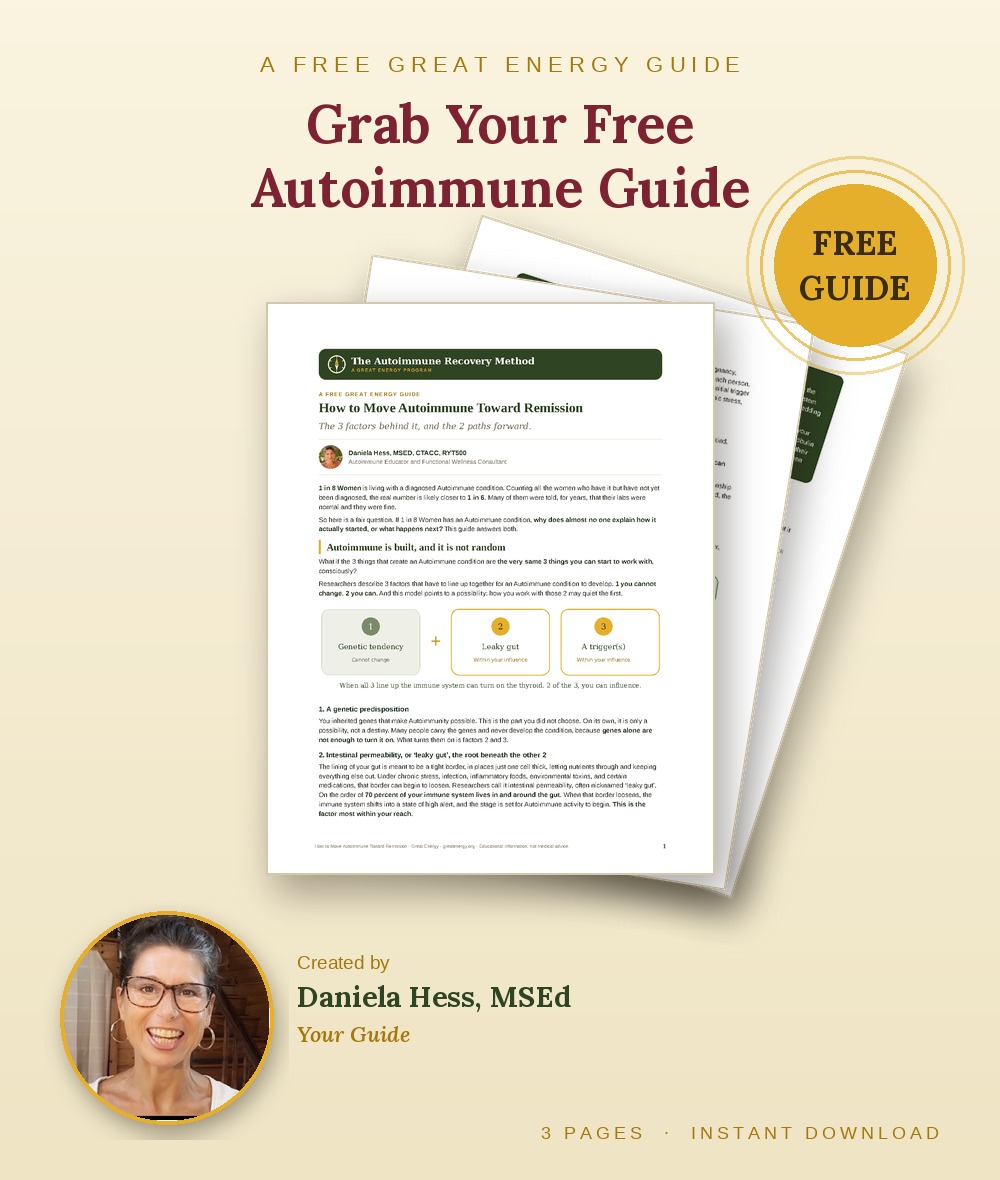
How to Move Autoimmune Toward Remission
The 3 factors behind an Autoimmune condition and the 2 paths forward, free, straight to your inbox.
No spam. Unsubscribe anytime.
Your guide is on its way. You can also open it now (PDF).

Articles from Daniela
Daniela Hess, MSEd, is a co-founder of Great Energy and an Autoimmune Educator and Functional Wellness Consultant who lives and thrives with Hashimoto’s. She is not a licensed medical provider.
AIP recipes to try
A place to start in the kitchen while you work on this with your own clinician: