Blood and blood vessels
Behcet's disease
Behcet's disease is a chronic, relapsing condition involving inflammation of blood vessels of varying sizes, in which the immune system appears to drive recurring inflammation in different parts of the body, most often the mouth, skin, eyes, and joints. Its cause is not fully understood and current research describes a combination of genetic susceptibility, with the HLA-B51 gene the strongest known risk factor, and environmental triggers such as certain infections that together appear to prompt an overactive immune response.
Behcet's disease is markedly more common along the historic Silk Route through the Middle East and East Asia, with estimated prevalence as high as several hundred per 100,000 people in Turkey, and far less common in Western countries such as the United Kingdom, where it affects fewer than 1 per 100,000. Onset usually occurs in the third or fourth decade of life, and men and women are affected in roughly equal numbers, though the pattern and severity of symptoms can differ between the sexes and by region.
Common signs
Recurring painful mouth sores, genital sores, eye inflammation that can affect vision, skin lesions, joint pain and swelling, and sometimes involvement of the gut, brain, or blood vessels.
This is a plain-language summary for orientation, not a diagnosis. Mechanisms are described as current understanding, not settled fact. Work with your own clinician for your care.
Questions people ask
What causes Behcet's disease?+
Is Behcet's disease contagious?+
Is Behcet's disease hereditary, or does it run in families?+
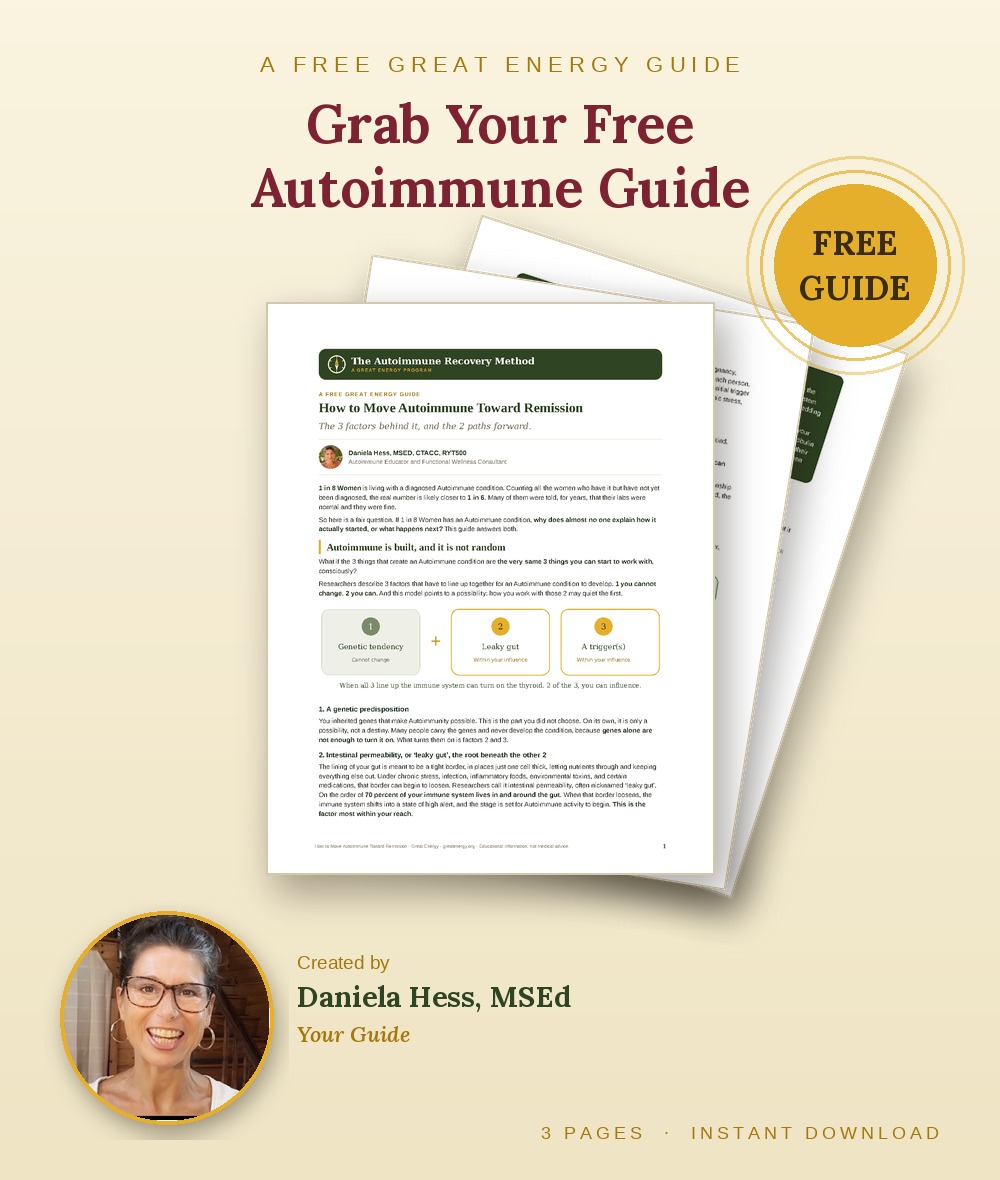
How to Move Autoimmune Toward Remission
The 3 factors behind an Autoimmune condition and the 2 paths forward, free, straight to your inbox.
No spam. Unsubscribe anytime.
Your guide is on its way. You can also open it now (PDF).

Articles from Daniela
Daniela Hess, MSEd, is a co-founder of Great Energy and an Autoimmune Educator and Functional Wellness Consultant who lives and thrives with Hashimoto’s. She is not a licensed medical provider.
AIP recipes to try
A place to start in the kitchen while you work on this with your own clinician: