Kidney and eye
Birdshot Chorioretinopathy
Birdshot chorioretinopathy affects the choroid and retina at the back of the eye. It is understood as an immune-driven inflammation of these tissues, and carries one of the strongest known associations between a genetic marker, the HLA-A29 allele, and any human disease, with more recent research pointing to a gene called ERAP2 as a contributor to how that genetic risk translates into disease.
A 2022 review described it as affecting mainly middle-aged adults of European descent, with a mean age at presentation of 53 and a slight female predominance, and noted that at least 96 percent of reported cases test positive for HLA-A29. It is chronic and can progress, and there is no single agreed treatment protocol, so ongoing care with an eye specialist matters for protecting vision, typically involving corticosteroids and often longer-term immunosuppressive therapy.
Common signs
Blurred vision, floaters, flashes of light, blind spots, trouble seeing at night, and difficulty with color or contrast. Symptoms can be mild at first, which sometimes delays diagnosis.
This is a plain-language summary for orientation, not a diagnosis. Mechanisms are described as current understanding, not settled fact. Work with your own clinician for your care.
Where this comes from
Questions people ask
What causes birdshot chorioretinopathy?+
Who is most likely to develop birdshot chorioretinopathy?+
Is birdshot chorioretinopathy curable?+
In a doctor’s words
“Over the last 10 to 20 years, ophthalmologists have increasingly been more aware of this as a diagnosis and referring patients earlier, so we're seeing them at a younger age, which is really fantastic.”
Jennifer Thorne, MD, PhD, Cross Family Professor of Ophthalmology, Johns Hopkins University School of Medicine; Chief, Division of Ocular Immunology, Wilmer Eye Institute
Read more at Johns Hopkins Medicine ↗
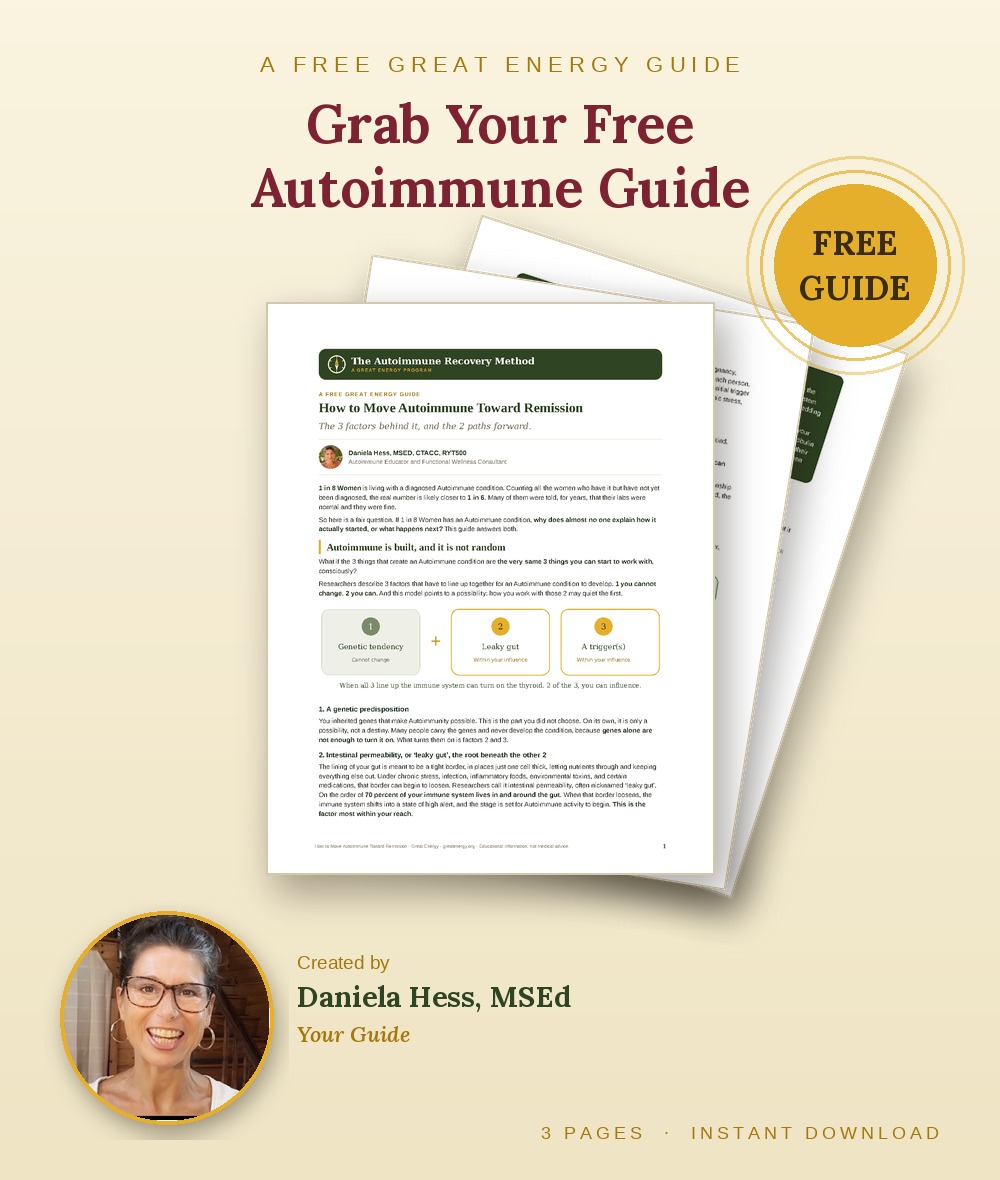
How to Move Autoimmune Toward Remission
The 3 factors behind an Autoimmune condition and the 2 paths forward, free, straight to your inbox.
No spam. Unsubscribe anytime.
Your guide is on its way. You can also open it now (PDF).
Articles from Daniela
Daniela Hess, MSEd, is a co-founder of Great Energy and an Autoimmune Educator and Functional Wellness Consultant who lives and thrives with Hashimoto’s. She is not a licensed medical provider.
AIP recipes to try
A place to start in the kitchen while you work on this with your own clinician: