Skin and hair
Bullous pemphigoid (BP)
Bullous pemphigoid affects the skin, most often in older adults. The immune system produces antibodies against BP180 and BP230, two proteins that help anchor the outer layer of skin to the layer beneath it, and most patients' antibodies target a specific region of BP180 called the NC16A domain. As that anchoring breaks down, fluid separates the skin layers and forms tense blisters, with complement activation and the buildup of eosinophils and neutrophils driving much of the surrounding inflammation. Research also points to a type 2 immune signature in many cases, including elevated IgE and eosinophil activity in the affected skin.
Bullous pemphigoid is described as the most common subepidermal blistering disease, though it remains uncommon overall, with global incidence estimated at well under one new case per 1,000 person-years, concentrated heavily in people over 70.
Common signs
Large, tense, fluid-filled blisters, often on the arms, legs, trunk, and skin folds, frequently preceded by intense itching and red, hive-like or eczema-like patches. The blisters tend to be firm rather than easily broken, and the mouth is involved less often than in some other blistering conditions, such as pemphigus vulgaris. Healed skin usually clears without scarring.
This is a plain-language summary for orientation, not a diagnosis. Mechanisms are described as current understanding, not settled fact. Work with your own clinician for your care.
Questions people ask
What is bullous pemphigoid and what causes it?+
What are the symptoms of bullous pemphigoid, and does it scar?+
Is bullous pemphigoid the same as pemphigus vulgaris?+
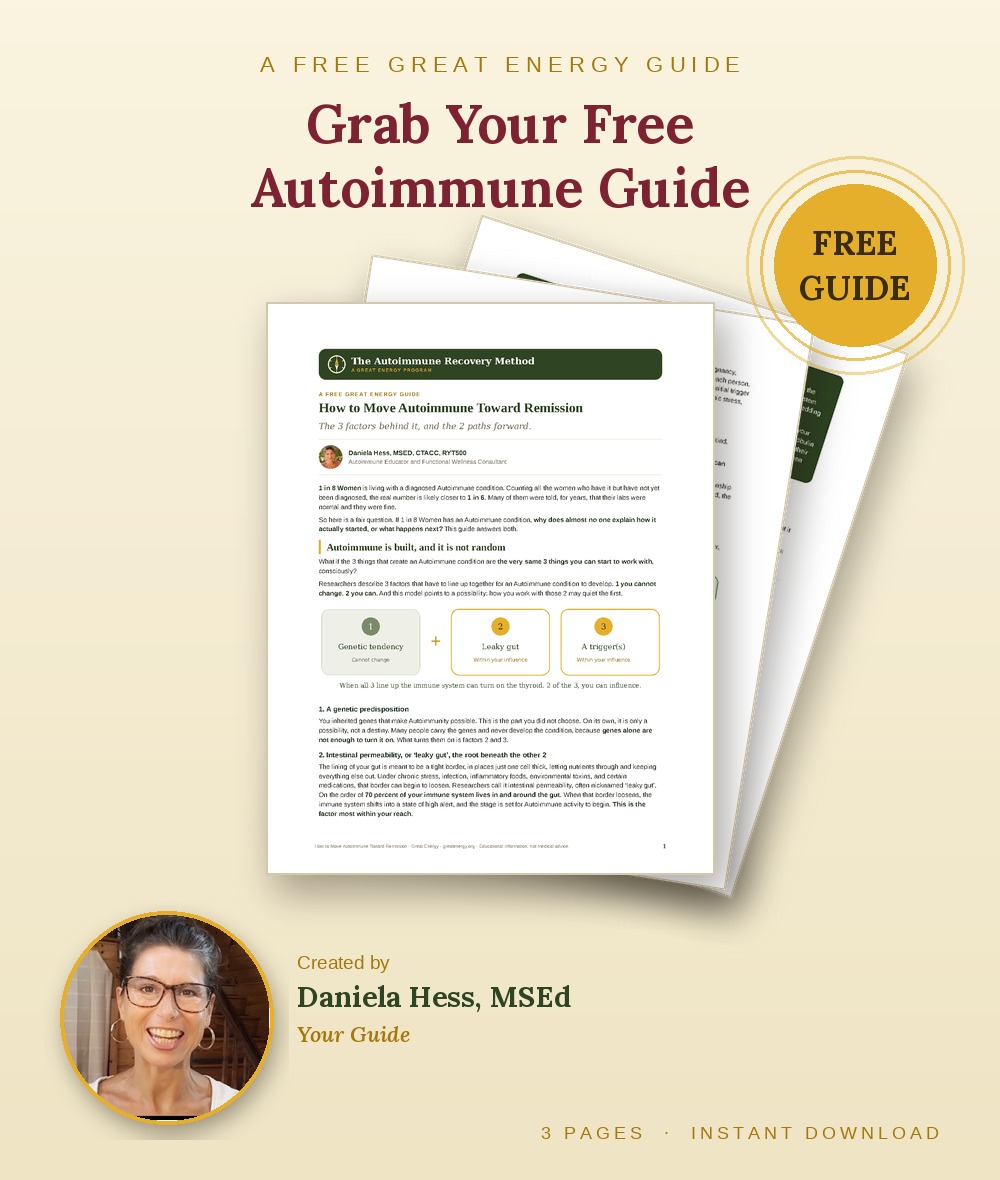
How to Move Autoimmune Toward Remission
The 3 factors behind an Autoimmune condition and the 2 paths forward, free, straight to your inbox.
No spam. Unsubscribe anytime.
Your guide is on its way. You can also open it now (PDF).
Articles from Daniela
Daniela Hess, MSEd, is a co-founder of Great Energy and an Autoimmune Educator and Functional Wellness Consultant who lives and thrives with Hashimoto’s. She is not a licensed medical provider.
AIP recipes to try
A place to start in the kitchen while you work on this with your own clinician: