Gastrointestinal and liver
Celiac disease (coeliac disease)
Celiac disease is an immune-mediated reaction to gluten, a protein found in wheat, barley, and rye, that occurs in people with a genetic susceptibility carried by the HLA-DQ2 or HLA-DQ8 genes. Eating gluten triggers an immune response in the small intestine that produces characteristic autoantibodies against tissue transglutaminase and endomysium, and damages the intestinal lining by flattening the villi that normally absorb nutrients.
Celiac disease affects an estimated 1 percent of people worldwide, though a large share of cases are believed to go undiagnosed, and presentation ranges from severe malabsorption to few or no digestive symptoms at all.
Common signs
Diarrhea, bloating, gas, abdominal pain, and greasy or foul stools are common, though many people have quieter signs instead, such as fatigue, iron-deficiency anemia, low B12 or vitamin D, weight loss, mouth ulcers, an itchy blistering rash, brain fog, or bone thinning over time. Some women also have infertility or miscarriage linked to undiagnosed disease.
This is a plain-language summary for orientation, not a diagnosis. Mechanisms are described as current understanding, not settled fact. Work with your own clinician for your care.
Questions people ask
Is celiac disease hereditary?+
Is there a cure for celiac disease?+
What foods should I avoid with celiac disease?+
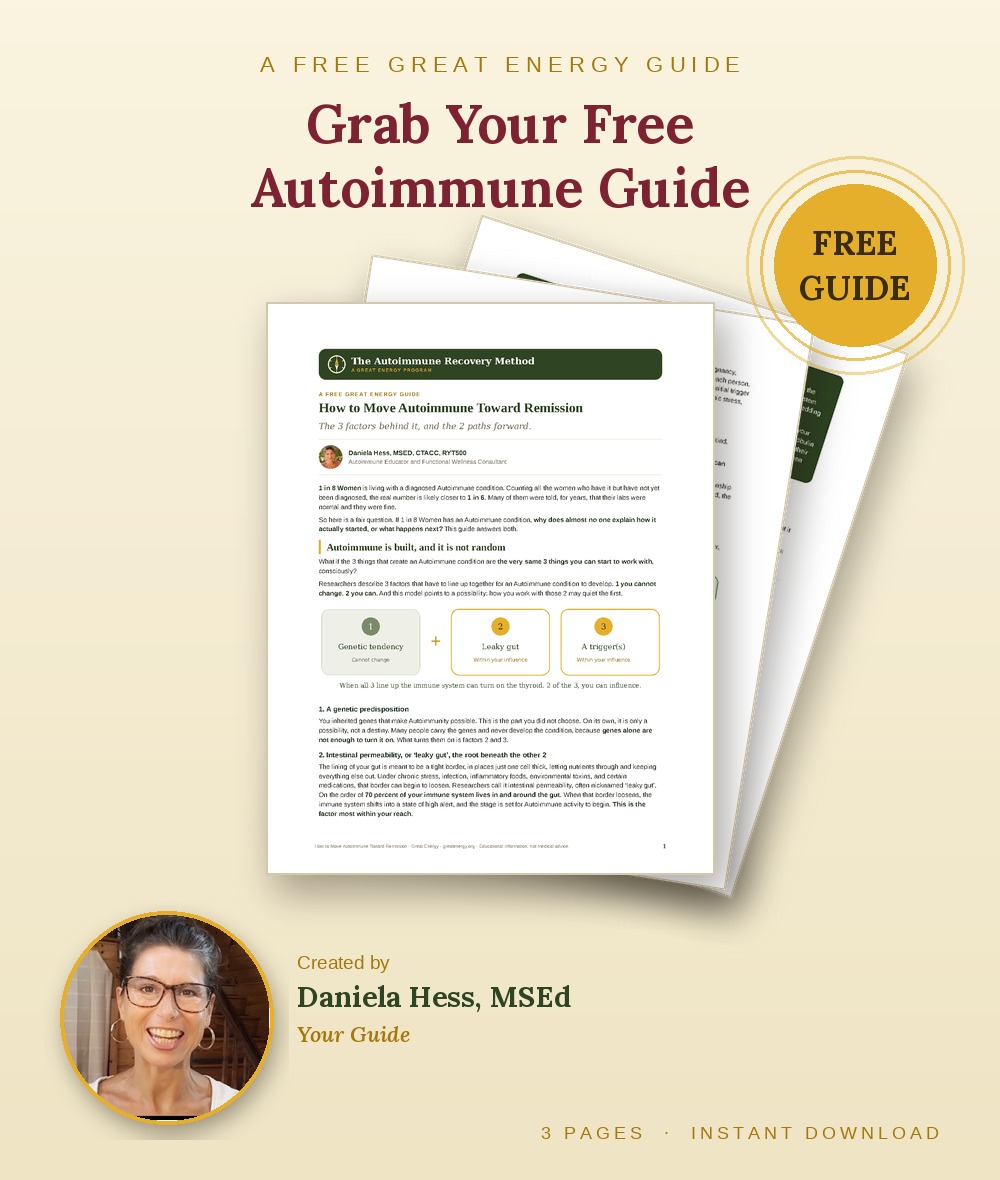
How to Move Autoimmune Toward Remission
The 3 factors behind an Autoimmune condition and the 2 paths forward, free, straight to your inbox.
No spam. Unsubscribe anytime.
Your guide is on its way. You can also open it now (PDF).

Articles from Daniela
Daniela Hess, MSEd, is a co-founder of Great Energy and an Autoimmune Educator and Functional Wellness Consultant who lives and thrives with Hashimoto’s. She is not a licensed medical provider.
AIP recipes to try
A place to start in the kitchen while you work on this with your own clinician: