Skin and hair
Cicatricial pemphigoid (mucous membrane pemphigoid)
Mucous membrane pemphigoid, also called cicatricial pemphigoid, is a rare chronic autoimmune blistering condition in which antibodies and complement deposit along the basement membrane of mucous membranes and sometimes the skin. Research describes this immune activity as driving blistering, erosions, and, over time, fibrosis and scarring in affected tissue, which is where the name 'cicatricial' comes from.
The eyes and mouth are the most frequently affected sites, involved in an estimated 85 and 65 percent of cases respectively, followed less often by the nose, throat, genitals, and esophagus. Scarring in the eyes and airway is the most serious long-term concern, and research describes roughly half of patients developing esophageal or ocular scarring severe enough to cause narrowing or vision loss if the disease is not controlled. Mucous membrane pemphigoid typically begins in later adulthood and is considered a rare disease overall.
Common signs
Blisters and painful erosions of the mucous membranes, most often in the mouth (including tender, bright-red gums) and the eyes, and possibly the nose, throat, voice box, food pipe, and genitals. Eye involvement can cause redness, irritation, and progressive scarring, and skin blisters, when present, most often appear on the scalp, face, and neck.
This is a plain-language summary for orientation, not a diagnosis. Mechanisms are described as current understanding, not settled fact. Work with your own clinician for your care.
Questions people ask
What is mucous membrane pemphigoid and what causes it?+
Can mucous membrane pemphigoid cause blindness?+
What is the difference between mucous membrane pemphigoid and bullous pemphigoid?+
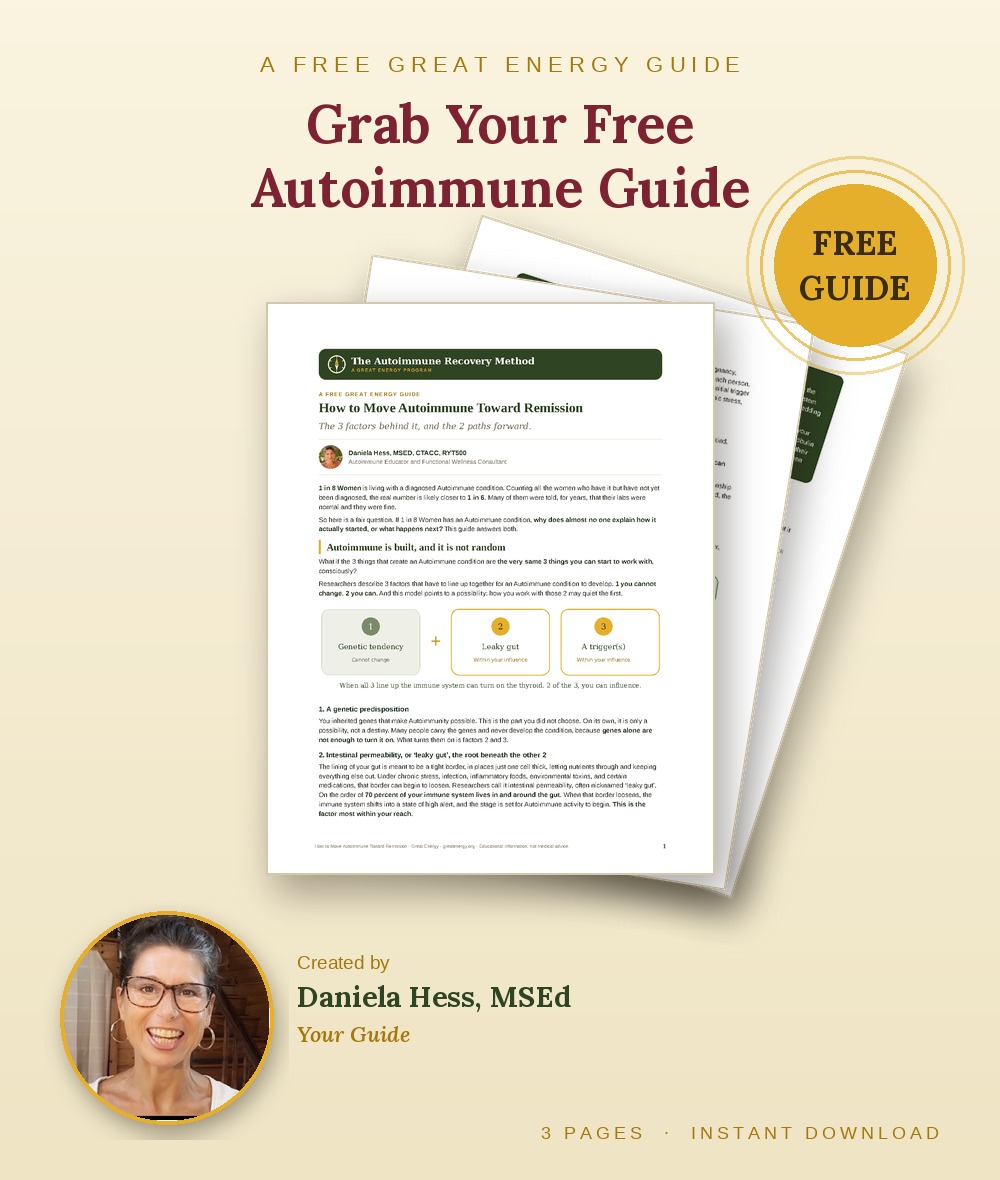
How to Move Autoimmune Toward Remission
The 3 factors behind an Autoimmune condition and the 2 paths forward, free, straight to your inbox.
No spam. Unsubscribe anytime.
Your guide is on its way. You can also open it now (PDF).

Articles from Daniela
Daniela Hess, MSEd, is a co-founder of Great Energy and an Autoimmune Educator and Functional Wellness Consultant who lives and thrives with Hashimoto’s. She is not a licensed medical provider.
AIP recipes to try
A place to start in the kitchen while you work on this with your own clinician: