Blood and blood vessels
Cold agglutinin disease (CAD)
Cold agglutinin disease is a form of autoimmune hemolytic anemia in which the immune system produces antibodies, usually of the IgM type, that become active at cooler temperatures and attach to red blood cells in the smaller blood vessels near the body's surface. This binding activates part of the immune system called the complement pathway, and the affected red blood cells are broken down faster than the body can replace them.
CAD is rare and research describes a prevalence estimated around 1 to 3 cases per 100,000 people in the United States, with cold climates associated with higher rates than warmer ones. It tends to appear later in life, around the mid-sixties on average, and is more common in women, and exposure to cold typically brings on or worsens symptoms.
Common signs
Fatigue and shortness of breath from anemia, a fast heartbeat, pale or yellowish skin, dark urine, and bluish or painful fingers, toes, ears, or nose on exposure to cold, which often eases with warming.
This is a plain-language summary for orientation, not a diagnosis. Mechanisms are described as current understanding, not settled fact. Work with your own clinician for your care.
Questions people ask
What causes cold agglutinin disease?+
Why do cold temperatures trigger symptoms of cold agglutinin disease?+
Is cold agglutinin disease the same as autoimmune hemolytic anemia?+
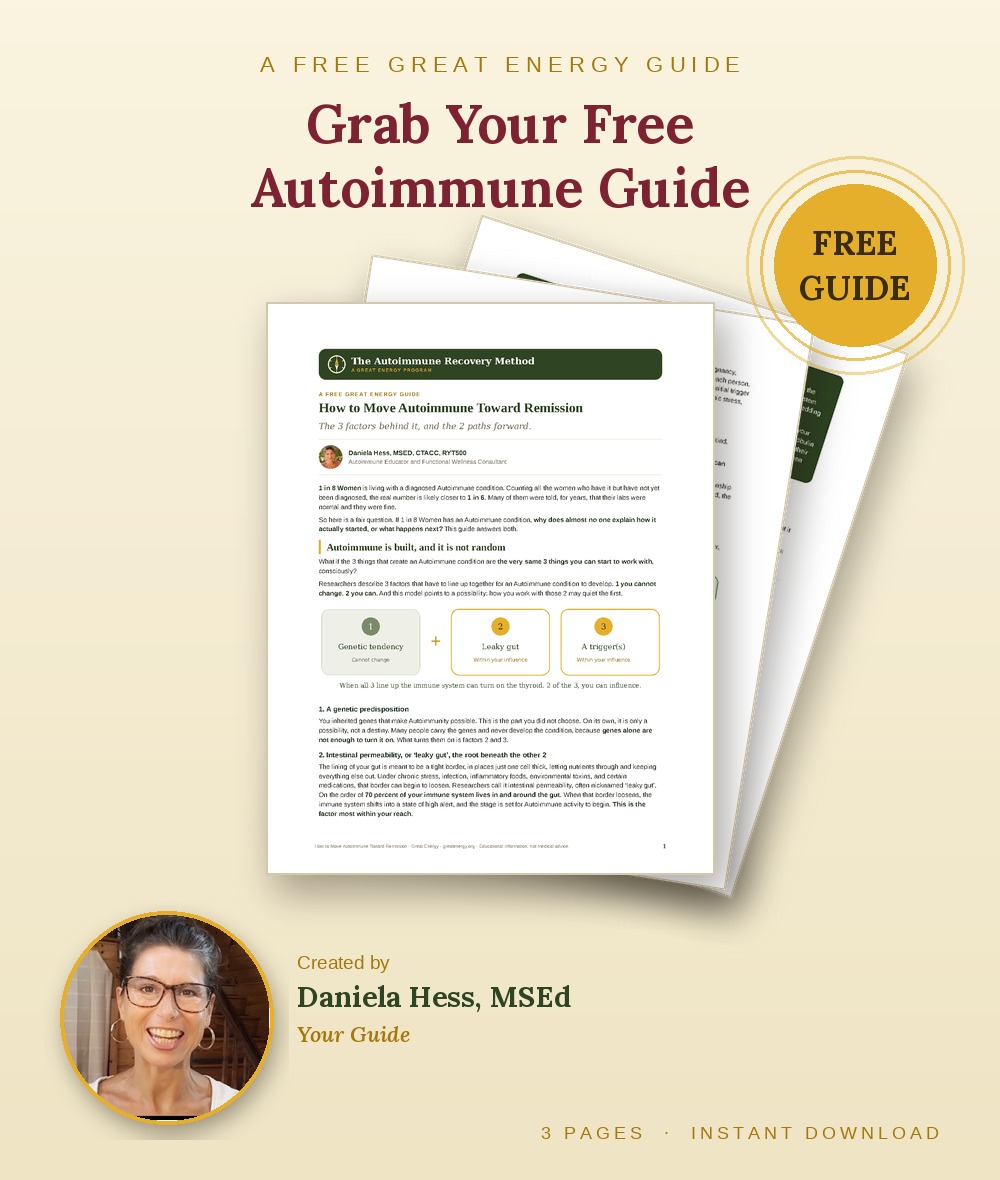
How to Move Autoimmune Toward Remission
The 3 factors behind an Autoimmune condition and the 2 paths forward, free, straight to your inbox.
No spam. Unsubscribe anytime.
Your guide is on its way. You can also open it now (PDF).

Articles from Daniela
Daniela Hess, MSEd, is a co-founder of Great Energy and an Autoimmune Educator and Functional Wellness Consultant who lives and thrives with Hashimoto’s. She is not a licensed medical provider.
AIP recipes to try
A place to start in the kitchen while you work on this with your own clinician: