Gastrointestinal and liver
Crohn's disease (CD)
Crohn's disease is a form of inflammatory bowel disease in which the immune system mounts an inappropriate response to intestinal bacteria in people who are genetically predisposed, producing patchy, full-thickness inflammation anywhere along the digestive tract, though it most often involves the end of the small intestine and the beginning of the large intestine. Over time this inflammation can lead to strictures (narrowing) or fistulas (abnormal connections between tissues) in as many as half of those affected.
Crohn's disease has been rising in prevalence across the United States and Europe in recent decades, and researchers have also documented rising rates in newly industrialized regions as diets and environments shift.
Common signs
Diarrhea, crampy abdominal pain, urgency, fatigue, fever, reduced appetite, and weight loss are common. Some people pass blood, develop mouth sores, or have problems around the anus such as fissures or fistulas. Flares and quieter periods often alternate, and inflammation outside the gut, in joints, skin, or eyes can also occur.
This is a plain-language summary for orientation, not a diagnosis. Mechanisms are described as current understanding, not settled fact. Work with your own clinician for your care.
Questions people ask
What is the difference between Crohn's disease and ulcerative colitis?+
Can Crohn's disease be cured?+
What triggers a Crohn's disease flare-up?+
In a doctor’s words
“Once patients get appropriate therapy, they can live a normal, healthy and happy life just like anyone else.”
Matthew D. Coates, MD, PhD, gastroenterologist, Penn State Health Milton S. Hershey Medical Center
Read more at Penn State Health News ↗
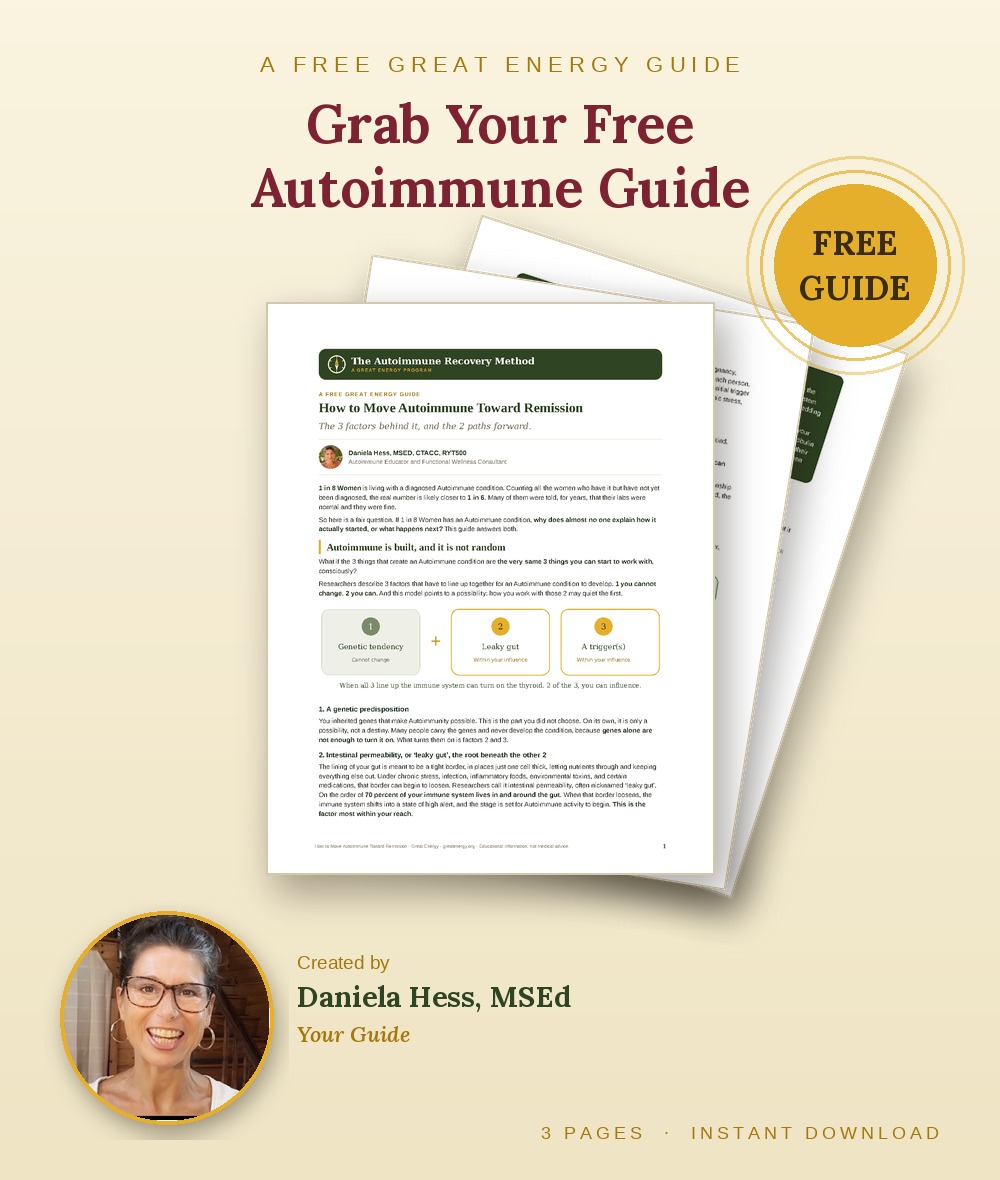
How to Move Autoimmune Toward Remission
The 3 factors behind an Autoimmune condition and the 2 paths forward, free, straight to your inbox.
No spam. Unsubscribe anytime.
Your guide is on its way. You can also open it now (PDF).
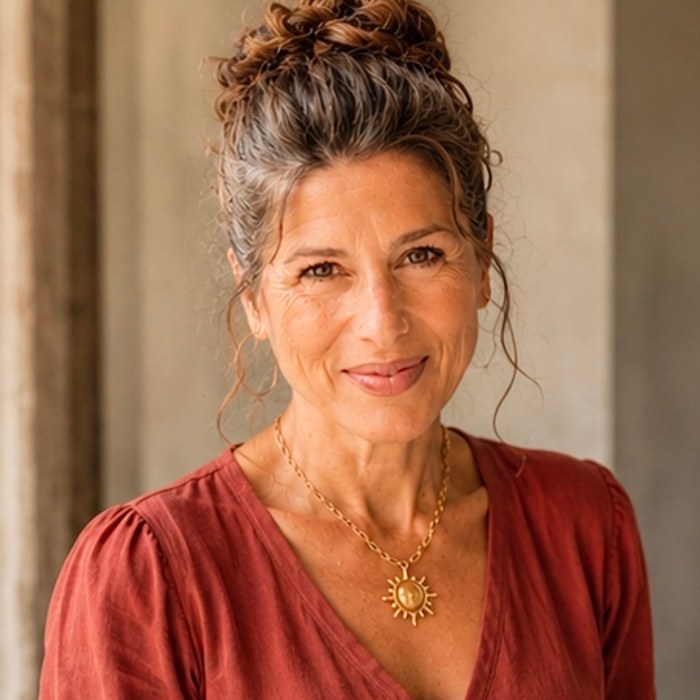
Articles from Daniela
Daniela Hess, MSEd, is a co-founder of Great Energy and an Autoimmune Educator and Functional Wellness Consultant who lives and thrives with Hashimoto’s. She is not a licensed medical provider.
AIP recipes to try
A place to start in the kitchen while you work on this with your own clinician: