Blood and blood vessels
Cryoglobulinemic vasculitis
Cryoglobulinemic vasculitis is inflammation of small and medium blood vessels caused by proteins called cryoglobulins that clump together in the cold, in which the immune system appears to involve these proteins in damaging the vessel walls, most often in the skin, joints, kidneys, and peripheral nerves. Research describes hepatitis C virus infection as the trigger in the large majority of cases, thought to prompt sustained overactivity of certain antibody-producing B cells that leads to the production of these abnormal proteins, while a smaller share of cases are linked to other autoimmune or blood conditions or occur without an identified cause.
Cryoglobulinemia as a whole is considered a rare condition, with research describing prevalence under roughly 5 per 10,000 people in Western countries, and the vasculitis form, which involves active vessel inflammation and organ damage, represents a smaller subset of people who test positive for circulating cryoglobulins.
Common signs
A purplish rash (purpura) on the legs, joint pain, fatigue, numbness or weakness from nerve involvement, and sometimes kidney involvement and worsening with cold exposure.
This is a plain-language summary for orientation, not a diagnosis. Mechanisms are described as current understanding, not settled fact. Work with your own clinician for your care.
Questions people ask
What causes cryoglobulinemic vasculitis?+
What is the difference between cryoglobulinemia and cryoglobulinemic vasculitis?+
Can cold weather trigger or worsen symptoms of cryoglobulinemic vasculitis?+
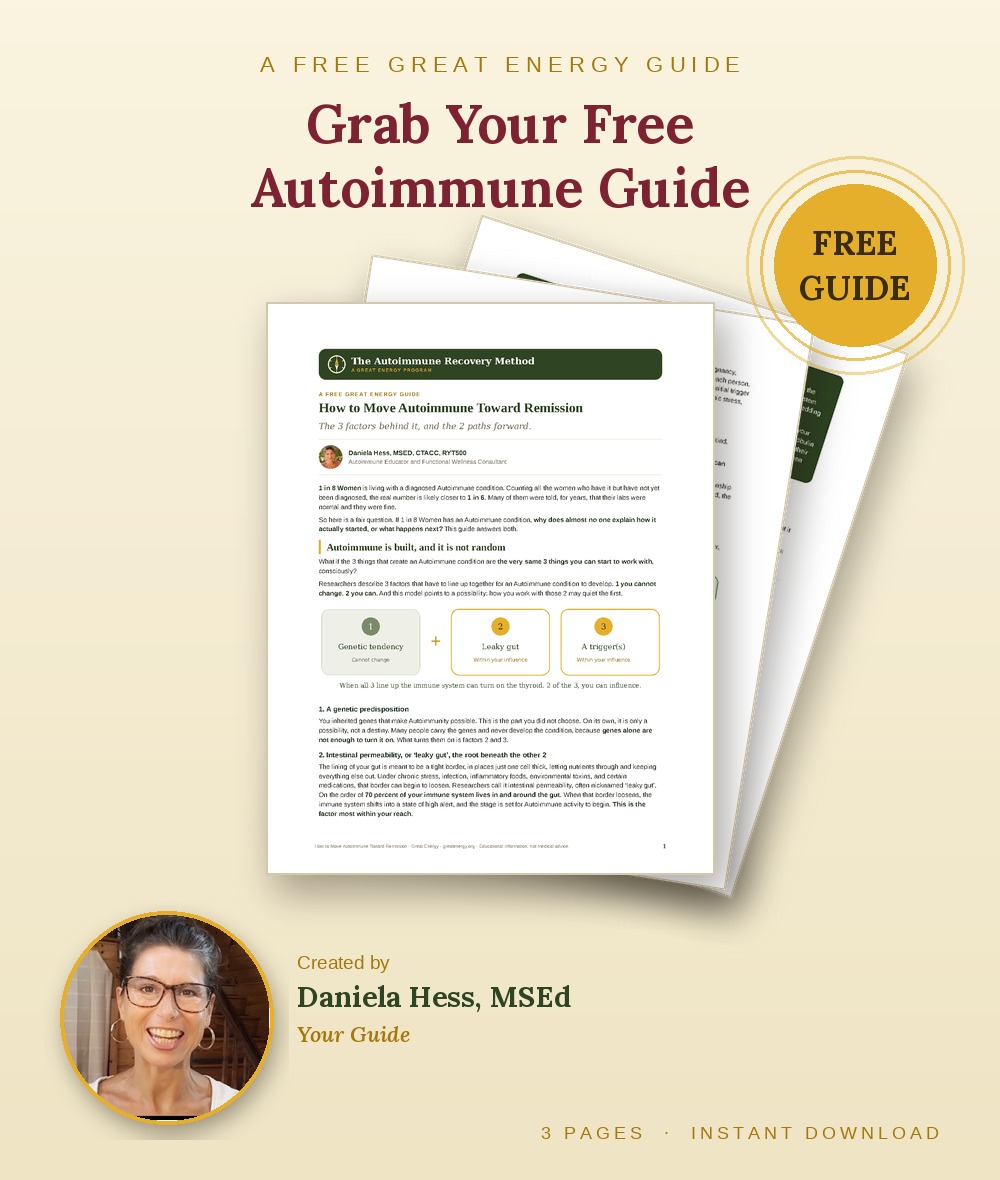
How to Move Autoimmune Toward Remission
The 3 factors behind an Autoimmune condition and the 2 paths forward, free, straight to your inbox.
No spam. Unsubscribe anytime.
Your guide is on its way. You can also open it now (PDF).

Articles from Daniela
Daniela Hess, MSEd, is a co-founder of Great Energy and an Autoimmune Educator and Functional Wellness Consultant who lives and thrives with Hashimoto’s. She is not a licensed medical provider.
AIP recipes to try
A place to start in the kitchen while you work on this with your own clinician: