Skin and hair
Cutaneous lupus (cutaneous lupus erythematosus)
Cutaneous lupus erythematosus affects the skin and can occur alone or alongside systemic lupus. Research describes ultraviolet light as a key environmental trigger, setting off apoptosis in skin cells that exposes self-antigens and prompts native skin cells, along with innate and adaptive immune cells including Th1 and Th17 cells, cytotoxic T cells, and dendritic cells, to drive and sustain the inflammatory rash. Genetic and immunological factors also shape who develops the condition and which of its several forms, including discoid, subacute, and acute cutaneous lupus, they experience.
Cutaneous lupus is more evenly split between men and women than systemic lupus and tends to appear somewhat later in life, and research describes its overall incidence as roughly similar to that of systemic lupus, with a notably higher prevalence among Black patients in the studies reviewed.
Common signs
Depending on the form, round coin-shaped patches of thick, inflamed skin (discoid), ring-shaped or scaly rashes on sun-exposed areas, or a butterfly-shaped rash across the cheeks and nose (acute). Rashes often flare with sun exposure, may itch or sting, and discoid patches can leave scars, color changes, and permanent hair loss when they involve the scalp.
This is a plain-language summary for orientation, not a diagnosis. Mechanisms are described as current understanding, not settled fact. Work with your own clinician for your care.
Questions people ask
What causes cutaneous lupus flares?+
What does cutaneous lupus look like?+
Can cutaneous lupus turn into systemic lupus?+
In a doctor’s words
“These drugs are all targeting different pathways and we are seeing effects. It is an exciting time. We are going to be able to offer hope to patients very soon.”
J. Michelle Kahlenberg, MD, PhD, Professor of Internal Medicine and Dermatology, Giles Boles and Dorothy Mulkey Research Professor of Rheumatology, Vice Chair of Basic and Translational Research, Department of Internal Medicine, University of Michigan
Read more at Healio Rheumatology ↗
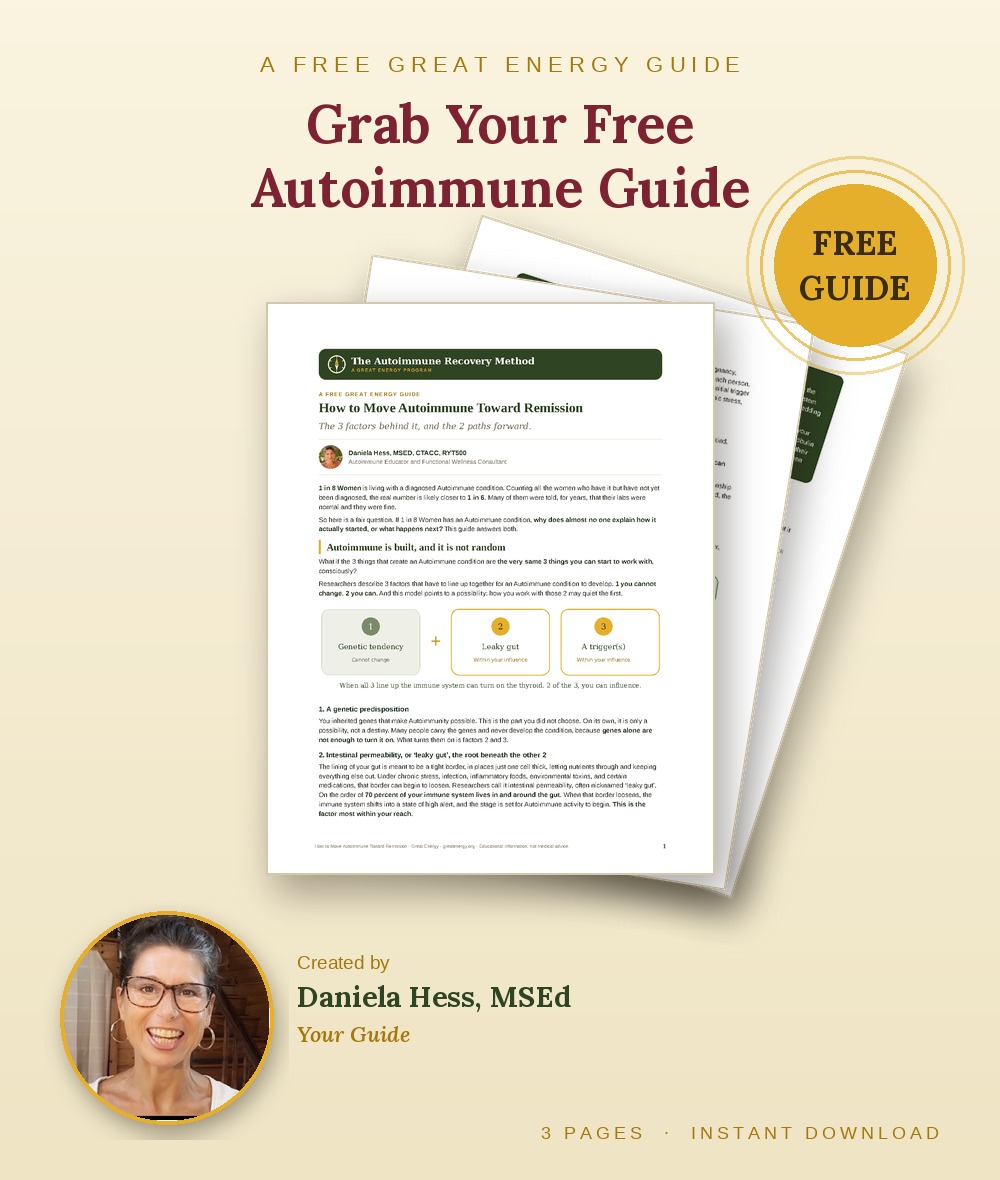
How to Move Autoimmune Toward Remission
The 3 factors behind an Autoimmune condition and the 2 paths forward, free, straight to your inbox.
No spam. Unsubscribe anytime.
Your guide is on its way. You can also open it now (PDF).

Articles from Daniela
Daniela Hess, MSEd, is a co-founder of Great Energy and an Autoimmune Educator and Functional Wellness Consultant who lives and thrives with Hashimoto’s. She is not a licensed medical provider.
AIP recipes to try
A place to start in the kitchen while you work on this with your own clinician: