Joints, muscles, and connective tissue
Eosinophilic fasciitis (EF)
Eosinophilic fasciitis is a rare condition in which a type of white blood cell called eosinophils is understood to interact with fibroblasts, the cells that build connective tissue, triggering signaling molecules that thicken and inflame the fascia beneath the skin. Research describes the exact trigger as unknown, though many people report unusually strenuous exercise in the one to two weeks before symptoms begin.
Because it is rare, precise population prevalence has not been well established, though case series describe an average age at onset in the mid-forties with roughly equal numbers of men and women affected, and a coexisting autoimmune condition is present in some patients. Blood testing often shows elevated eosinophils, and the condition can resemble scleroderma in how the tissue tightens, though it typically spares the fingers.
Common signs
Swelling followed by progressive thickening and tightening of the skin and tissue, often on the arms and legs, sometimes with a puckered or rippled (orange-peel) texture and a groove along the veins. Tightness can limit joint movement, and aching and fatigue are common.
This is a plain-language summary for orientation, not a diagnosis. Mechanisms are described as current understanding, not settled fact. Work with your own clinician for your care.
Questions people ask
What causes eosinophilic fasciitis?+
Is eosinophilic fasciitis the same as scleroderma?+
What are the symptoms of eosinophilic fasciitis?+
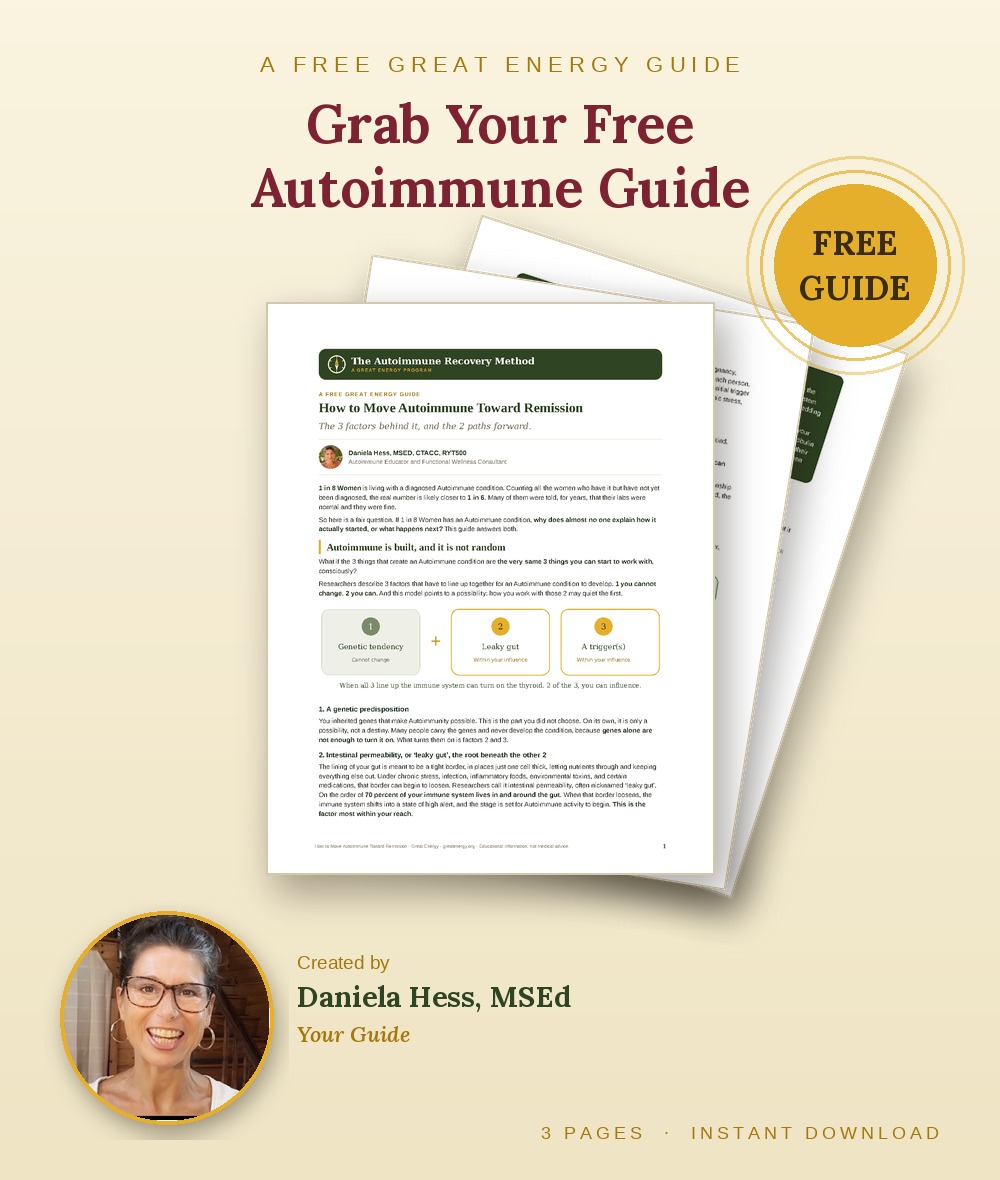
How to Move Autoimmune Toward Remission
The 3 factors behind an Autoimmune condition and the 2 paths forward, free, straight to your inbox.
No spam. Unsubscribe anytime.
Your guide is on its way. You can also open it now (PDF).

Articles from Daniela
Daniela Hess, MSEd, is a co-founder of Great Energy and an Autoimmune Educator and Functional Wellness Consultant who lives and thrives with Hashimoto’s. She is not a licensed medical provider.
AIP recipes to try
A place to start in the kitchen while you work on this with your own clinician: