Blood and blood vessels
Eosinophilic granulomatosis with polyangiitis (EGPA, Churg-Strauss)
Eosinophilic granulomatosis with polyangiitis (EGPA) is a rare inflammation of small blood vessels marked by high numbers of a white blood cell called the eosinophil, in which the immune system appears to attack the vessels and surrounding tissues. Research describes the disease as typically unfolding in phases, starting with adult-onset asthma and allergic rhinosinusitis that can precede the vasculitic phase by years, followed by tissue eosinophilia and then the vasculitic phase, when vessel inflammation can affect the lungs, skin, heart, nerves, gut, and kidneys. Only about a third of people with EGPA test positive for ANCA antibodies, and their presence appears to mark a different clinical pattern than ANCA-negative disease.
EGPA is one of the rarest ANCA-associated vasculitides, and while a precise population-wide prevalence figure is not well established, it is understood to be markedly less common than granulomatosis with polyangiitis, and it tends to appear in the third or fourth decade of life in people with a history of asthma or allergic disease.
Common signs
Worsening asthma, sinus problems and nasal polyps, then fatigue, fever, weight loss, numbness or weakness from nerve involvement, skin rashes or nodules, and sometimes heart, lung, or gut involvement.
This is a plain-language summary for orientation, not a diagnosis. Mechanisms are described as current understanding, not settled fact. Work with your own clinician for your care.
Questions people ask
Is EGPA the same as Churg-Strauss syndrome?+
Does everyone with EGPA test positive for ANCA?+
How does EGPA typically develop, and what are the symptoms?+
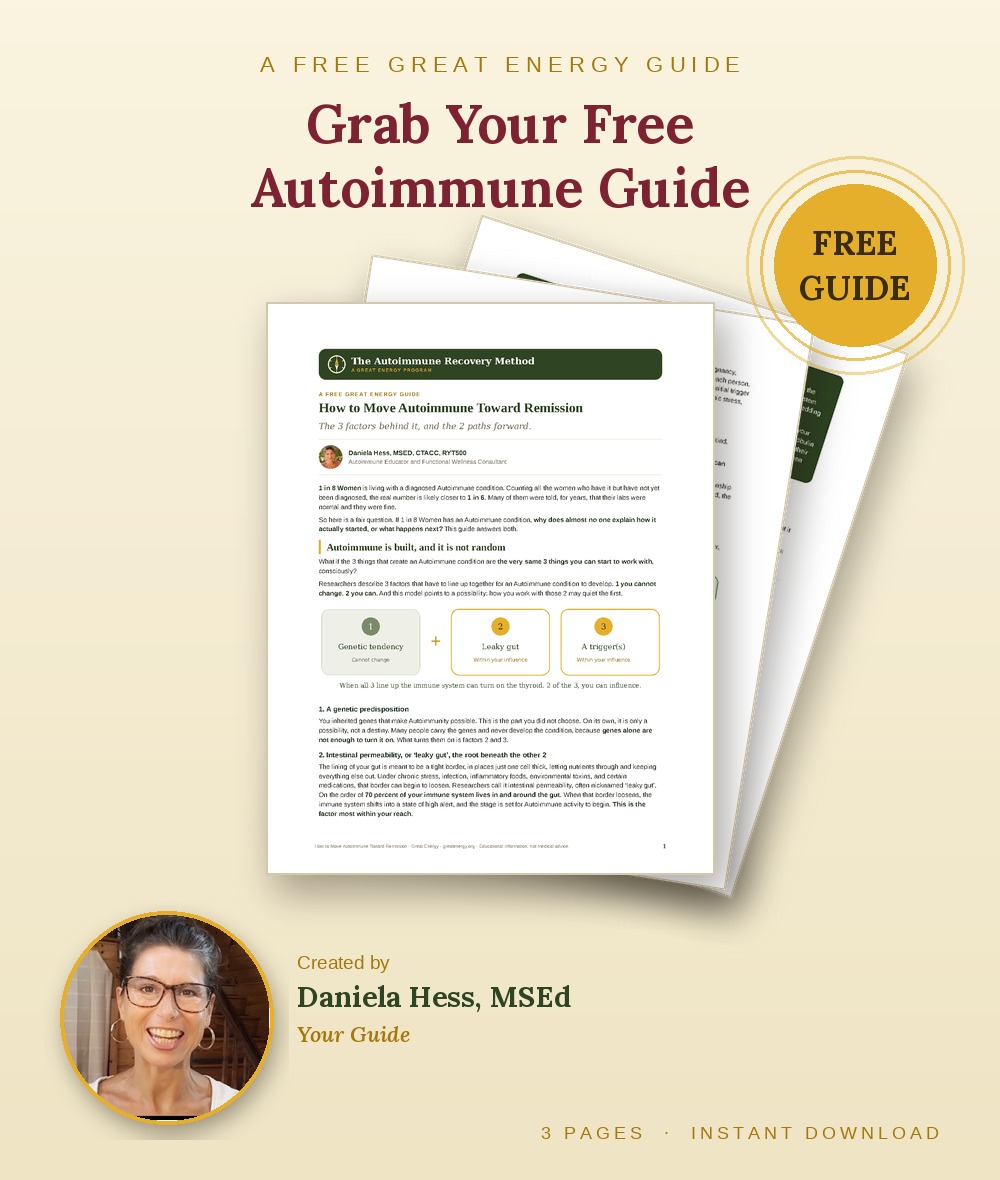
How to Move Autoimmune Toward Remission
The 3 factors behind an Autoimmune condition and the 2 paths forward, free, straight to your inbox.
No spam. Unsubscribe anytime.
Your guide is on its way. You can also open it now (PDF).

Articles from Daniela
Daniela Hess, MSEd, is a co-founder of Great Energy and an Autoimmune Educator and Functional Wellness Consultant who lives and thrives with Hashimoto’s. She is not a licensed medical provider.
AIP recipes to try
A place to start in the kitchen while you work on this with your own clinician: