Skin and hair
Epidermolysis bullosa acquisita (EBA)
Epidermolysis bullosa acquisita affects the skin and, in some cases, mucous membranes. The immune system produces autoantibodies against type VII collagen, the main component of the anchoring fibrils that connect the epidermis to the layer of skin beneath it, and animal studies have shown that these antibodies alone are enough to reproduce the blistering disease, confirming their role in causing it. As the anchoring breaks down, the skin becomes fragile and blisters, especially in areas exposed to friction or minor trauma, and healing often leaves scarring and small white bumps called milia. A less common inflammatory subtype also exists, with more widespread blistering and visible inflammation.
Epidermolysis bullosa acquisita is a genuinely rare condition, with research estimating an incidence of roughly 0.2 new cases per million people per year, making it one of the rarest of the autoimmune blistering diseases.
Common signs
Skin fragility with blisters and erosions, often on areas exposed to friction or trauma such as the hands, elbows, knees, and feet, which can heal with scarring and small white bumps called milia. Some people have a more inflamed, widespread form, and the nails or mucous membranes can be affected.
This is a plain-language summary for orientation, not a diagnosis. Mechanisms are described as current understanding, not settled fact. Work with your own clinician for your care.
Questions people ask
What causes epidermolysis bullosa acquisita?+
What are the symptoms of epidermolysis bullosa acquisita?+
How common is epidermolysis bullosa acquisita?+
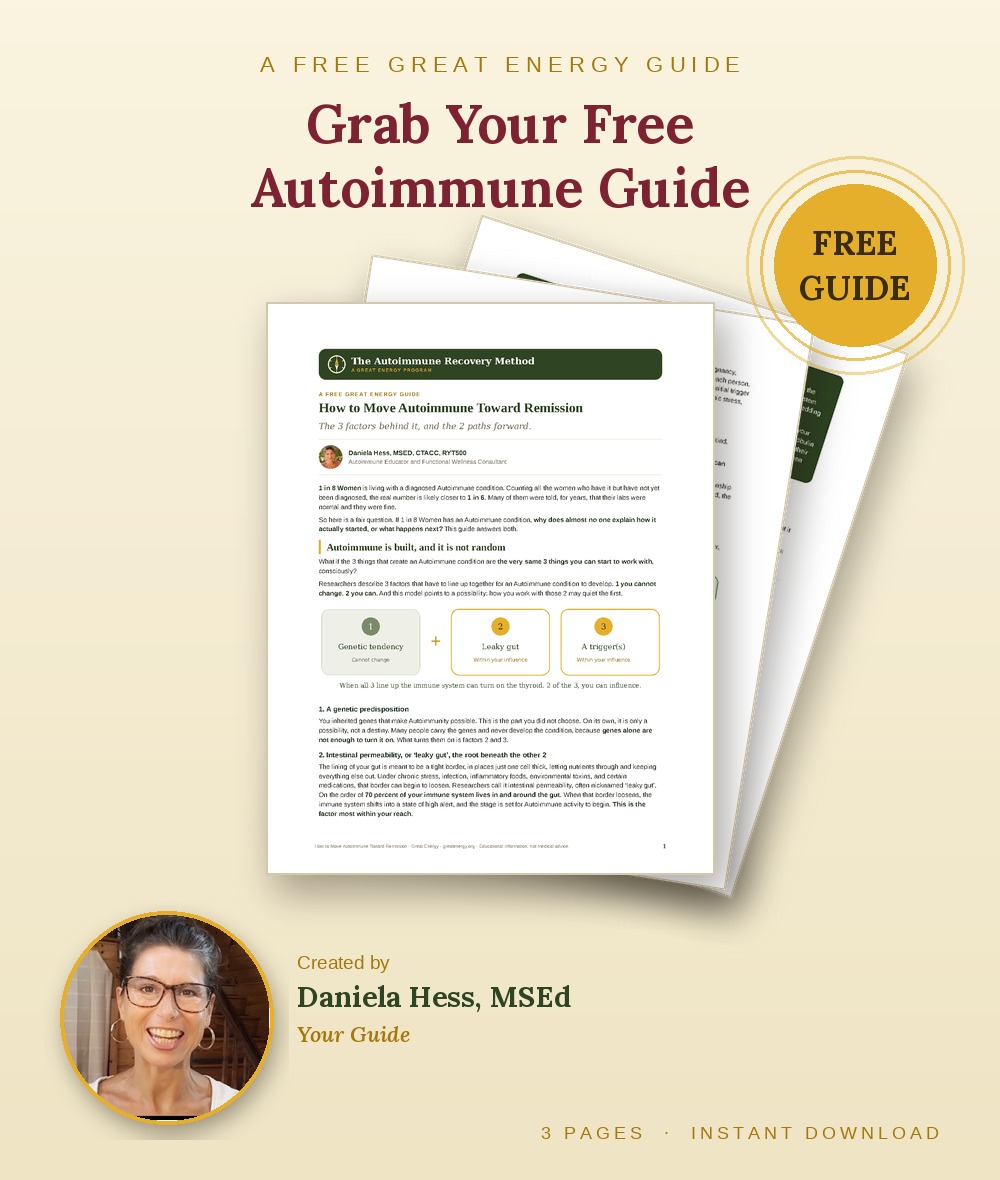
How to Move Autoimmune Toward Remission
The 3 factors behind an Autoimmune condition and the 2 paths forward, free, straight to your inbox.
No spam. Unsubscribe anytime.
Your guide is on its way. You can also open it now (PDF).
Articles from Daniela
Daniela Hess, MSEd, is a co-founder of Great Energy and an Autoimmune Educator and Functional Wellness Consultant who lives and thrives with Hashimoto’s. She is not a licensed medical provider.
AIP recipes to try
A place to start in the kitchen while you work on this with your own clinician: