Joints, muscles, and connective tissue
Fibromyalgia (related)
Fibromyalgia is included here as autoimmune-related or suspected rather than a confirmed autoimmune disease, and it frequently occurs alongside autoimmune conditions such as lupus, rheumatoid arthritis, and Sjogren's, which is part of why it appears in this group. Research describes the primary driver as central sensitization, a change in how the nervous system processes pain signals that turns up sensitivity throughout the body, alongside possible contributions from peripheral nerve signaling and immune pathways still being studied.
It is understood to be the third most common musculoskeletal condition after lower back pain and osteoarthritis, and research estimates worldwide prevalence at roughly 2 to 3 percent of the population, though figures vary by diagnostic criteria used. It is substantially more common in women and most often diagnosed in the thirties.
Common signs
Widespread muscle and soft-tissue pain and tenderness, deep fatigue, unrefreshing sleep, and difficulty with memory and concentration (often called fibro fog). Many people also have headaches, digestive symptoms, and heightened sensitivity to touch, temperature, or sound.
This is a plain-language summary for orientation, not a diagnosis. Mechanisms are described as current understanding, not settled fact. Work with your own clinician for your care.
Questions people ask
Is fibromyalgia an autoimmune disease?+
What causes fibromyalgia?+
What are the symptoms of fibromyalgia?+
In a doctor’s words
“Both conditions are treatable. It takes effort and you have to be in it, but I've had patients who have controlled their symptoms and feel much better.”
David Borenstein, MD, Clinical Professor of Medicine, George Washington University Medical Center; Executive Editor, SpineCommunity.com
Read more at CreakyJoints ↗
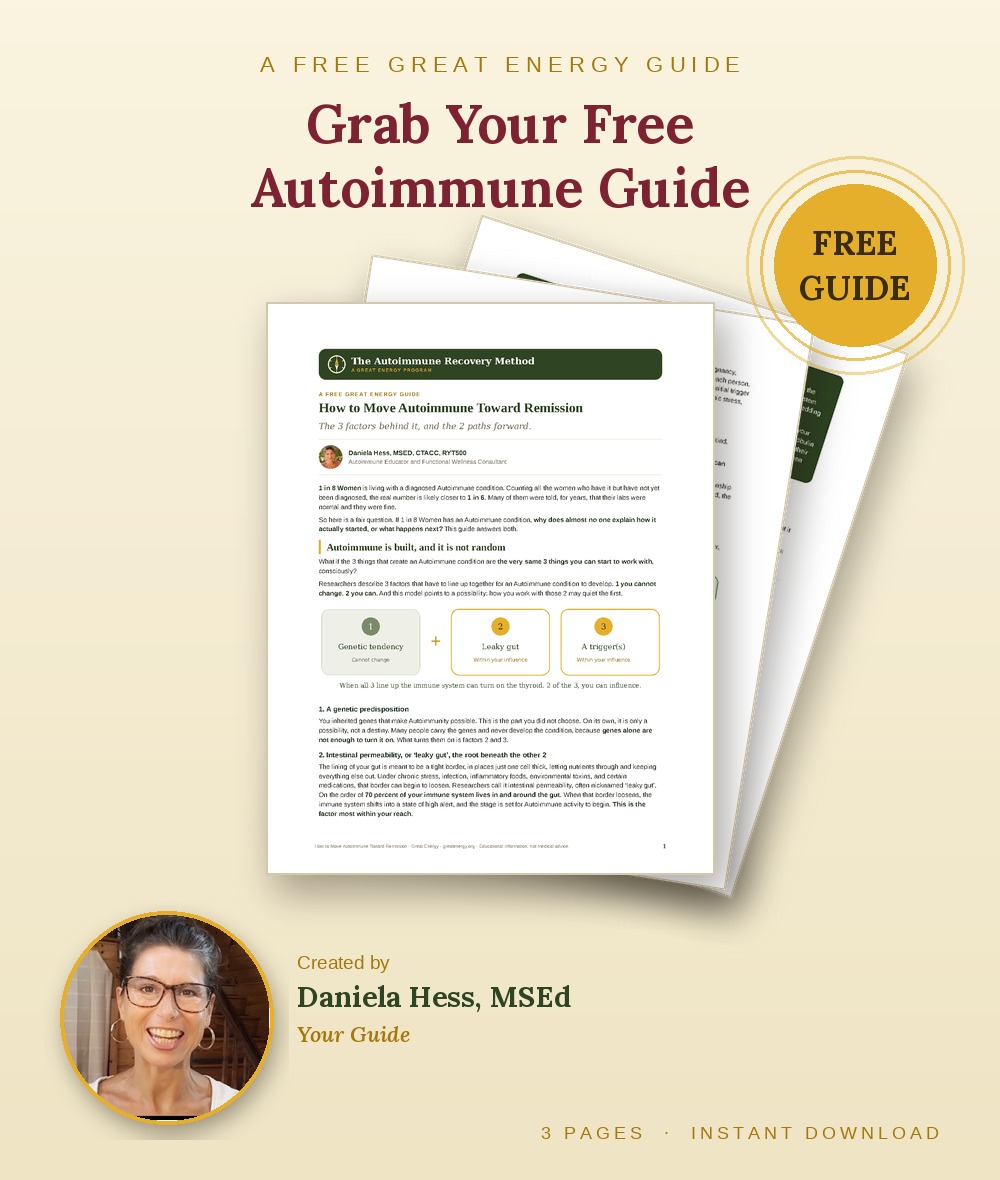
How to Move Autoimmune Toward Remission
The 3 factors behind an Autoimmune condition and the 2 paths forward, free, straight to your inbox.
No spam. Unsubscribe anytime.
Your guide is on its way. You can also open it now (PDF).

Articles from Daniela
Daniela Hess, MSEd, is a co-founder of Great Energy and an Autoimmune Educator and Functional Wellness Consultant who lives and thrives with Hashimoto’s. She is not a licensed medical provider.
AIP recipes to try
A place to start in the kitchen while you work on this with your own clinician: