Blood and blood vessels
Granulomatosis with polyangiitis (GPA, formerly Wegener's)
Granulomatosis with polyangiitis (GPA) is inflammation of small and medium blood vessels with clusters of inflammatory tissue called granulomas, in which the immune system appears to attack the vessels and surrounding tissue.
It is the most common of the ANCA-associated vasculitides, a group of conditions linked to antineutrophil cytoplasmic antibodies, and most people with GPA test positive for the PR3-ANCA antibody. It commonly affects the sinuses, nose, lungs, and kidneys, and can involve other organs as the inflammation spreads. GPA is considered a rare disease, and estimated incidence varies by country, from roughly 10 to 12 cases per million person-years in the United States and United Kingdom to lower rates elsewhere. A large United States claims-database analysis found an incidence of about 12.8 cases per million person-years in working-age adults and 1.8 per million in children, and it can occur at any age, with some studies describing a slight female predominance.
Common signs
Persistent runny or crusty nose, sinus pain, nosebleeds, ear problems, cough or shortness of breath that can include coughing up blood, kidney involvement, red or painful eyes, joint aches, fatigue, and fever.
This is a plain-language summary for orientation, not a diagnosis. Mechanisms are described as current understanding, not settled fact. Work with your own clinician for your care.
Questions people ask
Is granulomatosis with polyangiitis the same as Wegener's granulomatosis?+
What parts of the body does GPA affect?+
What is the difference between GPA and MPA?+
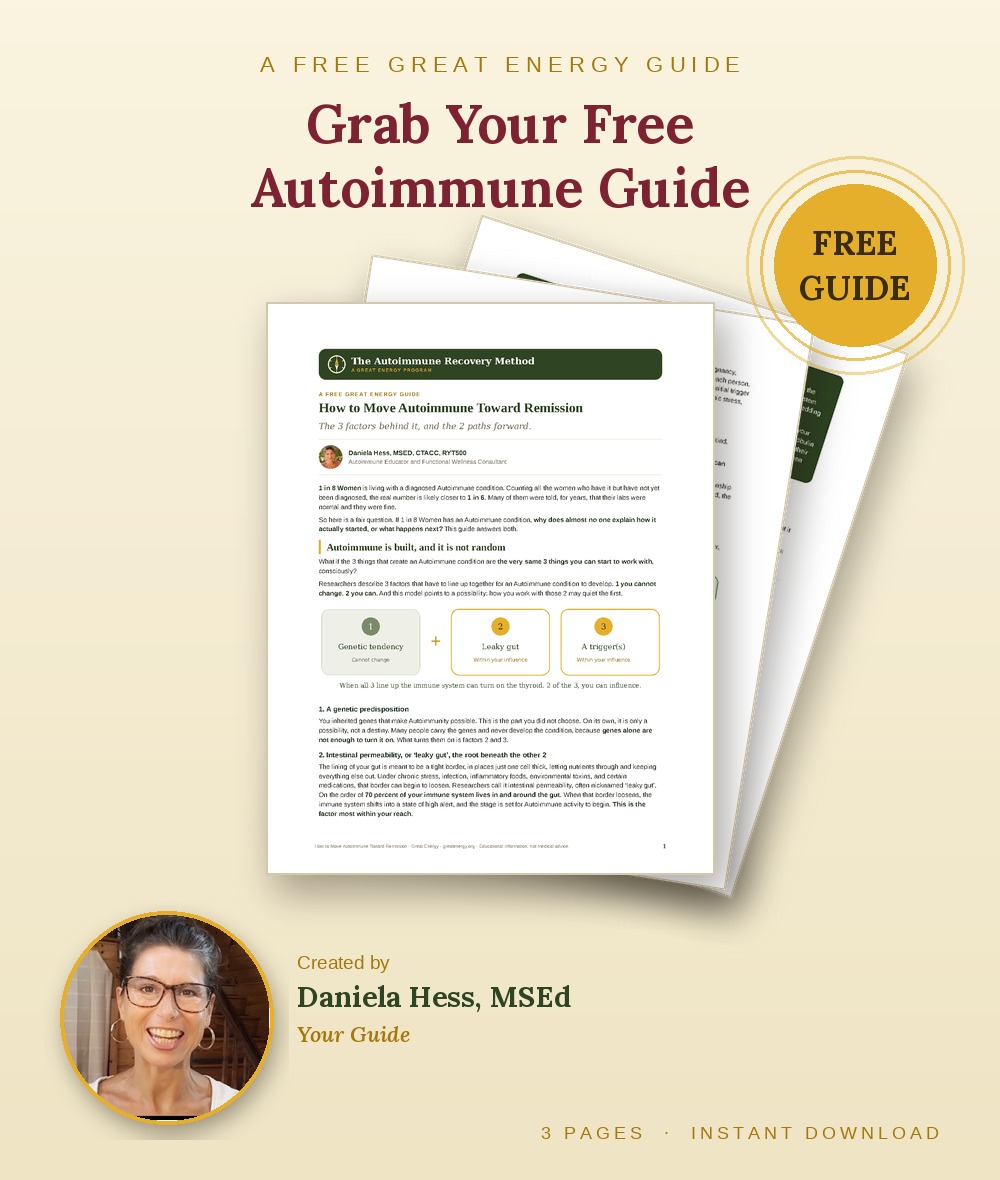
How to Move Autoimmune Toward Remission
The 3 factors behind an Autoimmune condition and the 2 paths forward, free, straight to your inbox.
No spam. Unsubscribe anytime.
Your guide is on its way. You can also open it now (PDF).

Articles from Daniela
Daniela Hess, MSEd, is a co-founder of Great Energy and an Autoimmune Educator and Functional Wellness Consultant who lives and thrives with Hashimoto’s. She is not a licensed medical provider.
AIP recipes to try
A place to start in the kitchen while you work on this with your own clinician: