Endocrine system
Graves' disease (toxic diffuse goiter)
Graves' disease is an autoimmune thyroid condition in which the immune system produces antibodies that bind to and stimulate the thyroid-stimulating hormone receptor, driving the thyroid to enlarge and overproduce thyroid hormone. The result is hyperthyroidism, which can bring on a racing heart, weight loss, heat intolerance, and anxiety, and a meaningful share of people with Graves' also develop eye involvement, known as Graves' ophthalmopathy.
It affects an estimated 1 to 2 percent of the population and is about 5 times more common in women, most often appearing between ages 30 and 60.
Common signs
rapid or pounding heartbeat, weight loss despite a good appetite, anxiety or irritability, tremor, heat intolerance and sweating, trouble sleeping, and sometimes bulging or irritated eyes and an enlarged thyroid.
This is a plain-language summary for orientation, not a diagnosis. Mechanisms are described as current understanding, not settled fact. Work with your own clinician for your care.
Where this comes from
Questions people ask
Is Graves' disease curable?+
Is Graves' disease hereditary?+
What are the symptoms of Graves' disease?+
In a doctor’s words
“The conversations we have with patients about treating Graves' have gotten longer because there are more options for short- and long-term management.”
Hyesoo Lowe, MD, Medical Director, Columbia Thyroid Center
Read more at ColumbiaDoctors ↗
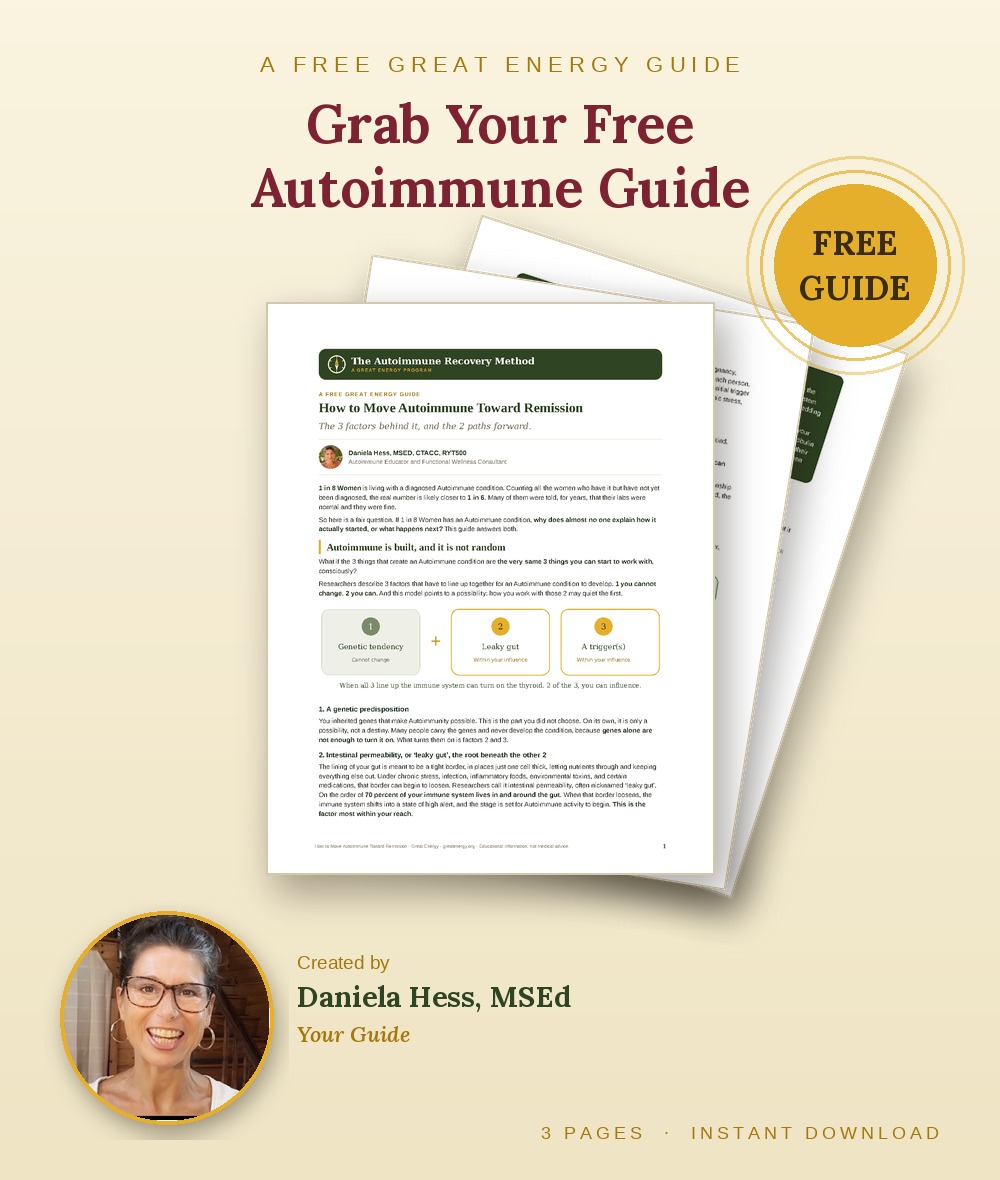
How to Move Autoimmune Toward Remission
The 3 factors behind an Autoimmune condition and the 2 paths forward, free, straight to your inbox.
No spam. Unsubscribe anytime.
Your guide is on its way. You can also open it now (PDF).

Articles from Daniela
Daniela Hess, MSEd, is a co-founder of Great Energy and an Autoimmune Educator and Functional Wellness Consultant who lives and thrives with Hashimoto’s. She is not a licensed medical provider.
AIP recipes to try
A place to start in the kitchen while you work on this with your own clinician: