Gastrointestinal and liver
IgG4-related sclerosing disease (IgG4-related disease, IgG4-RD)
IgG4-related disease is an immune-driven, fibroinflammatory condition that can affect many organs, and in the digestive system it commonly involves the pancreas, where it is known as autoimmune pancreatitis, and the bile ducts, where it can closely resemble other liver and pancreas diseases. Research describes the process as involving a skewed immune response that drives infiltration of affected tissue by IgG4-producing plasma cells, leading to swelling and fibrosis in the organs involved.
Because it was only recognized as a distinct entity in the past two decades, researchers describe its prevalence as still quite limited, though reviews note it appears more often in men in mid-to-later adulthood. In the digestive system, symptoms can include yellowing of the skin or eyes from blocked bile flow and an enlarged organ that can be mistaken for cancer on imaging.
Common signs
Because it can settle in different organs, symptoms vary widely. Painless swelling of the salivary or tear glands, swollen lymph nodes, kidney changes found on blood or urine tests, and swelling around the eyes and eyelids are all recognized patterns, along with abdominal or back pain and weight loss. Some people have few symptoms since the disease tends to progress slowly.
This is a plain-language summary for orientation, not a diagnosis. Mechanisms are described as current understanding, not settled fact. Work with your own clinician for your care.
Questions people ask
What is IgG4-related disease?+
How serious is IgG4-related disease?+
What is the life expectancy for IgG4-related disease?+
In a doctor’s words
“We are developing broader medical knowledge and recognition of the disease so that patients are diagnosed earlier before they have permanent damage. If the diagnosis is made promptly and the treatments are used wisely, patients would very quickly feel as if they had no disease at all.”
John H. Stone, MD, MPH, director of clinical rheumatology, Massachusetts General Hospital
Read more at Mass General Advances in Motion ↗
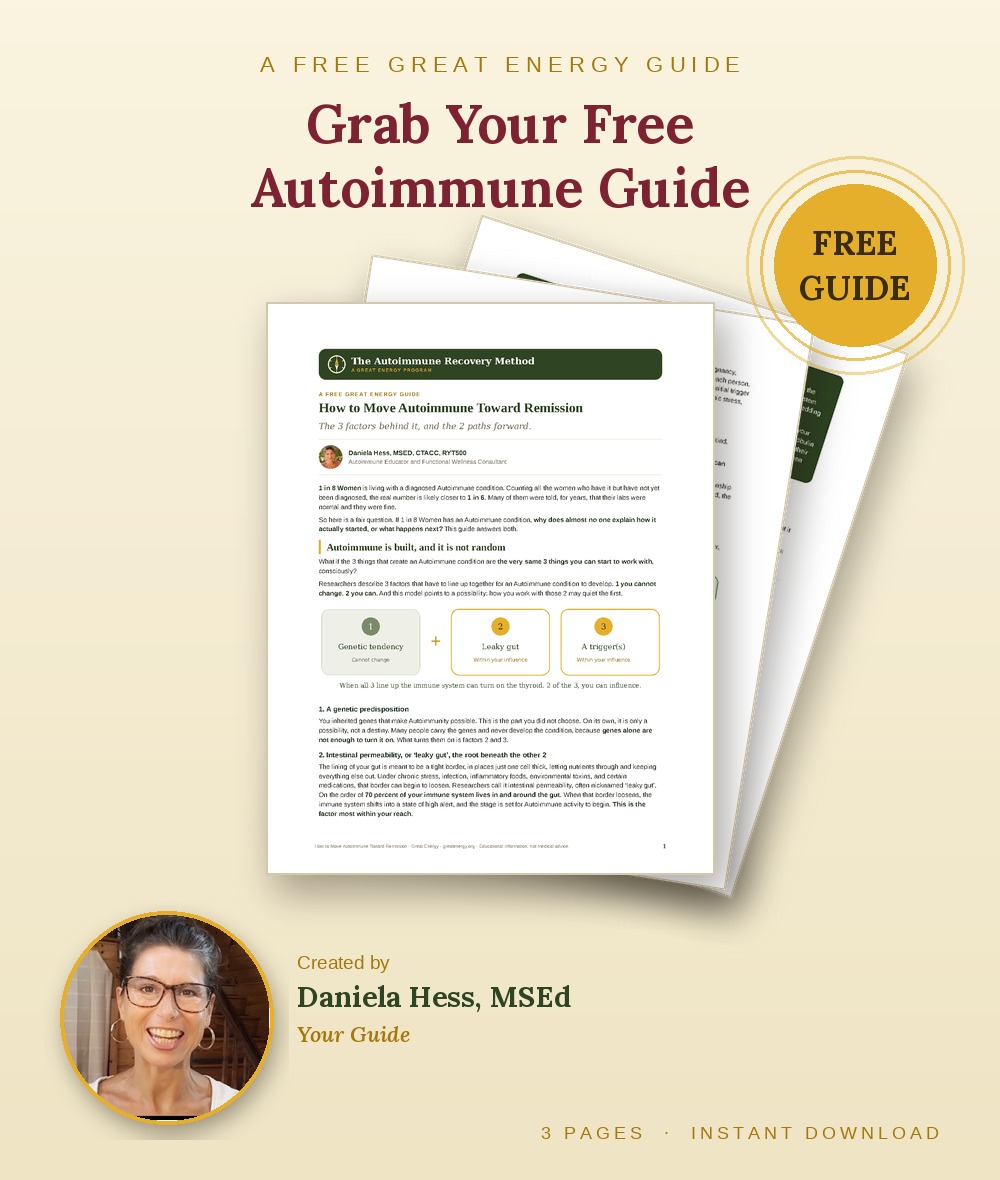
How to Move Autoimmune Toward Remission
The 3 factors behind an Autoimmune condition and the 2 paths forward, free, straight to your inbox.
No spam. Unsubscribe anytime.
Your guide is on its way. You can also open it now (PDF).

Articles from Daniela
Daniela Hess, MSEd, is a co-founder of Great Energy and an Autoimmune Educator and Functional Wellness Consultant who lives and thrives with Hashimoto’s. She is not a licensed medical provider.
AIP recipes to try
A place to start in the kitchen while you work on this with your own clinician: