Joints, muscles, and connective tissue
Immune-mediated necrotizing myopathy (IMNM)
Immune-mediated necrotizing myopathy is a muscle disease in which the immune system is understood to drive the death of muscle fibers directly, with research describing deposits of immune complement proteins on damaged muscle cells and, in many cases, relatively little of the lymphocyte infiltration seen in other inflammatory myopathies. Two autoantibodies, anti-SRP and anti-HMGCR, are associated with distinct forms of the condition and help define its diagnosis, though some people test negative for both.
Contemporary research estimates it affects roughly 7 to 11 people per 100,000 annually in the United States, making it rare, and it typically produces more rapidly progressive weakness and higher muscle enzyme levels than related conditions. The disease process is only partly understood, and researchers are still working out why some cases respond better to treatment than others.
Common signs
Often rapidly developing and significant weakness in the muscles closest to the trunk, the hips, thighs, shoulders, and upper arms, making rising, climbing, and lifting difficult. Muscle aching and fatigue are common, and the weakness can be more pronounced than in some other muscle diseases.
This is a plain-language summary for orientation, not a diagnosis. Mechanisms are described as current understanding, not settled fact. Work with your own clinician for your care.
Where this comes from
Questions people ask
What causes immune-mediated necrotizing myopathy?+
What are anti-SRP and anti-HMGCR antibodies?+
What are the symptoms of immune-mediated necrotizing myopathy?+
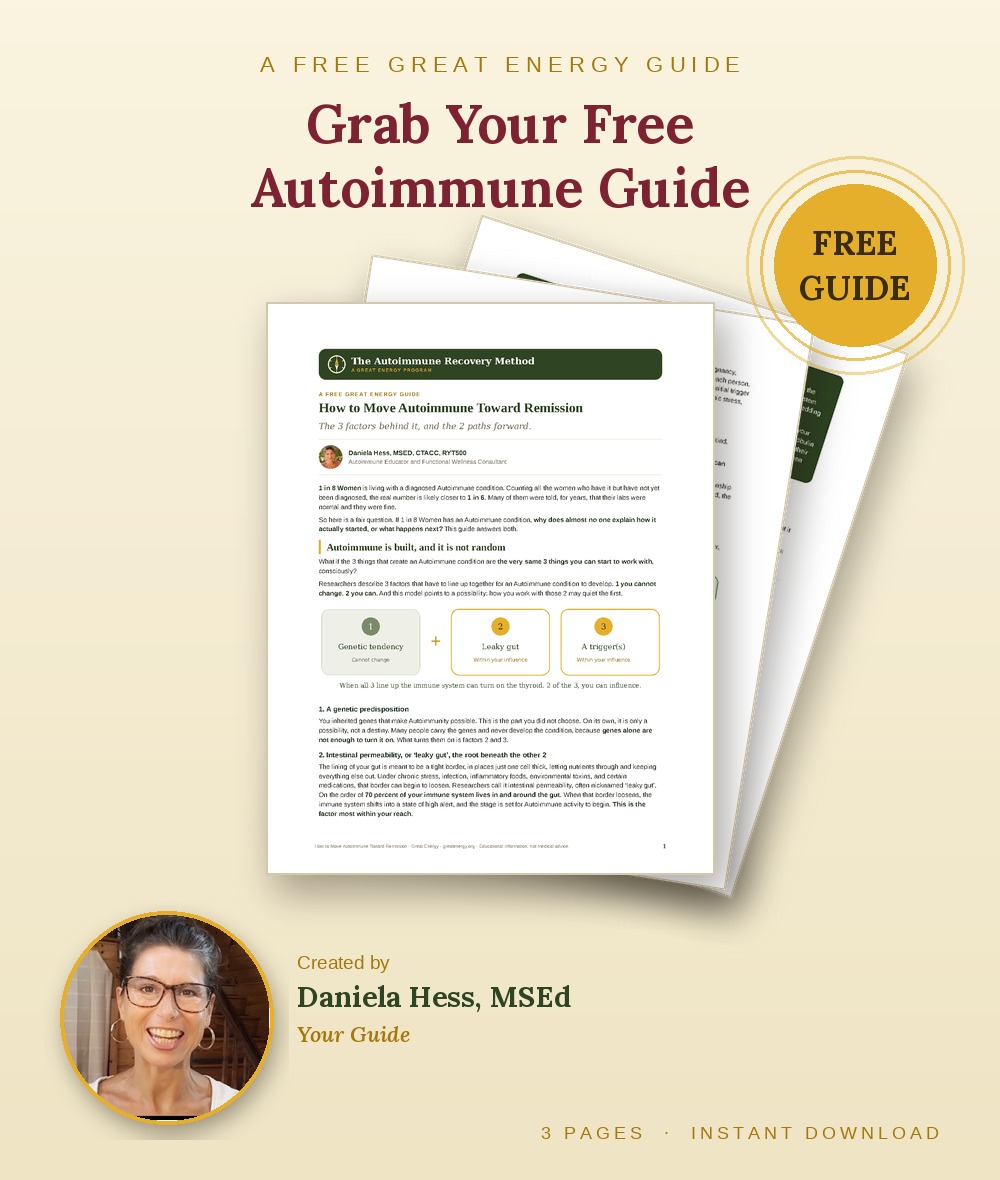
How to Move Autoimmune Toward Remission
The 3 factors behind an Autoimmune condition and the 2 paths forward, free, straight to your inbox.
No spam. Unsubscribe anytime.
Your guide is on its way. You can also open it now (PDF).

Articles from Daniela
Daniela Hess, MSEd, is a co-founder of Great Energy and an Autoimmune Educator and Functional Wellness Consultant who lives and thrives with Hashimoto’s. She is not a licensed medical provider.
AIP recipes to try
A place to start in the kitchen while you work on this with your own clinician: