Blood and blood vessels
Immune thrombocytopenia (ITP)
Immune thrombocytopenia affects platelets, the cell fragments that help blood clot. The condition involves a misdirected immune response in which antiplatelet antibodies and immune cells clear platelets from circulation faster than normal, and current understanding also points to impaired platelet production in the bone marrow as a contributing factor rather than destruction alone. It can follow an infection, occur on its own, or appear alongside other autoimmune conditions.
ITP is uncommon and research estimates its prevalence at roughly 9 to 20 cases per 100,000 people, with incidence rising with age and a modest tendency to affect women somewhat more than men. Severity ranges widely, and many people with only mildly low platelet counts have few or no symptoms, while others experience more significant bleeding risk.
Common signs
Easy or unusual bruising, tiny reddish-purple dots on the skin (petechiae), bleeding gums, frequent nosebleeds, heavier menstrual bleeding, and blood in urine or stool. Many people have few or no symptoms when counts are only mildly low.
This is a plain-language summary for orientation, not a diagnosis. Mechanisms are described as current understanding, not settled fact. Work with your own clinician for your care.
Questions people ask
What causes immune thrombocytopenia?+
What are the symptoms of ITP?+
What platelet count is considered dangerous in ITP?+
In a doctor’s words
“Yeah, you're not wrong about that, actually. We describe three new platelet disorders a year and probably 10 to 20 new inherited immune disorders every year. So, it really is exploding.”
Michele Lambert, MD, Pediatric hematologist, Children's Hospital of Philadelphia; Associate Professor of Pediatrics, University of Pennsylvania; Chair of PDSA's Medical Advisory Board
Read more at Platelet Disorder Support Association (PDSA) podcast, "Bruised but Not Broken: Living with ITP," Season 2 Episode 28 transcript ↗
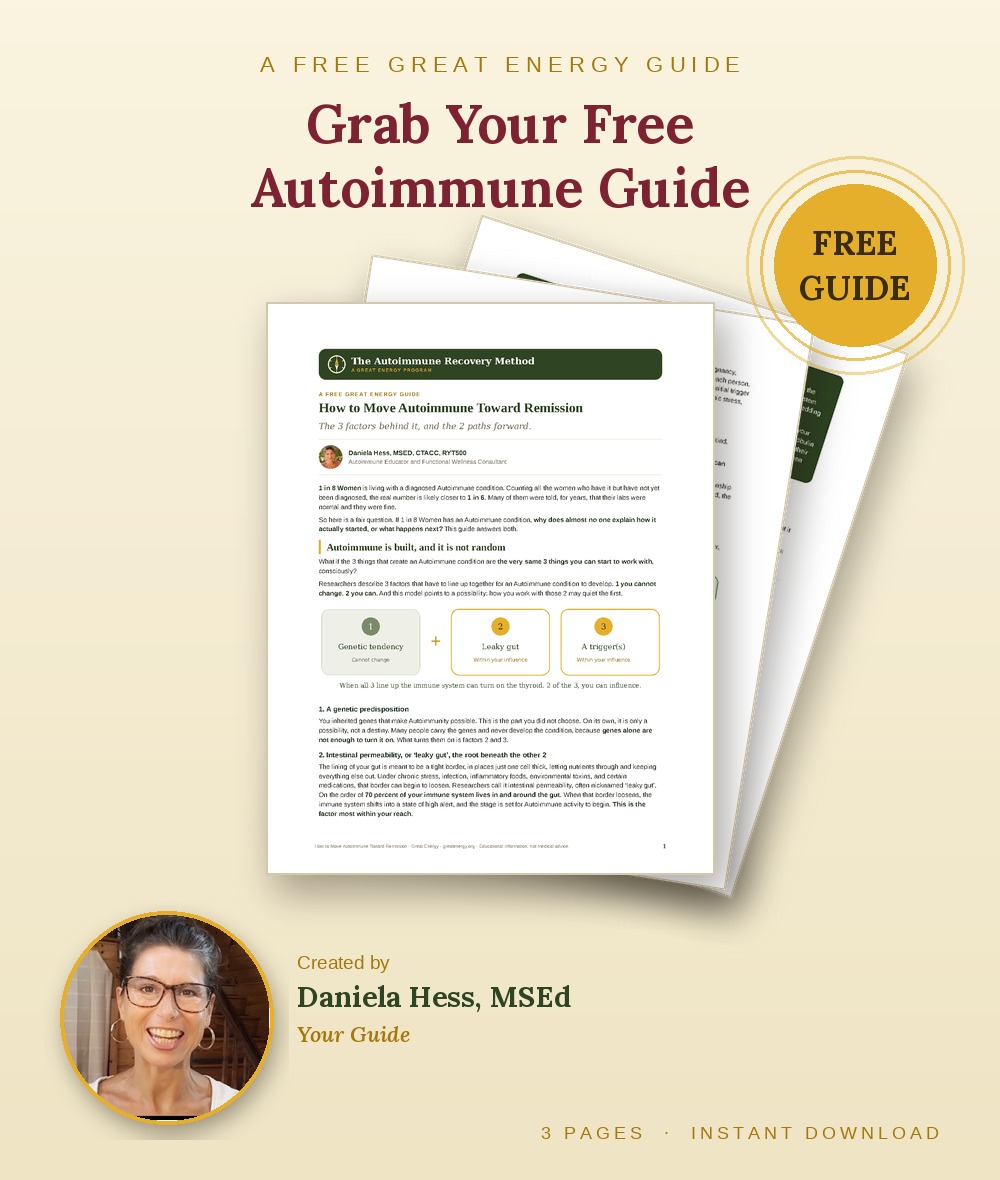
How to Move Autoimmune Toward Remission
The 3 factors behind an Autoimmune condition and the 2 paths forward, free, straight to your inbox.
No spam. Unsubscribe anytime.
Your guide is on its way. You can also open it now (PDF).

Articles from Daniela
Daniela Hess, MSEd, is a co-founder of Great Energy and an Autoimmune Educator and Functional Wellness Consultant who lives and thrives with Hashimoto’s. She is not a licensed medical provider.
AIP recipes to try
A place to start in the kitchen while you work on this with your own clinician: