Joints, muscles, and connective tissue
Juvenile idiopathic arthritis (JIA)
Juvenile idiopathic arthritis is the most common form of chronic arthritis in childhood, in which the immune system is understood to drive persistent joint inflammation in a child under 16, with several subtypes that behave differently and a cause that is not fully understood.
A systematic review found incidence estimates ranging from roughly 2 to 23 per 100,000 children per year and prevalence ranging just as widely, from under 4 to as high as 400 per 100,000, a spread researchers attribute to differences in study methods and classification systems across regions. More recent UK population data found an incidence around 5.6 per 100,000 and prevalence around 43.5 per 100,000, and research consistently finds JIA affects girls more often than boys. Depending on the subtype, some children also develop silent eye inflammation that requires ongoing monitoring.
Common signs
Joint pain, swelling, warmth, and stiffness, often worse in the morning or after rest, sometimes with limping or a reluctance to use a limb. Depending on the subtype, there may also be fever, rash, or eye inflammation (uveitis), which can be silent and is watched closely.
This is a plain-language summary for orientation, not a diagnosis. Mechanisms are described as current understanding, not settled fact. Work with your own clinician for your care.
Questions people ask
What are the symptoms of juvenile idiopathic arthritis?+
How common is juvenile idiopathic arthritis, and what age does it start?+
Will my child outgrow juvenile idiopathic arthritis?+
In a doctor’s words
“Most kids with JIA, once they get on the right treatment, really do make a recovery and can have completely normal lives. It's important to instill that hope, while being realistic that it just may take some work to get there.”
Sarah Faith Taber, MD, Pediatric rheumatologist, Hospital for Special Surgery, New York City
Read more at HealthCentral, "Best Bedside Manner Tips From Doctors Who Treat Juvenile Idiopathic Arthritis" ↗
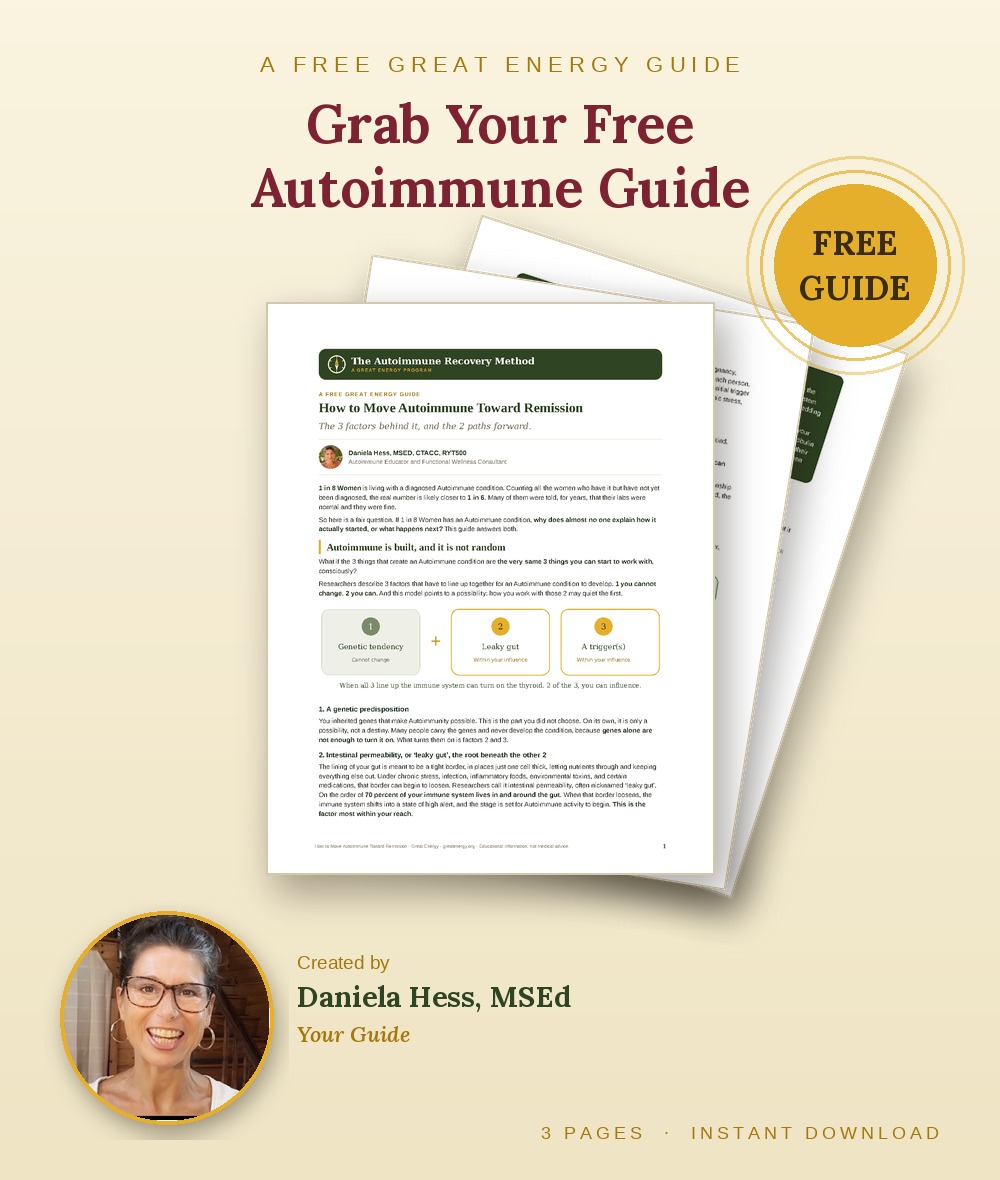
How to Move Autoimmune Toward Remission
The 3 factors behind an Autoimmune condition and the 2 paths forward, free, straight to your inbox.
No spam. Unsubscribe anytime.
Your guide is on its way. You can also open it now (PDF).

Articles from Daniela
Daniela Hess, MSEd, is a co-founder of Great Energy and an Autoimmune Educator and Functional Wellness Consultant who lives and thrives with Hashimoto’s. She is not a licensed medical provider.
AIP recipes to try
A place to start in the kitchen while you work on this with your own clinician: